The New Machine Lords
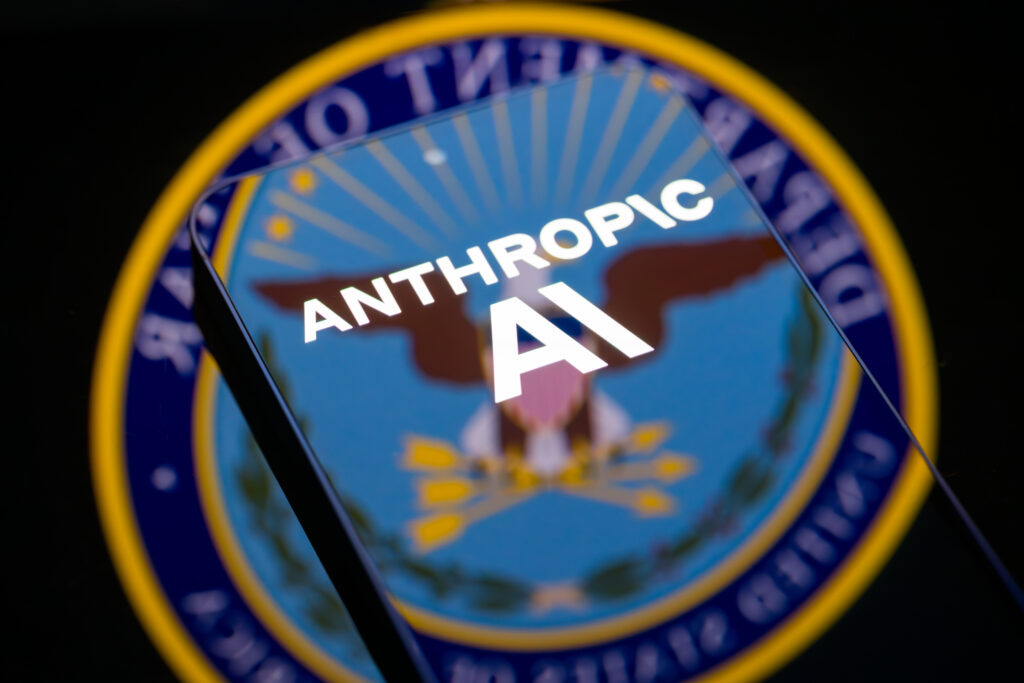
Anthropic, the San Francisco company behind the Claude family of AI models, has gone public at a valuation of roughly $1.5 trillion.
There is something wonderfully medieval about the artificial intelligence industry. Its founders speak of creating minds beyond human comprehension, its investors surrender fortunes in anticipation of miracles, and its engineers conduct their experiments in buildings that consume the electricity of small cities. Everyone involved seems to believe that the ordinary laws of economics have been temporarily suspended. This week, Wall Street was invited to join the congregation.
Anthropic, the San Francisco company behind the Claude family of AI models, has gone public at a valuation of roughly $1.5 trillion, raising some $81 billion in the largest initial public offering in history. Its 2025 revenue was approximately $4.6 billion, while operating losses exceeded $8 billion. In the first half of 2026, it spent nearly $9 billion on computing infrastructure alone. The company’s prospectus also describes hundreds of billions of dollars in future purchasing and leasing commitments. These figures belong to the peculiar arithmetic of the AI revolution, in which extraordinary commercial success seems only to increase the amount of money required to remain in business.
The temptation is to call the whole thing a bubble. Perhaps it is. But bubbles are an exceptionally poor guide to the significance of the things around which they form. Railway speculation bankrupted investors without making the railway any less revolutionary. The dot-com crash wiped out fortunes without restoring the world that existed before the internet. A technology can be genuinely transformative while the securities attached to it are grotesquely overpriced.
Conservatives should be particularly resistant to the fashionable conclusion that because Silicon Valley has developed an insufferable priesthood, its inventions must be fraudulent. The chatbot is real. The productivity improvements are real, if unevenly distributed and frequently exaggerated. Software that can assist with scientific research, perform complicated programming tasks, and make certain forms of expertise dramatically cheaper is worth taking seriously. The fact that its creators insist on describing every incremental improvement as an event in salvation history should not obscure the underlying achievement.
What ought to worry us is the political economy emerging around that achievement.
The American technology industry was once associated, however imperfectly, with a kind of anarchic individualism. Its mythology celebrated the brilliant eccentric who built something in a garage and humiliated the corporate establishment. Artificial intelligence has inverted this mythology. The frontier now belongs to organizations that can purchase astonishing quantities of computing power, secure access to electricity, and negotiate infrastructure agreements worth more than the annual budgets of many countries.
Anthropic exemplifies this transformation. Its expansion depends heavily on relationships with the largest cloud computing and semiconductor companies. Several of those same companies have invested in Anthropic or agreed to purchase billions of dollars in shares alongside its public offering. They provide infrastructure, receive payments for that infrastructure, and acquire ownership interests in the companies purchasing their services. There are perfectly legitimate commercial reasons for these arrangements. There are also good reasons to ask how much of the apparent growth of the industry reflects durable demand from customers outside this interconnected circle.
This is a question for investors, certainly. It should also interest policymakers concerned about competition. An industry whose greatest innovations can only be financed by a handful of enormous firms will eventually acquire the political habits of those firms. It will learn to regard regulation as an inconvenience when imposed on itself and a public necessity when imposed on potential competitors.
Here the moderate conservative ought to become particularly suspicious. Anthropic’s founding identity rests partly on a commitment to AI safety. Its executives have consistently argued that advanced models present unusual risks and require serious oversight. Some of those concerns are entirely reasonable. Systems capable of autonomous action, sophisticated cyber operations, and increasingly consequential decisions deserve scrutiny. It would be foolish to insist that every emerging danger is imaginary merely because the people warning us about it are wealthy Californians.
But the language of safety creates a peculiar opportunity for incumbents. If developing powerful AI requires elaborate compliance systems, extensive testing, and substantial regulatory approval, the companies best equipped to survive are precisely those that already possess vast capital and established government relationships. Public protection can become the respectable language through which an industry closes the door behind itself.
The answer is not to dismiss the possibility of dangerous AI. It is to distinguish demonstrable risks from metaphysical speculation, and practical safeguards from regulatory arrangements that privilege the largest firms. A government capable of enforcing laws against fraud, negligence, cybercrime, and anticompetitive conduct would do more immediate good than one endlessly debating whether a chatbot has acquired the moral status of a medieval angel.
There are other anxieties conservatives can afford to shrug off. The complaints that AI consumes electricity, requires enormous data centers, or threatens to rearrange familiar occupations are sometimes presented as though industrial civilization were an unfortunate administrative error. New technologies require physical infrastructure. They also change labor markets, often painfully. These consequences demand sensible planning, adequate energy supplies, and institutions capable of helping people adapt. They do not justify treating every new server farm as an ecological crime scene.
Nor should we assume that every inflated valuation represents a national emergency. Investors are permitted to make foolish decisions. Indeed, the freedom to lose money on grand technological ambitions is one of capitalism’s more useful features. If Anthropic disappoints its shareholders, that failure should belong principally to its shareholders. The public has no obligation to guarantee the profitability of an experiment merely because its founders have described it as the future of civilization.
The more serious danger arises when private speculation becomes inseparable from public power. AI companies increasingly matter to national security, intelligence, scientific research, and the operation of ordinary institutions. Their infrastructure requires enormous investments in energy and land. Their executives move comfortably between corporate boardrooms and government advisory circles. Eventually, the argument that a particular company is too strategically important to fail begins to sound plausible. That is when the taxpayer should begin checking the locks.
There is also a quieter cultural question. The great promise of AI is that it will relieve human beings of drudgery and expand their capacity to accomplish difficult things. Yet the civilization building these machines seems increasingly uncertain about what human capacities are actually for. We can automate the writing of letters, the production of pictures, the organization of schedules, and perhaps eventually large portions of professional judgment. Whether the time saved will produce more leisure, stronger families, better scholarship, or simply more hours spent supervising machines is a question that cannot be answered by a benchmark.
Conservatism, at its best, has always understood that efficiency is an inadequate measure of human flourishing. A society can become richer and more technically proficient while losing the habits that make its prosperity worth having. This possibility deserves more attention than the latest demonstration of a chatbot performing a task once thought uniquely human.
The Anthropic IPO is therefore worth neither celebration nor panic. It represents a genuine technological achievement, an extraordinary financial wager, and a further concentration of economic influence in a small number of institutions. Each deserves a different response.
We should welcome useful inventions, tolerate speculative excess, resist corporate favoritism, and insist that technological power remain subject to ordinary legal and political accountability. Above all, we should refuse to confuse the ambitions of a particular company with the interests of the country.
The machines may become extraordinarily intelligent. Their owners will remain human, with all the familiar human appetites for wealth, security, influence, and exemption from the rules that govern everyone else. That, rather than the sudden arrival of an electronic god, is the danger we already know how to recognize.