Three Scandals, One Threat: How Nvidia and Washington Let China Into the AI Race
For well more than a year, the head of America’s most strategically important technology company stayed close to a suspected foreign agent.
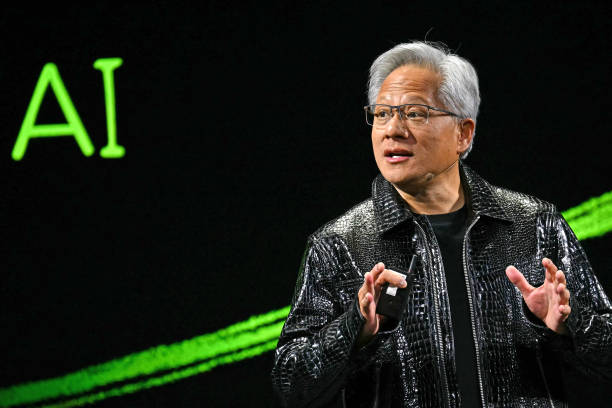
Under the Export Control Reform Act of 2018, 15 CFR §§ 730-774 (EAR), breaking America’s export rules on advanced technology can bring up to 20 years in prison and $1 million in fines per violation. Keep those numbers in mind. They are the measure for Nvidia, for its now-former chief executive Jensen Huang, its board, and for the officials who were supposed to police them both.
The past three weeks have exposed not one scandal but three, and together they are among the worst self-inflicted wounds in America’s AI race with China.
Scandal One: The Honey Trap
The first reads like a James Bond spy novel, but it isn’t fiction.
Jensen Huang has admitted to an affair with Alice Huang, a Chinese national (no relation), a former top executive at Megaspeed, a Singapore cloud company that grew into one of Nvidia’s biggest buyers in Southeast Asia. U.S. intelligence officials suspect she was working for China’s Ministry of State Security, Beijing’s version of the CIA. The House Select Committee on China calls her a “publicly reported Chinese intelligence asset.”
According to the reporting, the connection ran through Alice Huang’s husband, Chinese investor Kang Wei, who had known Jensen Huang through the video game business for decades. As the late-night comics put it, two Huangs don’t make a right. Did he, in effect, pimp her for the CCP?
Intelligence professionals call this a “honey trap,” the oldest move in the book, and the man running what was then the world’s most valuable $5 trillion-dollar company fell for it. Nvidia says no secrets were compromised and that earlier diversion allegations against Megaspeed were internally investigated and disproven.
Sure, if you believe that. But for well more than a year, the head of America’s most strategically important technology company stayed close to a suspected foreign agent, and no one inside Nvidia stopped it.
Context matters. Huang has been the industry’s loudest voice for selling to China, and he talked the White House into loosening export limits. His motives look completely commercial rather than ideological. Beijing does not care which. It should be noted that Jensen Huang, who hails from Taiwan, has long been an advocate for the People’s Republic of China. He wants them to succeed and lobbies for them perennially.
Scandal Two: Commerce Looked the Other Way
The second scandal sits inside the Cabinet. Commerce Secretary Howard Lutnick controls the Entity List, the government’s main tool for cutting off companies that funnel controlled chips to China.
Axios, citing six high-level sources, reports that Lutnick stalled a presidential crackdown on suspected chip diverters three times this year alone. At a November 5 Situation Room meeting, Treasury Secretary Scott Bessent reportedly asked him point-blank why Megaspeed still wasn’t on the list. Secretary of State Marco Rubio and others in the room sided with Bessent. Commerce denies the exchange took place. Bessent then went on CNBC and FOX Business to say Treasury, State, and Defense all had wanted Megaspeed listed for months, and Lutnick did not act.
Then there is the family business. Lutnick handed his firm, Cantor Fitzgerald, to his sons. A New York Times investigation found he backed a narrower chip rule covering just seven countries and only future shipments. One site it would spare is A201, a Malaysian data center packed with top-end Nvidia servers and run by Bitdeer, a Cantor client that reportedly rents computing power to a Chinese tech giant, likely Tencent. The Times found no evidence those ties drove his decisions. It didn’t need to. When the official writing the rules has family business on the other side of them, the appearance alone disqualifies him and appears compromising.
This is the old Kissinger bet that trade with China buys stability, and access greased it. Nvidia gave $25 million to the White House ballroom fund and first asked to stay anonymous. Huang flew to Beijing with the president, and last month he received the National Medal of Science. What is going down, and what are U.S. interests?
Scandal Three: A Board That Didn’t Try
I would give Nvidia’s board an F.
Nvidia ran like a monarchy. Huang had about 60 direct reports, so that everything ran through him. The company had no board chair until the day he resigned. Its directors have served an average of almost 15 years, roughly triple the S&P 500 norm, and three have been there since the company’s founding in 1993. The roster included a former Taco Bell president and an NFL representative. Huang openly dismissed succession planning, and the board let it go. That is Founder’s Syndrome, written into the governance structure, and engenders a diseased corporate culture.
Then came reports of a second affair, this time with a vice president who reported directly to him. At almost any public company, that alone gets a CEO fired. The board’s first statement said it had “confidence in Jensen.” Three days later he was gone. He resigned under pressure.
Under Delaware’s Caremark doctrine, directors breach their duty of loyalty when they make no good-faith effort to oversee the company’s critical risks. For a company whose chips are a national security asset, export compliance is the critical risk. Shareholder lawyers will want to know whether anyone on this board ever asked a hard question about Megaspeed.
Investors have already handed down their verdict: the stock is down about 35 percent from its October peak. A wider AI sell-off explains some of that, not all. Nvidia likely committed fraud and signed off on financials that saw 20 percent of the entire company’s sales bent to cut out players in Asia who allowed the chips to either get to China or to be used by Chinese companies, like Alibaba, Kimi and DeepSeek—our competitors and national security threats.
Who Pays?
It still hasn’t been publicly established whether or how many chips actually reached China through Megaspeed, although intelligence suggests many have. The FBI is investigating, and so is Nvidia’s board. If export laws were broken, the 20-year penalties are there to be used.
Washington doesn’t need to wait for the verdicts to act. Put Megaspeed on the Entity List today. Lutnick should step away from chip-control decisions or step down now. Nvidia needs a truly independent board with a national security committee that actually meets. And Congress should put every one of these people under oath.
Three scandals, one threat. The only question left is whether anyone will be held to account.