What Hath God Wrought?
America's spiritual capital, and the lesson we keep refusing to learn.
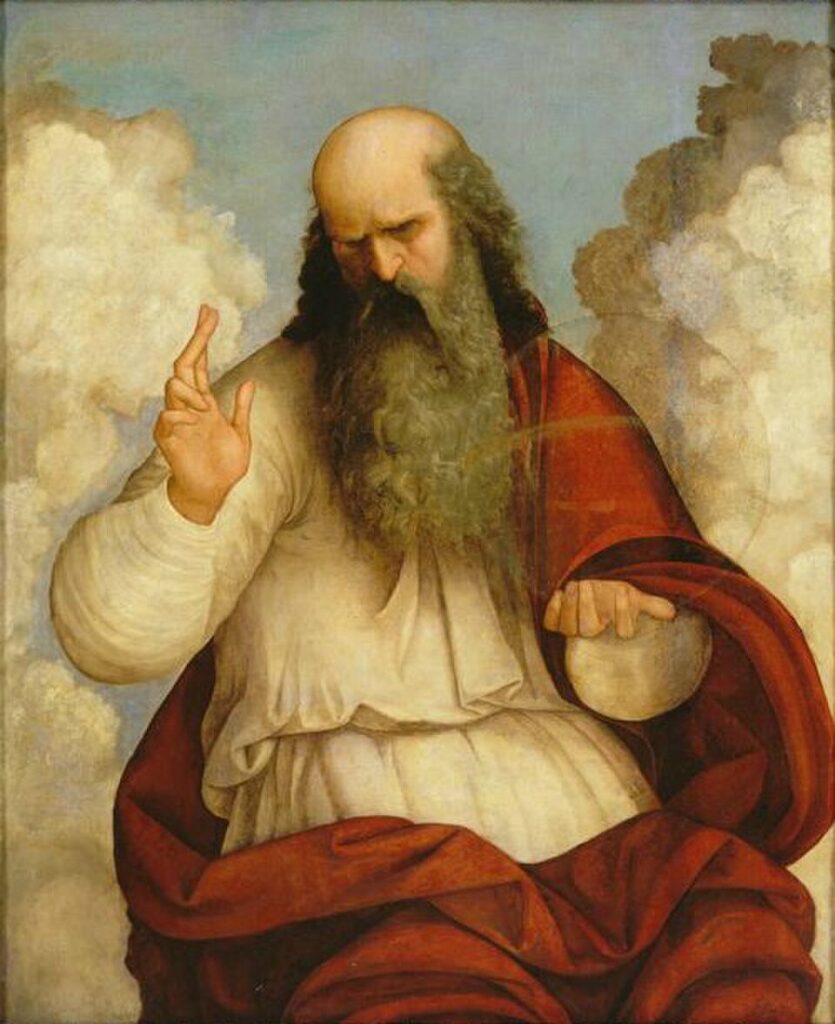
On May 24, 1844, Samuel Morse sat in the Supreme Court chamber of the U.S. Capitol and tapped out the first official message on the new Baltimore–Washington telegraph line: “What hath God wrought.” A young woman named Annie Ellsworth chose the words from the Old Testament, Book of Numbers. Those who saw it took the moment as Morse did. To them it was not a boast about human cleverness. It was an admission that something larger than ingenuity was at work—God’s hand in human affairs.
Historian Daniel Walker Howe borrowed Morse’s phrase for his Pulitzer Prize–winning volume of the Oxford History of the United States, which runs from the Battle of New Orleans to the end of the Mexican American War. It is a panorama of a nation remade. Canals, railroads, newspapers and the telegraph collapsed distance, mass political parties emerged, and a rural republic became a commercial power stretching to the Pacific. Howe writes as a historian, not a preacher. But his title is a reminder that the Americans who lived through that transformation read their own story as providence.
That reading did not begin in 1844. It runs from John Winthrop’s “city upon a hill” through Lincoln’s “almost chosen people” to Reagan’s shining city. Call it civic religion. I call it America’s spiritual capital: a reserve of conviction that this country has a calling, and that our better angels, selves are measured against it. Like any capital, it can be spent down or not renewed.
Which brings us to this November.
Democrats retook the House and Senate, and a record number of candidates backed by the Democratic Socialists of America won federal office. An Islamist-socialist mayor already governs New York City. In fairness, many of the Democrats who flipped Republican seats hid their true selves. But the energy inside the Democratic coalition is unmistakable, and conservatives are left alarmed and stunned.
President Trump, no political philosopher, has said more than once that America will never be a socialist country. He meant it. Yet our two-party system has a quirk worth noticing. In a parliamentary democracy, socialists would run under their own banner, and voters would judge them on their own terms. Here they ride inside the big tent. Now the Democratic Party must reckon with a large and growing faction that does not share its liberal inheritance or policies.
None of this is new.
Wherever Marxism has been tried, from Lenin’s Russia and Stalin’s purges to Mao’s famine, Pol Pot’s killing fields and Castro’s Cuba, the harvest has been poverty, corruption and graves. The record is written in Solzhenitsyn, in Koestler’s Darkness at Noon, in Hayek’s The Road to Serfdom. And still the politics of envy tempts each new generation. Envy is not an economic error. It is a sin, and sin does not yield to footnotes. Now, it seems, it is our turn.
Part of the problem is that modern people expect from politics what politics cannot give. Nearly fifty years ago, Peter Berger and Richard John Neuhaus wrote a short essay, To Empower People. They argued that a healthy society depends on “mediating structures” such as family, church, neighborhood and voluntary association. These are Burke’s “little platoons,” standing between the lone individual and the state, and they are where meaningful life is really lived. Socialism in every form crowds them out, because it cannot tolerate rival loyalties.
William F. Buckley Jr. said the conservative stands athwart history, yelling Stop. Borrowing from Eric Voegelin, he also warned against efforts to “immanentize the eschaton,” to try to build heaven on earth by political means. That temptation is not confined to the Left; the Right has its idols too. But every Tower of Babel comes down. We are finite creatures and sinners in need of grace, and no ideology can deliver what only grace provides. That truth is both humbling and exasperating. The next two years will likely prove it again.
Here the original verse speaks prophetically. “What hath God wrought” were not the words of a friend of Israel. They were spoken by Balaam, a seer the king of Moab hired to curse God’s people. Again and again, he climbed the heights to pronounce a curse, and each time only a blessing came out. “Surely there is no enchantment against Jacob,” he conceded, “neither is there any divination against Israel.”
That is the word for this hour. The spell of ideology is powerful, and it recasts itself for every generation that has forgotten the last. But it is not the final word. Curses aimed at a people have a way of turning into blessings. Dark seasons have a way of driving a nation back to its first principles and its little platoons.
In hymns we sing that God is working His purpose out. We see it, as Paul wrote, through a glass, darkly. Must we learn this lesson one more time?
Perhaps. But if so, the story may end as it did on the heights of Moab, with Americans looking back on these years and saying, in astonishment: What hath God wrought.