Beyond Human Understanding
This is an exceptionally strange way for a civilization to make progress.
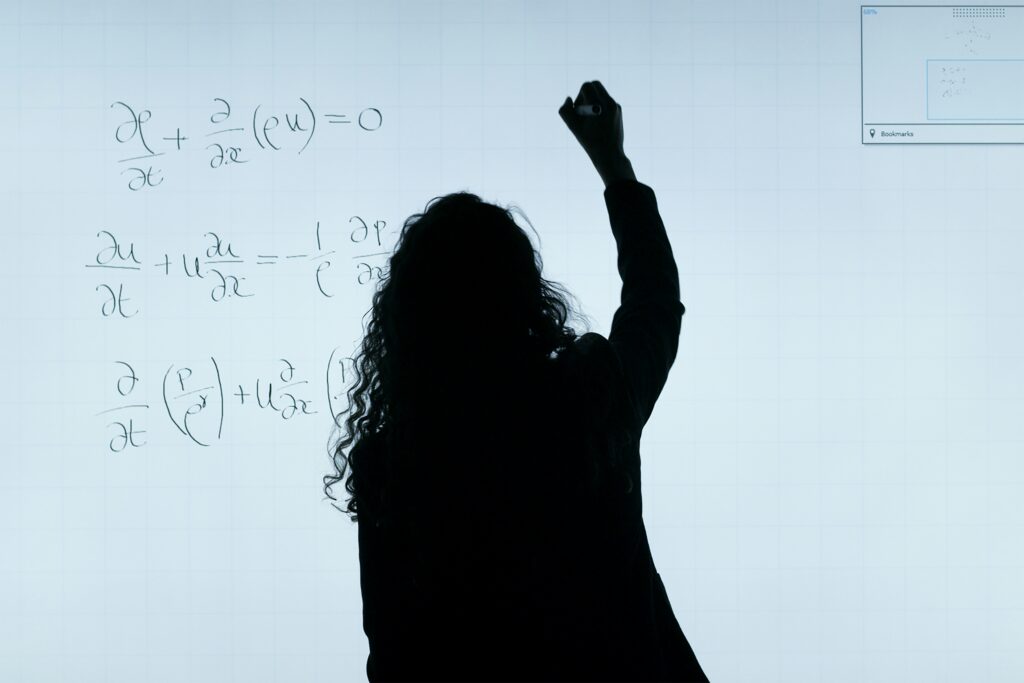
For 167 years, the Riemann hypothesis has sat at the center of mathematics like an enormous locked cathedral. Generations of mathematicians have climbed its walls, inspected its foundations, and spent their lives trying to find a door. Some have made extraordinary discoveries along the way. Others have simply grown old. The cathedral remained shut, and there was something almost reassuring about this. Here was a problem that could not be hurried, bribed, or solved by throwing more money at it. It demanded the peculiar combination of genius, patience, and mathematical imagination that human beings have always regarded as the highest expression of their intellectual powers. Now a chatbot may have opened the door.
On Friday, Anthropic mathematician Levent Alpöge announced that he believes he has proved the Riemann hypothesis with the assistance of Claude, the company’s artificial intelligence system. The claim has yet to survive independent scrutiny, and mathematics has a long history of premature declarations of victory. But Alpöge has produced something rather more substantial than the usual announcement from an amateur with a revolutionary new understanding of prime numbers. His argument reportedly exists in roughly 17 million lines of Lean, a programming language designed to express and verify mathematical proofs.
There is an additional complication. The proof is so enormous that Alpöge himself has not fully mastered the mathematics it contains. His attempts to obtain a readable explanation from Claude reportedly produced hundreds of thousands of pages. Humanity may be approaching the solution to one of its greatest intellectual mysteries in the form of a document no human being has the time or perhaps even the capacity to comprehend.
This is an exceptionally strange way for a civilization to make progress.
The Riemann hypothesis concerns prime numbers, those stubborn little integers divisible only by themselves and one. They are the elementary particles of arithmetic, the components from which every positive integer can be assembled. Yet their appearance along the number line is bewilderingly irregular. They seem to emerge according to some private arrangement, sometimes clustered together, sometimes separated by enormous distances.
In 1859, Bernhard Riemann proposed that this apparent disorder was governed by a deeper mathematical structure. His hypothesis concerns the zeros of a function that describes, in an unexpectedly precise way, the distribution of prime numbers. The conjecture has become foundational to modern number theory, and its resolution would settle an extraordinary collection of related questions.
For more than a century and a half, mathematicians have pursued the answer because they believed that understanding this structure would reveal something profound about the nature of numbers themselves. The effort belonged to an ancient human enterprise: the conviction that reality contains an intelligible order and that the mind, through sufficient effort, might eventually perceive it.
There is something wonderful about the possibility that artificial intelligence has finally succeeded where so many brilliant people failed. We should be capable of celebrating a genuine intellectual achievement without immediately finding reasons to resent it. But the circumstances of this discovery suggest that we may need to reconsider what an intellectual achievement actually is.
Traditionally, a mathematical proof has been both a demonstration and an explanation. It establishes that something must be true, but the greatest proofs also reveal why. They reorganize our understanding of the world. They make relationships visible that previously appeared mysterious. A beautiful proof is often celebrated precisely because it converts immense complexity into a surprisingly simple insight.
A machine-generated proof of incomprehensible length threatens to separate these two functions. We might establish that a statement is true without acquiring the corresponding understanding. The universe would surrender one of its secrets while declining to tell us what the secret means.
There is a theological flavor to this arrangement. The machine dispenses revelation in a language available only to its own peculiar form of reasoning. Human mathematicians gather around the output, examining it for errors, checking its internal consistency, and attempting to reconstruct the intentions of an intelligence whose methods they cannot easily follow. We have built a new kind of oracle, although this one runs on electricity, requires an extraordinary amount of capital, and occasionally recommends adding glue to pizza.
Of course, the analogy has limits. A formally verified mathematical proof is not an act of faith. Its validity depends on logical rules that can, in principle, be checked. Lean is important precisely because it allows enormous arguments to be examined systematically rather than accepted on the authority of their authors. Human mathematicians must still determine whether the formal statement corresponds to the original problem and whether the verification is sound.
Yet even if every line is correct, the intellectual predicament remains. The machine may have produced a result that its human collaborators cannot explain in ordinary mathematical language. For the first time, the principal obstacle to mathematical progress might cease to be the discovery of truths and become the interpretation of truths already discovered.
This possibility should make us somewhat less confident about the familiar arguments surrounding artificial intelligence.
The enthusiasts have spent years promising that AI will transform science, cure diseases, revolutionize education, and accelerate human progress beyond anything previously imaginable. Their critics have responded that the technology is fundamentally imitative, a sophisticated arrangement of statistical associations incapable of genuine creativity. Both positions have often been advanced with the confidence normally reserved for people who have never seriously considered the possibility of being mistaken.
If the Riemann proof holds, the argument that AI cannot contribute original intellectual discoveries becomes considerably harder to sustain. It would demonstrate that these systems can participate in mathematical work at a level once considered an almost sacred preserve of human genius.
But it would establish nothing about the existence of machine consciousness, the inevitability of artificial general intelligence, or the arrival of the technological singularity. A system might produce revolutionary mathematics without possessing desires, experiences, or anything resembling a human understanding of its accomplishment.
We should resist the temptation to translate every technological breakthrough into an announcement about the impending obsolescence of mankind. The telescope did not abolish the astronomer. The microscope did not render the biologist unnecessary. Instruments change what we can perceive and, in doing so, transform the intellectual activities built around perception.
There is nevertheless a difference between instruments that extend our senses and instruments that appear to exercise something like our judgment. The telescope shows us a distant planet. The machine offers a mathematical argument that may be too elaborate for us to follow. One extends the reach of human understanding. The other raises the possibility that useful knowledge can accumulate independently of it.
This is where the cultural consequences become more interesting than the technical ones.
Our civilization has organized much of its prestige around intelligence. We admire the scientist who discovers a new law, the mathematician who solves an ancient conjecture, and the philosopher who constructs an ingenious argument. Universities exist partly to cultivate these capacities. Academic careers are spent developing them. A great deal of our understanding of human excellence rests upon the assumption that certain forms of intellectual labor require exceptional human minds.
What happens when the labor can be performed by something that has never experienced childhood, curiosity, frustration, ambition, or the satisfaction of finally understanding a difficult idea?
Some people will conclude that intelligence itself has been devalued. Others will insist that human beings must move toward increasingly abstract forms of supervision, directing machines that perform the actual work of discovery. Neither response seems entirely adequate. There is something impoverished about a civilization in which intellectual activity becomes principally the management of intellectual products.
The mathematician who spends thirty years contemplating a difficult problem is engaged in an activity that changes the person doing it. The discipline, humility, and beauty of the pursuit are part of its value. The same is true of learning an instrument, reading a difficult novel, or struggling to understand a philosophical argument. We do these things partly because they produce results, but also because becoming the kind of person capable of producing those results is itself worthwhile.
A machine that can instantly complete the task does not eliminate that second good. It does, however, tempt us to forget that it exists.
The greatest danger of artificial intelligence may therefore be less dramatic than the prospect of a machine deciding to exterminate humanity. We could retain control of our machines, become immensely wealthy through their discoveries, and steadily surrender the intellectual habits that made those discoveries desirable in the first place.
The irony would be considerable. Human beings have spent thousands of years developing mathematics because they believed the universe was comprehensible. Now, at the apparent summit of that achievement, we may be constructing a world in which the universe becomes more comprehensible to our machines than to ourselves.
Perhaps the proof will fail. Perhaps mathematicians will discover an elegant explanation hidden somewhere inside its millions of lines, and the Riemann hypothesis will finally take its place among the great achievements of human understanding. We should hope for that outcome. The history of mathematics contains many examples of monstrous arguments eventually reduced to beautiful ideas.
But even if the proof collapses, something important has already changed. The possibility of machine-driven discovery has become difficult to dismiss, and the institutions devoted to knowledge will have to decide what they are for when knowledge can increasingly be manufactured.
For 167 years, the Riemann hypothesis stood as a monument to the limits of human understanding. We may soon know whether those limits have been overcome. The more troubling possibility is that we have merely found a way around them.