Wisconsin’s Bill Comes Due
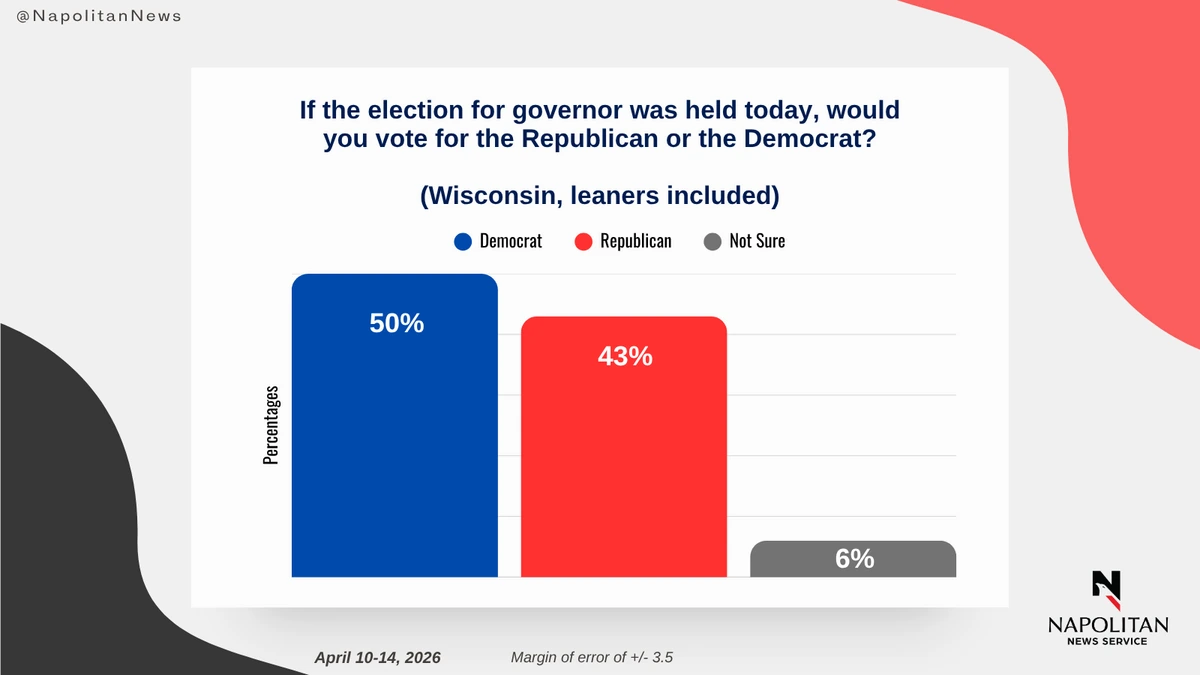
A new Napolitan poll finds Democrats up seven in the open governor's race. Cost of living is doing the work, and the markets agree.
Every Republican strategist who cares about winning in 2026 needs to be paying attention to the recent returns out of Wisconsin.
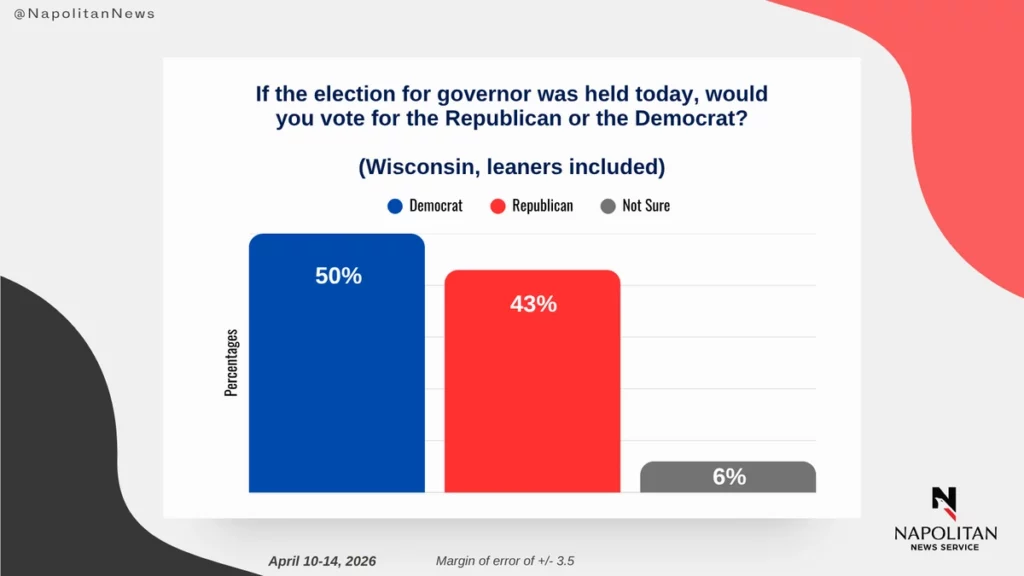
In a recent Napolitan News Service survey, Democrats lead the generic governor’s ballot 50 to 43. Even if we adjust for the leaners, the margin holds: 48 to 41. And among voters who describe themselves as Very Enthusiastic about voting, forget it. Here, the gap widens to 20 points.
That last figure is the one to watch. Enthusiasm is the closest thing pollsters have to a leading indicator of turnout. It is enthusiasm that causes people to vote in elections, to engage politically. When Americans are enthusiastic, it means they feel they play a real part of the electoral process. And at this stage of an open-seat race, a 20-point enthusiasm gap is striking.
The reason for the gap is not hard to understand. Eighty-four percent of Wisconsin voters consider cost of living a Very Important issue, and 42% rank it as the single most important issue facing the country. Healthcare, the next-closest concern, draws 14%. There is no other issue within a country mile. Ninety-four percent of voters report seeing higher food prices. Ninety-four percent report higher gas prices. Ninety-one percent report higher electricity and natural gas prices. Only 23% say their income has kept up.
Wisconsin voters are about to hold some folks responsible. Forty-six percent blame President Trump for inflation. Another 17% blame the Republican-controlled Congress. That is 63% pointing fingers in the same political direction. President Trump’s approval in the state has slid accordingly, from 48% on Inauguration Day to a peak of 51% the following month, and now to 39%. A majority, 53%, say they Strongly Disapprove. Only 19% Strongly Approve of his work.
Prediction markets have also noticed.
They are worth taking seriously for the same reason futures markets for oil or wheat are worth taking seriously: they aggregate real money wagered by participants with a financial stake in being right. That discipline tends to surface information faster than polls and more reliably than pundits. Polymarket called the 2024 presidential race earlier, and with more confidence, than most traditional forecasters.
On Polymarket, for instance, traders are pricing a Democratic gubernatorial win at 80% against just 12% for the Republican, a spread that widened after the April 7 state Supreme Court election. There, liberal-backed Chris Taylor defeated conservative Maria Lazar by 20 points, a 21-point overperformance against Donald Trump’s 2024 margin in the state. Spring judicial races are not gubernatorial races, but a swing of that size in the same electorate is a signal worth pricing in.
But to remind, Wisconsin is not a generic state. It was decided by less than a single point in 2024. It will be a tossup again next November, in a race for an open seat now that Governor Tony Evers has declined a third term. Both primary fields are crowded. On the Democratic side, Lieutenant Governor Sara Rodriguez, former Lieutenant Governor Mandela Barnes, and Milwaukee County Executive David Crowley are among the contenders. On the Republican side, Congressman Tom Tiffany carries the president’s endorsement, with Washington County Executive Josh Schoemann and businessman Bill Berrien also in the field. Whoever emerges from the August 11 primary will inherit the political environment these numbers describe. The lesson for any 2026 state candidate is that prices seem to be the driving issue for voters in Wisconsin. Campaigns that fails to make grocery receipts and utility bills its center is conceding the field.
Six months remain until the primary. Eighteen until the general. Numbers move. But the Wisconsin electorate is not asking a complicated question, and a party that wants to govern would do well to give it a clear answer.