The Strait of Hormuz Is Not Iran’s
Project Freedom ends ten weeks of pretense in the Strait of Hormuz.
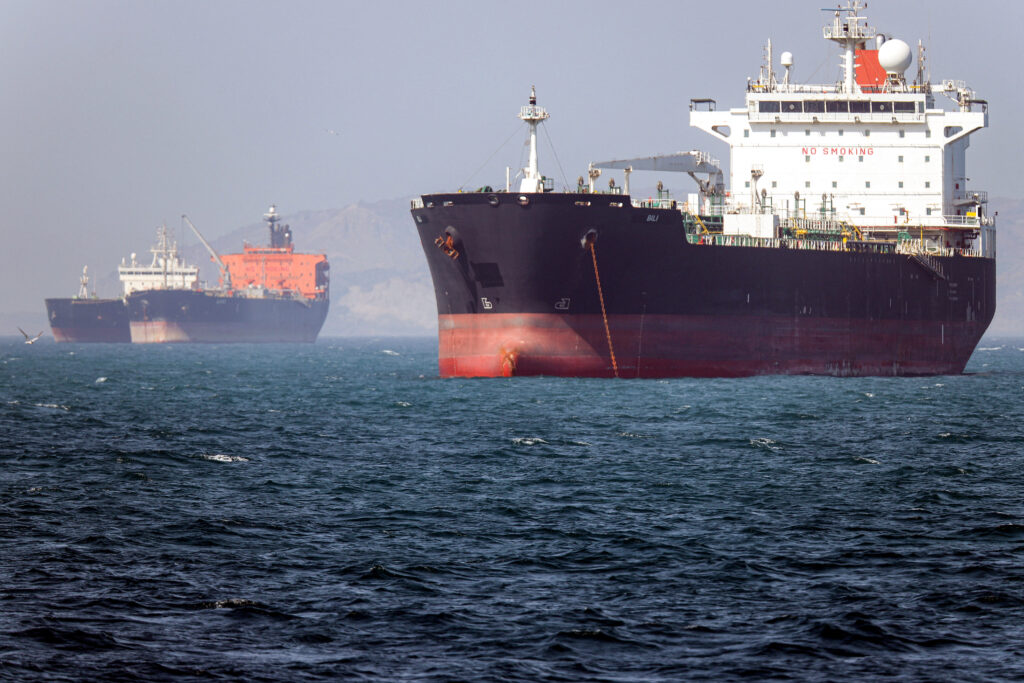
On May 4, the Alliance Fairfax, a U.S.-flagged vehicle carrier, exited the Persian Gulf under the protection of American guided-missile destroyers. Two of those destroyers, the Truxtun and the Mason, had transited the strait that same morning under a sustained Iranian barrage of small boats, missiles, and drones. By the close of operations, the U.S. Navy had destroyed six Iranian small craft and intercepted cruise missiles and drones across the chokepoint. Adm. Brad Cooper, the CENTCOM commander, called it the first day of Project Freedom. He was, more importantly, ending a fiction.
For ten weeks, since the death of Ali Khamenei in Operation Epic Fury, Washington and its partners have called the post-Khamenei interval a peace. By Gen. Dan Caine’s own accounting at Tuesday’s Pentagon briefing, Iran has fired on commercial vessels nine times since the April 8 ceasefire, seized two container ships, and attacked U.S. forces more than ten times. The Iranian Revolutionary Guard Corps has held the world’s most important energy waterway and demanded transit tolls of as much as $1 million per ship. Twenty percent of global seaborne oil and a fifth of the world’s liquefied natural gas pass through the Strait of Hormuz. For ten weeks, that traffic moved at Tehran’s sufferance, not the world’s right.
Federalist #70 names the constitutional principle now reasserted in the Strait of Hormuz. “Energy in the Executive is a leading character in the definition of good government,” Hamilton wrote. “It is essential to the protection of the community against foreign attacks.” The Founders were not theorizing about lawn signs. They had watched the Barbary states levy tribute on American shipping and Congress dither over whether to pay it. They wrote a Constitution that fixed responsibility for the seas in one office. President Trump’s order to the Navy Sunday, followed by his Monday warning to Tehran that interference in the strait would meet with annihilating force, is the kind of unitary direction Hamilton thought the office required.
Reagan settled this question in 1988
Reagan understood the same point. From 1986 through 1988, during what came to be called the Tanker War, Iran mined the Gulf and attacked Kuwaiti-flagged shipping in an effort to strangle Iraq’s oil revenue. The Reagan administration responded by reflagging Kuwaiti tankers as American vessels under Operation Earnest Will and putting U.S. warships on the line. When the frigate USS Samuel B. Roberts struck an Iranian mine in April 1988, Reagan ordered Operation Praying Mantis. In a single day the Navy sank the Iranian frigate Sahand, crippled a second, and destroyed two oil platforms used as command-and-control posts for tanker attacks. It was the largest U.S. surface engagement since the Second World War, and it broke Iranian ambitions to close the strait for a generation.
Project Freedom is a smaller operation, but its premise is identical: the Strait of Hormuz is international water, and no regime has the right to convert it into a toll road. Defense Secretary Pete Hegseth was explicit at the Pentagon Tuesday. The mission is “defensive in nature, focused in scope, and temporary in duration,” and Iran is “the clear aggressor.” Hegseth called the protective umbrella over the strait the only thing it deserves to be called: a “red, white, and blue dome.”
The home-front math is unforgiving in both directions
The home-front cost of acting is real. AAA reports the national average for a gallon of regular at $4.46. Treasury Secretary Scott Bessent has sanctioned Chinese refineries buying Iranian crude and is pressing Beijing to end its complicity, calling China a state sponsor of terrorism for sustaining the Iranian export pipeline. Drivers feel the squeeze. So do truckers, farmers, and small businesses. None of this is welcome news.
The home-front cost of not acting is worse, and durable. A Persian Gulf in which Iran charges seven-figure tolls for safe passage is a Persian Gulf in which every American grocery price, manufacturing input, and energy bill is set, on the margin, by the IRGC. Such an arrangement amounts to a permanent Iranian veto over American economic life. The question is not whether Americans pay; they were paying when the strait was effectively closed, and they are paying now. The question is whether they pay in a market governed by ordinary commerce or in a market governed by Tehran’s mood.
Iran calibrates. The administration just answered.
The Iranian regime understands the stakes. Mohammad Bagher Qalibaf, the parliamentary speaker and Tehran’s chief negotiator, accused Washington Tuesday of building a “new equation” in the strait and warned that Iran has “not even begun yet.” Foreign Minister Abbas Araghchi offered the standard line about “quagmire.” This is the language of a regime that has lost its supreme leader, its air defenses, and most of its conventional navy, and that retains exactly two cards: the small-boat swarm, and the threat to escalate just enough to keep insurance premiums punitive. Caine’s threshold framing captures the dynamic. Iran is calibrating attacks to stay below the level that would restart major combat, on the assumption that Washington would absorb the calibration indefinitely. Sunday answered the assumption.
Project Freedom names the false trade. The April 8 truce, whatever else it accomplished, produced in the strait a piracy regime with diplomatic cover. The freedom of the strait will not wait on the messages now passing through Pakistan. Hamilton’s Constitution did not contemplate a Navy that asks permission to operate in international waters, and Reagan’s example did not require one.
The Strait of Hormuz is not Iran’s. It never was. Project Freedom is the answer the administration prepared while Iran’s bad faith made action unavoidable. The first U.S.-flagged ships are out. The world’s commerce is not. The Navy will be in the strait until it is.