“We Will Find You and We Will Kill You.”
After four years of a federal apparatus turned inward, the 2026 Counterterrorism Strategy names the actual enemies of the United States.
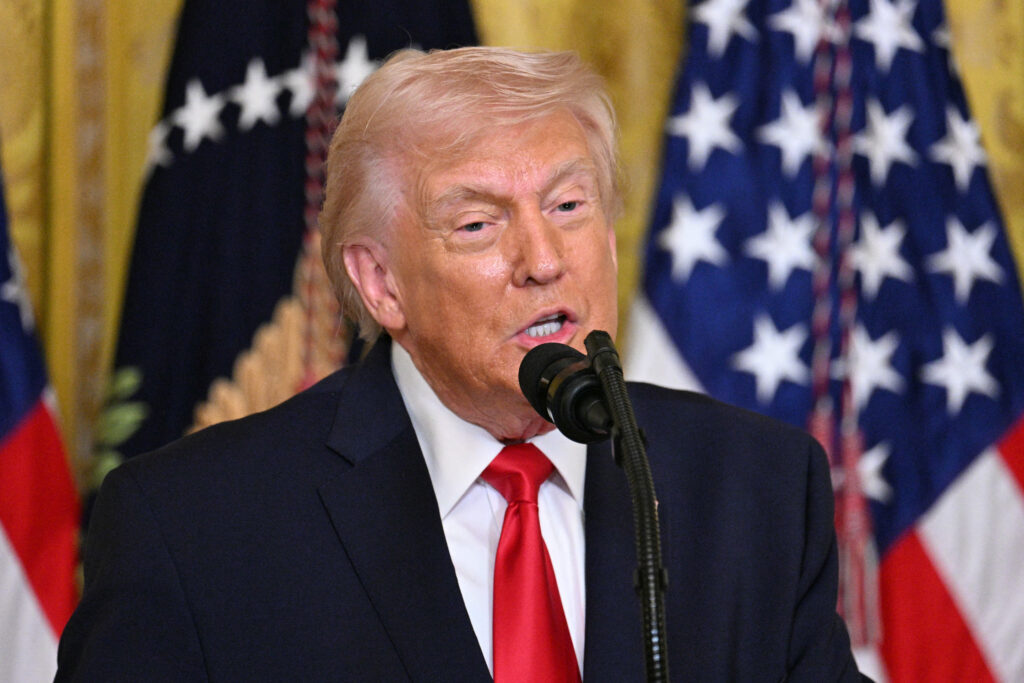
The White House released its 2026 United States Counterterrorism Strategy on Wednesday morning. It is a striking document that includes a Forward by President Donald Trump promising would-be adversaries that “We Will Find You and We Will Kill You.”
But on page 6 a striking assertion is made: “Our nation has not been well served by its Intelligence Community (IC), which has been mired in old ways of looking at threats, or has been actively weaponized by its leadership as a political tool.” The document does not dwell upon or return to the substance of this comment, but the import should give pause. In a memo, the subject of which is America’s counterterrorism strategy, the intelligence community is itself a potential adversary.
With this in mind, look first at the table of contents. Three threat categories are enumerated along with three operational goals. The strategy organizes the federal counterterrorism enterprise around narcoterrorists and transnational criminal gangs, legacy Islamist networks, and violent left-wing extremists, including the anarchist and antifa formations that have been treated for years as a sociology problem rather than a security one. The stated objectives are equally unsentimental: identify terrorists before they act, sever their funding, and dismantle the organizations that produced them.
What the document collapses is more important than what it lists. For the first time in a generation, a federal counterterrorism framework treats border security, jihadism, and organized political violence on the radical Left as different fronts in a single conflict the United States has decided to win rather than to manage. The Biden Administration handled each as a public-health or social question adjacent to government, when it bothered with them at all. It then, as you might recall from the hint on Page 6, turned the apparatus inward.
The Target List Was Domestic
The receipts behind the hint are no longer in dispute.
In May 2025, Director of National Intelligence Tulsi Gabbard released an unredacted version of the Biden National Security Council’s 2021 Strategic Implementation Plan for Countering Domestic Terrorism. The plan instructed federal law enforcement to investigate Americans engaged in “concerning non-criminal behavior.” This lowered the standard for opening a federal probe from the predicate of articulable criminality required by the Attorney General’s Guidelines for Domestic FBI Operations to something closer to ideological suspicion. Eat your heart out, Joe McCarthey.
Pro-life demonstrators. Parents who spoke at school board meetings. Traditional Catholics attending Latin Mass in Virginia. Active-duty servicemembers. Gun owners whose social-media posts featured the Gadsden flag, the Betsy Ross flag, or, in the Bureau’s analysis, an excessive enthusiasm for the Second Amendment. All of them ideologically suspect in the view of the FBI.
FBI whistleblower Garrett O’Boyle testified to Congress that, after the Dobbs decision, agents were directed to develop sources inside pro-life groups to investigate threats against Supreme Court justices. Only the threats were coming from the political Left. A pro-abortion activist drove across the country to assassinate Justice Brett Kavanaugh. The Bureau, by Mr. O’Boyle’s account, asked a pro-life informant about it anyway. At the State Department, the Global Engagement Center funded outside groups that flagged conservative outlets, including The Federalist, as conduits of foreign disinformation. Secretary Marco Rubio, thankfully, shuttered its successor.
From Doctrine to Execution
This is the apparatus the 2026 strategy explicitly repudiates. Its language on the Intelligence Community is the harshest a White House strategy has used about its own agencies in living memory. It names the categories of victims in the same paragraph cited above: conservative Catholics, school-board parents, Members of Congress, the president and his associates.
The repudiation is not new. It is the operational expression of a doctrine President Trump set out in his 2025 National Security Strategy (NSS), which names “Protection of Core Rights and Liberties” as one of four organizing priorities of American foreign policy alongside border security, burden-shifting, and realignment through peace. The NSS lays the principle down in the language the CT strategy then borrows verbatim: agencies granted “fearsome powers” may not abuse them under any pretext, and “when and where those powers are abused, abusers must be held accountable.”
The 2026 Counterterrorism Strategy has now been set. We await more good news on its implementation.