The Misleading Shadows Cast By Data Center Activists
Since they don’t know what it’s like in the real world, they interpret reality based upon shadows like social media firestorms.
In my previous column, I showed how people in the political bubble are like the prisoners in Plato’s Allegory of the Cave. In our 10-10-80 nation, many ten percenters are imprisoned within their ideological bubbles and have little understanding of the 80 percenters they want to rule. Since they don’t know what it’s like in the real world, they misinterpret reality based upon shadows like news coverage, social media firestorms, and low-turnout election results.
The current debate over data centers is a good example of the problem. It also highlights a weakness in our political system that is a real threat to our nation.
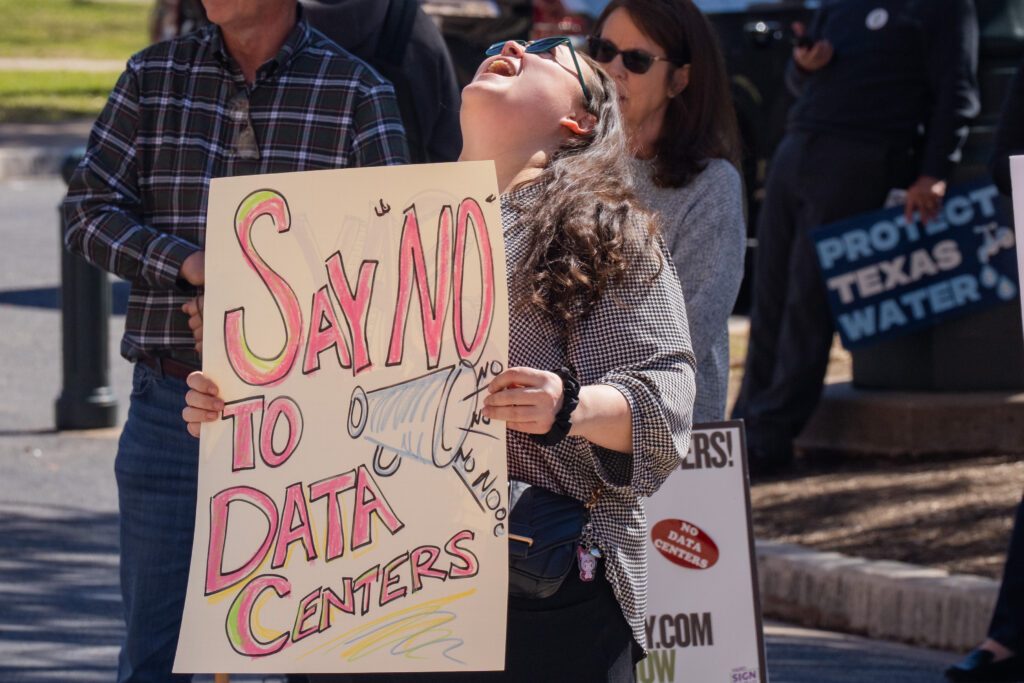
Countless state legislators, city council members, and other officials have encountered loud and angry voices protesting data centers at town hall meetings and other forums. These shadows convince many in the political bubble that data centers are a hot issue in Election 2026.
That perception leads to media coverage that is devoured by the ten percenters. Among those who talk politics on a daily basis, an astounding 54% are following news about data centers very closely. However, among the vast majority of Americans who talk politics no more than once a week, just 14% are paying such close attention.
The sense that the activists at town hall meetings aren’t representative of public opinion is confirmed by another data point. In every survey we conduct, my firm asks voters to tell us — in their own words—what they consider the most important issue facing the country. Survey after survey, only about 1% mention data centers. Not surprisingly, economic concerns are consistently mentioned as the top issue, mentioned by about a third of voters.
Still, some might argue that the economy is just about always the top issue (and they’re right). Perhaps, then, data centers are a top secondary issue, but not quite as important as the economy. Once again, however, that’s not what the numbers show. To test this theory, we asked voters how the data center issue will impact their voting decision this fall. When asked directly in this manner, 33% of all voters say it will be very Iimportant.
Not surprisingly, that level of interest pales in comparison to economic concerns. Seventy-six percent (76%) of voters say the economy will be very important in their voting decision. Seventy-two percent (72%) say the inflation issue will be that important.
But it’s not just the economy. Voters consider a whole range of issues more important than data centers. That list includes healthcare (68%), national security (61%), crime (55%), education (50%), immigration (49%), gun laws (45%), climate change (41%), and abortion (38%). In other words, at 33%, data centers are bringing up the rear in terms of importance to voters.
This disconnect highlights a major problem with our current political dynamics. In a healthy political system, activists would have to win over a majority of voters to bring about a significant change in government policies. That’s the way it’s supposed to work in a nation founded on the belief that governments derive their only legitimate authority from the consent of the governed.
In America today, however, a small, organized group of activists can bring about major change by creating shadows to convince a small group of ten percenters that something is real. Once they accomplish that, reality — what the 80 percenters actually think — doesn’t matter anymore. The issue then takes on a life of its own and many ten percenters care only about using it to defeat the other team.