Reimagining Russia, Reimagining Peace
A successful settlement would produce benefits far beyond Eastern Europe.
When Russia invaded Ukraine in February 2022, the West understandably focused on the immediate demands of war. Policymakers debated sanctions, military aid, energy security, and deterrence. The objective was clear: help Ukraine survive. Yet even in those early months, a larger strategic question lingered beneath the surface: What geopolitical order should the United States seek once the war ended?
Two years ago, I argued that American policymakers were asking the wrong question about Russia. The debate had become consumed by how to confront, punish, isolate, or weaken Moscow. Missing from the discussion was a serious consideration of what a favorable long-term strategic outcome might actually look like. Strategy doesn’t boil down to merely winning today’s battles. Indeed, it’s also about shaping tomorrow’s realities.
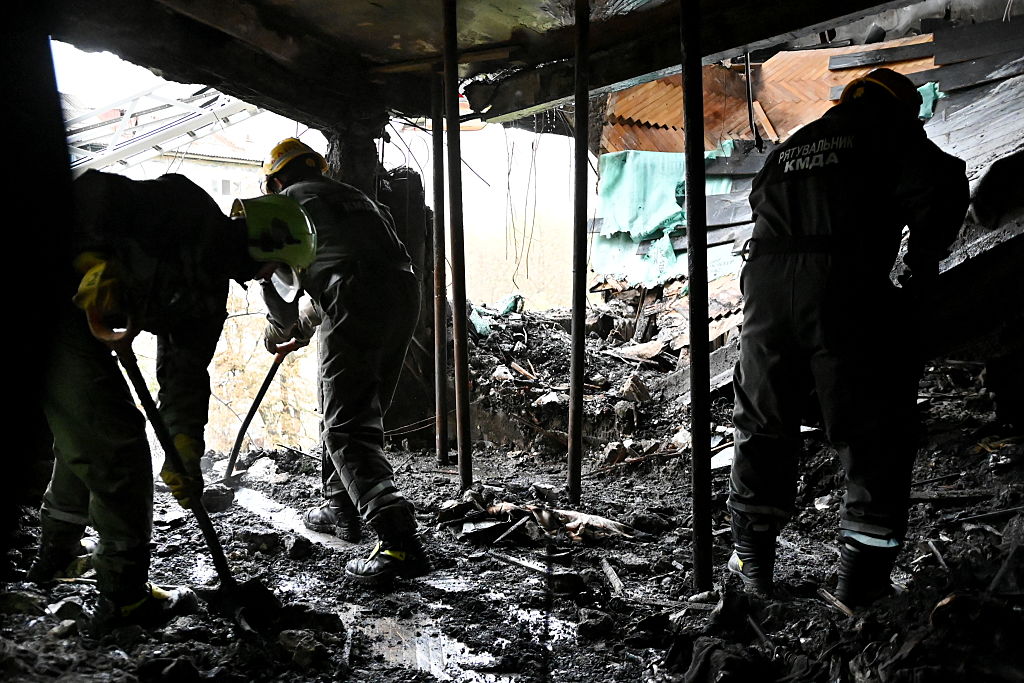
That question has become unavoidable anyway. The war has inflicted staggering human, economic, and geopolitical costs. Hundreds of thousands have been killed or wounded. Entire cities have been reduced to rubble. A generation of Ukrainians and Russians has been shaped by conflict. Having traveled to Ukraine on a humanitarian mission during the summer of 2022, I witnessed firsthand both the extraordinary resilience of the Ukrainian people and the immense human toll of the war. As discussions of a negotiated settlement increasingly move from the margins to the center of policy debates, the challenge facing statesmen is no longer simply how to wage war. It is how to construct a durable peace.
History has already rendered judgment on several assumptions widely held in early 2022. Russia failed to conquer Ukraine, extinguish Ukrainian national identity, or fracture the Western alliance. Ukraine demonstrated extraordinary resilience, preserved its sovereignty, and transformed itself into one of the most capable military powers in Europe. At the same time, neither side succeeded in achieving its maximal political objectives. The reality emerging from the battlefield is one that often confronts nations after prolonged wars: neither side has achieved everything it wanted, and both eventually recognize that continued fighting offers diminishing returns.
The most serious peace proposals now under discussion reflect that reality. A plausible settlement would leave Ukraine sovereign, heavily armed, increasingly integrated with Europe, and protected by meaningful security guarantees. Whatever territorial arrangements ultimately emerge, the broader strategic reality is unmistakable: Ukraine is likely to emerge from this conflict more deeply embedded in the West than at any point in its history.
That outcome should not be viewed as the conclusion of the conflict**, but** as the beginning of a new phase of statecraft.
When I spoke with President Trump at Mar-a-Lago on March 30, 2022, only weeks after the invasion began, I came away with the impression that his concern about the loss of human life was genuine and deeply felt. Whatever one’s views of his broader policies, he appeared focused on the tragedy of a war consuming an entire generation of Ukrainians and Russians. If history ultimately records that he played a decisive role in ending the conflict, his achievement will not be measured by the precise wording of a settlement agreement. It will be measured by whether he succeeded in stopping the destruction while creating conditions in which peace could endure.
Yet peace agreements are not self-executing. The history of diplomacy is filled with accords that looked impressive on paper but failed because leaders neglected the harder task of preparing their societies for compromise. The challenge facing Ukraine and Russia is therefore not simply to end military operations. It is to create the political, social, and economic foundations that allow peace to survive.
This is where the next phase of diplomacy must evolve beyond traditional statecraft. It will require individuals willing to spend extended periods on the ground in both Ukraine and Russia, engaging political leaders, military officers, business communities, veterans, local governments, academics, journalists, religious leaders, and civil society organizations. Their purpose would not be to negotiate the terms of peace itself. That responsibility belongs to presidents, ministers, and official envoys. Rather, their objective would be to cultivate public understanding of why peace serves the long-term interests of both nations.
Wars often end before populations are psychologically prepared to accept that the fighting is over. Political grievances persist. Veterans return home carrying the burdens of conflict. Economic dislocation remains. Entire generations emerge having known little except confrontation. Unless these realities are addressed directly, ceasefires become pauses rather than conclusions. Successful diplomacy must therefore extend beyond presidential palaces and foreign ministries. It must reach universities, churches, businesses, veterans’ organizations, local governments, and civic institutions. The ultimate test of any settlement will not be whether negotiators can sign a document. It will be whether ordinary Ukrainians and Russians come to view peace as more beneficial than renewed conflict.
Economic strategy will be equally important. One of the most underappreciated consequences of the war is Ukraine’s emergence as one of the world’s most innovative defense technology ecosystems. Ukrainian engineers, entrepreneurs, and military operators have developed extraordinary capabilities in autonomous systems, electronic warfare, cyber operations, intelligence fusion, battlefield networking, and low-cost precision-strike technologies. These innovations were forged through necessity, but they can become engines of prosperity.
A coordinated effort to expand Ukrainian defense exports throughout NATO and other allied nations would strengthen Ukraine’s economy while enhancing collective Western security. Rather than viewing Ukraine solely as a recipient of assistance, the alliance should increasingly regard it as a contributor to the future of democratic defense innovation. Such an approach would generate employment, increase export revenue, accelerate reconstruction, and strengthen the economic foundations necessary for eventual European Union membership. A sovereign Ukraine integrated into Western markets, supported by security guarantees, and possessing a thriving defense-industrial base would be far more resilient than one indefinitely dependent on foreign aid.
Yet the most important strategic question extends beyond Ukraine itself.
For all the attention devoted to Russia over the past decade, the defining geopolitical challenge of the twenty-first century is not Russia. It is the growing competition between the free world and the authoritarian model advanced by the Chinese Communist Party. This reality does not diminish the importance of Ukraine. It clarifies why the conflict must eventually end.
The United States has a profound interest in preventing a permanent alignment between Russia and China. Such an alignment is not preordained. Historically, Russia has been wary of becoming the junior partner in any geopolitical relationship. As China’s economic and demographic weight continues to grow, Moscow’s dependence on Beijing becomes increasingly uncomfortable for Russian strategists. A stable settlement in Ukraine could create the conditions for Russia to gradually rebalance its foreign policy and regain strategic flexibility rather than drift deeper into China’s orbit.
This does not mean embracing the Kremlin or ignoring profound differences with Moscow. It means recognizing that great powers must distinguish between permanent enemies and temporary alignments. The long-term objective of American strategy should not be a world in which Russia and China become an inseparable bloc opposing the West. It should be one in which Russia finds greater prosperity, security, and opportunity through normalized relationships with Europe and the broader Western world than through increasing dependence on Beijing.
Indeed, the most successful outcome for the United States may ultimately be one in which both Ukraine and Russia become stakeholders in a stable European order. Ukraine would remain firmly integrated with the West, contributing military innovation, industrial capacity, and strategic depth to the democratic world. Russia, over time, would recognize that its long-term interests are better served by engagement with Europe and North America than by serving as a resource appendage to China. Such an outcome may seem ambitious today. Yet history repeatedly demonstrates that yesterday’s adversaries can become tomorrow’s partners when statesmen have the courage to look beyond the passions of the moment.
Beneath these strategic calculations lies a deeper civilizational reality. Ukraine increasingly sees itself as part of a broader Western tradition rooted in Christianity, constitutional government, individual liberty, private property, and the rule of law. Its citizens have repeatedly demonstrated a desire to anchor their future in the political and economic institutions of the West. A successful peace should therefore not seek to place Ukraine in a permanently neutral geopolitical gray zone. It should create conditions in which Ukraine can complete its integration into the Western community while retaining the strength necessary to defend its sovereignty.
A successful settlement would produce benefits far beyond Eastern Europe. At a moment when tensions with Iran continue to generate uncertainty in energy markets, disrupt trade flows, and consume diplomatic bandwidth, a durable peace between Russia and Ukraine could provide a rare source of geopolitical stability. The resulting reduction in global uncertainty would strengthen investor confidence, ease pressure on governments and markets already coping with Middle Eastern volatility, and allow policymakers to devote more resources to longer-term strategic priorities. For the Trump Administration, a negotiated end to Europe’s largest war since 1945 would represent more than a diplomatic achievement. It would demonstrate that American leadership remains capable of resolving major international conflicts while creating the strategic flexibility necessary to address emerging challenges elsewhere.
The ultimate objective should not be the permanent isolation of Russia or the perpetual militarization of Europe. It should be the construction of a stable geopolitical framework in which Ukraine is firmly anchored in the West, Europe assumes greater responsibility for its own defense, Russia gradually moves away from strategic dependence on China, and the United States is able to concentrate greater attention on the larger challenge that will define the coming century.
History’s greatest statesmen are not remembered because they won every battle. They are remembered because they correctly identified the central challenge of their age and built durable institutions capable of meeting it. The challenge before the West today is not merely to end a war. It is to secure a peace that strengthens Ukraine, stabilizes Europe, reduces China’s leverage over Eurasia, and creates a geopolitical environment in which both Ukrainians and Russians find greater opportunity alongside the West than against it.
That would not simply end a war. It would reshape the strategic landscape of the twenty-first century.