Marvel Continues to Miss What Makes America Great
In the end, all they allow themselves to say in praise of America is that “at its best, [it] learns from its mistakes and grows wiser.”
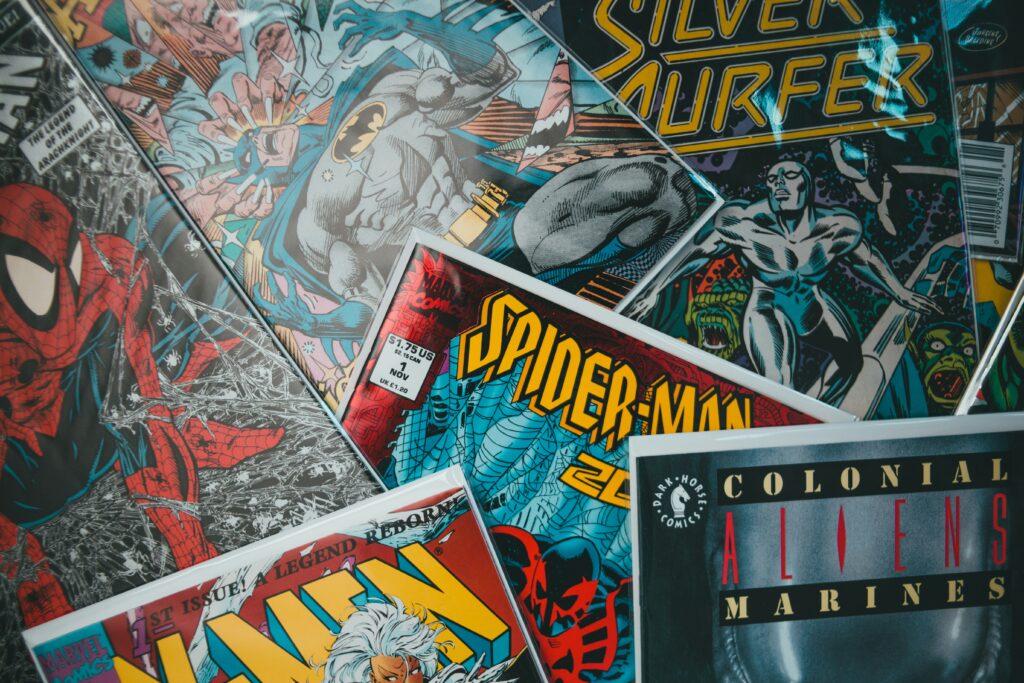
I will say what it seems Marvel Comics cannot: America is great and still worthy of celebration 250 years after the signing of the Declaration of Independence. In “1776,” a mini-series Marvel released in advance of our nation’s birthday, the franchise’s most popular heroes work together to stop a time-travel plot that would totally quash the American Revolution.
And while publishing the five-issue “1776” miniseries technically acknowledges the historic anniversary, Marvel’s work is simply unequal to the moment. It is quite a sign of American decadence that almost no major publishers or studios are doing anything to mark the anniversary of the fight for liberty so dearly won nearly 250 years ago. In that sense, at least Marvel tried. But unfortunately, the result is a ho-hum drama paired with lackluster art that amounts to less than the sum of its parts.
The story opens with Benjamin Franklin astrally projecting himself into the future to warn that Morgan Le Fay has come to help the British win the battles of Saratoga. Le Fay is King Arthur’s half-sister and a powerful sorceress who wants to rule Britain. Crushing America at Saratoga might have kept France from helping us win the war, smothering America in the cradle and allowing Le Fay to command a longer-lasting British Empire.
The basic plot is less important than the Marvel heroes’ reactions to the possibility that American history might be erased.
Bruce Banner and Spider-Man wonder whether it might be better to let Britain win because it abolished slavery before America did. After all, Banner says, as a scientist, he must “look at every possible variable in every possible situation.” Yet scientists ought to be concerned with truth and justice if they want a proper understanding of the way the world works.
As he weighs the options, Banner claims Canada and Australia “came out ok in the end” without throwing off British rule, which weighs in favor of letting Le Fay crush the Revolution. However, he also says the “British Empire did a lot of awful things, as did the States during the push west.”
He eventually agrees to join the fight for America because he sees preserving American history as a “lateral move,” and because he might not exist if he does not save the country.
Previous generations of Americans worked out how best to protect equal rights under the law. As a happy result, our nation was blessed with unrivaled prosperity. All that newfound wealth and freedom paved the way for the scientific advancements Banner champions.
Captain America, on the other hand, seems horrified by the idea that the heroes might not intervene to help the Revolution. And yet all he can muster in defense of his namesake is a frown and an exclamation that he “can’t believe [they’re] actually suggesting this is a good idea.” This exchange is a microcosm of the problem with the miniseries as a whole: The creators know they ought to honor America, but they cannot quite bring themselves to do so wholeheartedly.
As the series progresses, Captain America and Spider-Man deliver more than one soliloquy about what America means and the cost of war and revolution. But in the end, all they allow themselves to say in praise of America is that “at its best, [it] learns from its mistakes and grows wiser.”
Our forefathers fought a revolution for that? Any country can learn from the mistakes of the past. America was founded to vindicate the idea that people could have a consensual government focused on protecting the equal rights of all citizens.
China seems to have abandoned communism to adopt a system of autocratic market control, but its people are still not free in the American sense. Scandinavian countries seem much more open to American-style market reforms as their welfare states face insolvency. Nigeria now has the largest GDP in Africa, with abundant natural resources and a booming tech sector, yet its people still wrestle with systemic religious persecution. America is not just another country on the United Nations roster between Algeria and Zimbabwe.
Perhaps the ugliness of the art in these books also reflects the creators’ apprehension about the American way of life, hampering their ability to celebrate it. The art is flat and has a rushed quality. Not everything has to be an Alex Ross watercolor masterpiece or an Eric Powell charcoal sketch, but a comic book titled “1776” needs a little more Mel Gibson and a little less Ken Burns.
For a series ostensibly commemorating America’s 250th birthday, Marvel offers vague platitudes such as “speaking truth to power” and highlights areas where our nation has failed to live up to the revolutionary declaration that we hold as self-evident the truth that all men are created equal. This is another missed opportunity to burnish the legacy of the patriots of 1776.
To be sure, the second issue of the miniseries discusses the Boston Tea Party, during which Americans objected to a state in which “citizens had no say in the governing of [their] affairs.” This nod toward the Revolution’s vindication of self-government is laudable. So is the reverence given to the signers of the Declaration of Independence and their mutual pledge of their lives, fortunes, and sacred honor.
Spider-Man’s call for leaders to seek the consent of the people before entering wars is a welcome reminder that elected representatives ought to decide such weighty matters.
But having Spider-Man then ask whether any Black soldiers fought in the Continental Army seems like a discordant detail to include. Captain America tells him about the heroism of Peter Salem, which is great. Yet Cap adds that some enslaved people who were promised their freedom for fighting the British were never liberated at the end of the war.
Maybe it is worthwhile for people to know that the Founders were human, “with all the glories and flaws of the human race.” That way, Americans looking back on the Revolution from 2026 can find inspiration in the fact that imperfect men are capable of greatness.
To achieve that vision, however, the series would need to focus more on the glories of what the Founders accomplished than on their flaws. And, of course, no one in the broader culture is willing to do it.