Oklahoma’s Universities Don’t Answer to Oklahoma
A gubernatorial order banning DEI becomes a rebranding exercise, and the dossier keeps growing.
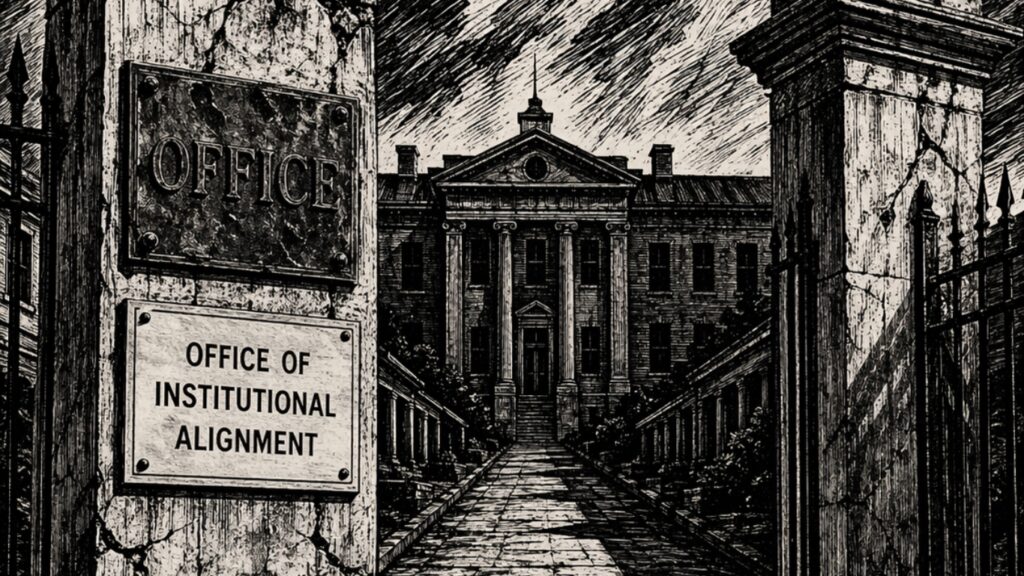
The Oklahoma Council of Public Affairs maintains a running dossier of headlines from the state’s public universities. A sample. Drag-queen programming at the University of Oklahoma this year exceeding $56,000. An Oklahoma State University Writing Center advertisement for antiracist tutors who would “accept all Englishes.” A Chinese Communist Party branch established at OSU. Andreas Malm’s How to Blow Up a Pipeline assigned as required reading in an OU graduate English seminar. And, after Governor Kevin Stitt issued Executive Order 2023-31 banning diversity, equity, and inclusion programs at state institutions, OU’s Chief Diversity Officer, Belinda Higgs Hyppolite, emailed school officials the same day with a promise: “no one is losing their jobs.” The programs were simply rebranded. Hyppolite’s own title was eventually changed from Vice President for Diversity and Inclusion to Vice President for Access and Opportunity.
This is Oklahoma. A state that voted for Donald Trump by more than 30 points in 2024, governed by Republicans at every level. Its flagship universities have ruled differently. They intend to keep ruling differently.
The pattern will be familiar to anyone who has followed red-state reform efforts in higher education over the past five years. The electorate passes a law or an executive order. The elected official announces compliance. The relevant institution holds a press briefing, updates a website, renames an office, and continues more or less as before. The tenured faculty remain. The administrators remain. The budgets persist. The dissertations continue to be written on climate justice and queer theory and antiracist pedagogy. A writing center in Stillwater keeps training tutors to treat standard English as a form of oppression. A graduate seminar in Norman keeps assigning a book-length argument that climate activists should start sabotaging oil pipelines.
Christopher Rufo has put the diagnostic point plainly. Public universities are creatures of the state; they “belong to and should reflect the values of the public.” The alternative is not academic freedom but bureaucratic rule by an unelected administrative class. In red states, the gap between the values of the public and the conduct of the institutions the public funds has become a chasm. The public pays. The bureaucracy governs. The public has no institutional voice sufficient to close the gap.
Oklahoma is a clarifying case because the evidence is so voluminous and the political orientation of the state so unambiguous. The Aim Higher Oklahoma dossier, maintained by the Oklahoma Council of Public Affairs, now runs to hundreds of entries. It documents an OU “social justice mathematics” professor who links the memorization of math facts to authoritarianism. DEI-style hiring requirements persisting in fields as removed from politics as plant physiology and atmospheric sciences. Students for Justice in Palestine chapters at OU, OSU, and the University of Central Oklahoma pledging to resist Immigration and Customs Enforcement operations on their campuses. A federal civil-rights complaint alleging racial discrimination at 12 Oklahoma colleges and universities. These are not isolated incidents. They are the steady output of a system operating according to its own internal logic, insulated from the electorate that pays for it.
Stitt signed the executive order in December 2023 with admirable directness. State agencies and universities were directed to review and eliminate non-critical DEI personnel, programs, and expenditures, with a compliance deadline of May 31, 2024. By the following fall, independent researchers documented that compliance was largely cosmetic. DEI staff at OU had kept their positions under new titles. OSU retained DEI requirements under different labels. University of Oklahoma President Joseph Harroz, Jr. issued a letter to students and alumni expressing “deep concern and uncertainty about the future.” The future arrived. It looked a great deal like the past.
Thomas Jefferson, who founded the University of Virginia, insisted that the university’s governing board conform to whatever laws the legislature might enact for the school’s governance. He understood what Rufo has recently rediscovered: the alternative to democratic accountability over public institutions is not liberty but the rule of an unaccountable administrative class. Oklahoma’s taxpayers, parents, and elected representatives are now living with the consequences of having ceded that ground. The executive orders are signed. The statutes are on the books. What is missing is the institutional will to make any of it mean something. Until that changes, the dossier will keep growing.