Fraud by Design
Ninety-four shell companies in a single Columbus office building, and a federal program designed to make their fraud unfalsifiable.
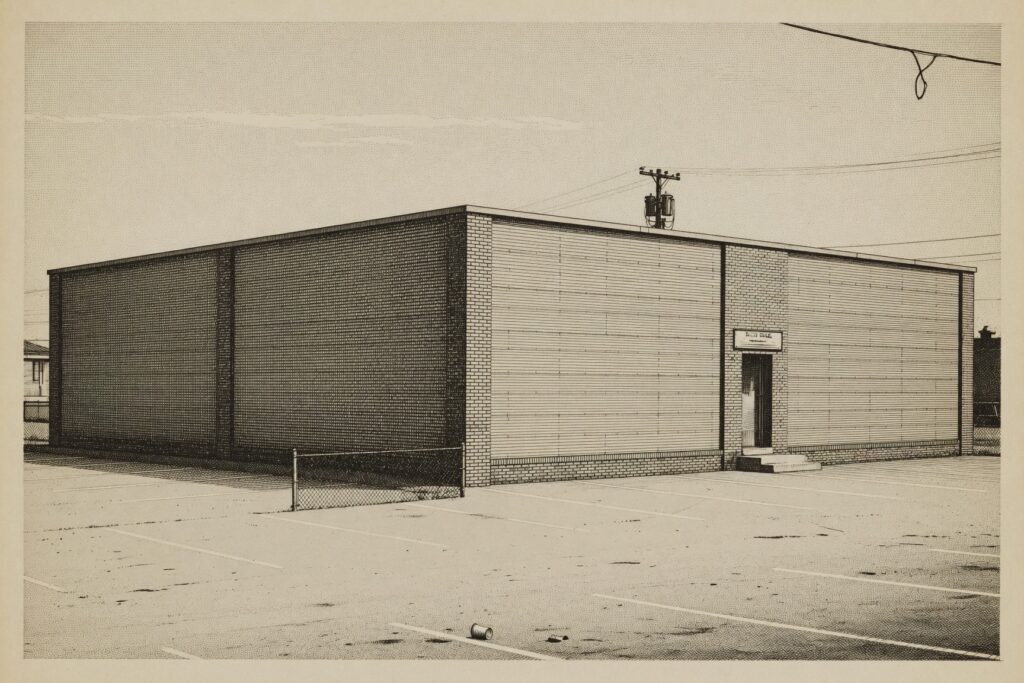
In a windowless office building at 6161 Busch Boulevard in Columbus, Ohio, 94 separate companies are registered to bill Medicaid for home health services. The interior is largely deserted. Doors are marked with handwritten notes claiming employees stepped out for a break, though the dust on the carpets says otherwise. Over the past several years, that single address has billed American taxpayers more than $66 million.
The Daily Wire’s Luke Rosiak, working with Parker Thayer of the Capital Research Center, has spent two months reviewing newly released Medicaid billing data made public for the first time by the now-shuttered Department of Government Efficiency. What he calls “the most blatant waste of federal dollars” of his two-decade career is, on its face, a story of fraud. Look closer and something stranger emerges: a system designed to make fraud unfalsifiable.
The Verification Problem
Ohio, like Minnesota, holds a federal waiver allowing Medicaid to pay for “personal services” delivered inside the homes of beneficiaries. The services include cooking, cleaning, and “companionship and conversation.” The providers are often relatives of the recipient. No medical credential is required. No supervisor walks the route. The unit being billed is, by design, a private conversation in a private kitchen. Ohio spent roughly $1 billion on home health care in 2024 under this framework.
You could not construct a more inviting target if you tried. And the federal government has done more than tolerate it. The Office of Refugee Resettlement, an agency within the Department of Health and Human Services, has for decades operated a Microenterprise Development Program that funds nonprofits to help newly arrived refugees launch small businesses, including home-based child care and similar in-home service ventures. The stated goal is “economic self-sufficiency.” The effect, in jurisdictions like Columbus and Minneapolis, has been the rapid proliferation of cottage industries whose only customer is the federal Treasury and whose only meaningful product is a billing code.
This is what we mean by program design. The 94 shell companies in a single Columbus office building are exactly what the system produces when the verification mechanism is a relative’s word and the payment mechanism is automatic.
A Pattern Repeating
The same architecture, applied elsewhere, yields the same result. Lyceum has previously documented the roughly $180 billion lost to fraud in California under Governor Gavin Newsom, where federal officials estimate Medi-Cal alone carries a 25 percent fraud rate. The Los Angeles findings now flowing out of the federal task force are the visible edge of that loss.
Vice President JD Vance’s Task Force to Eliminate Fraud has suspended 447 hospices and 23 home health agencies in Los Angeles, with estimated fraudulent billing exceeding $600 million. Earlier in May, the task force announced it had withheld $1.4 billion in federal funding from home health and hospice providers nationwide, and the Centers for Medicare and Medicaid Services imposed a six-month moratorium on new enrollments in those two categories. Ninety percent of the suspended Los Angeles providers, when notified that payments had stopped, simply went dark. They did not contest. They did not produce patient records. They vanished. Legitimate businesses dependent on Medicare reimbursements do not respond to a payment suspension by disappearing. The pattern is recognizable to anyone who has ever watched a confidence game end.
In Minnesota, the Feeding Our Future scheme stole more than $250 million in federal child-nutrition funds during the pandemic, with 78 defendants charged. Founder Aimee Bock and more than 60 others have been convicted or pleaded guilty. The Minnesota Office of the Legislative Auditor, reviewing the wreckage, found that state regulators saw the warning signs early and processed the payments anyway, in significant part because the nonprofit had threatened to accuse them of racial discrimination if they slowed down. The audit concluded that fear of being branded racist had a chilling effect on the agency’s oversight function. Bock won in court. The checks kept flowing.
The Government Accountability Office estimates that the federal government loses between $233 billion and $521 billion every year to fraud, somewhere between three and seven percent of all federal spending. That is the cost, in dollars, of pretending that the honor code is an auditing system.
A republic that cannot verify its own checks cannot honestly call itself a republic. The Trump Administration’s Task Force to Eliminate Fraud is doing necessary work, and suspending the billing is the right first move. But the deeper problem lies in the design itself, and in the political conditions that made the design untouchable. Programs that pay people to do unverifiable work for their own relatives inside private homes will be defrauded. State agencies that capitulate to accusations of racism will not stop them. The 94 names on the office doors at 6161 Busch Boulevard were never hidden. The state simply chose not to look.