European Christendom Isn’t Dead Yet
Tourists aren’t visiting the Paris mosques. They want the old France, the real France, the Paris of their dreams.
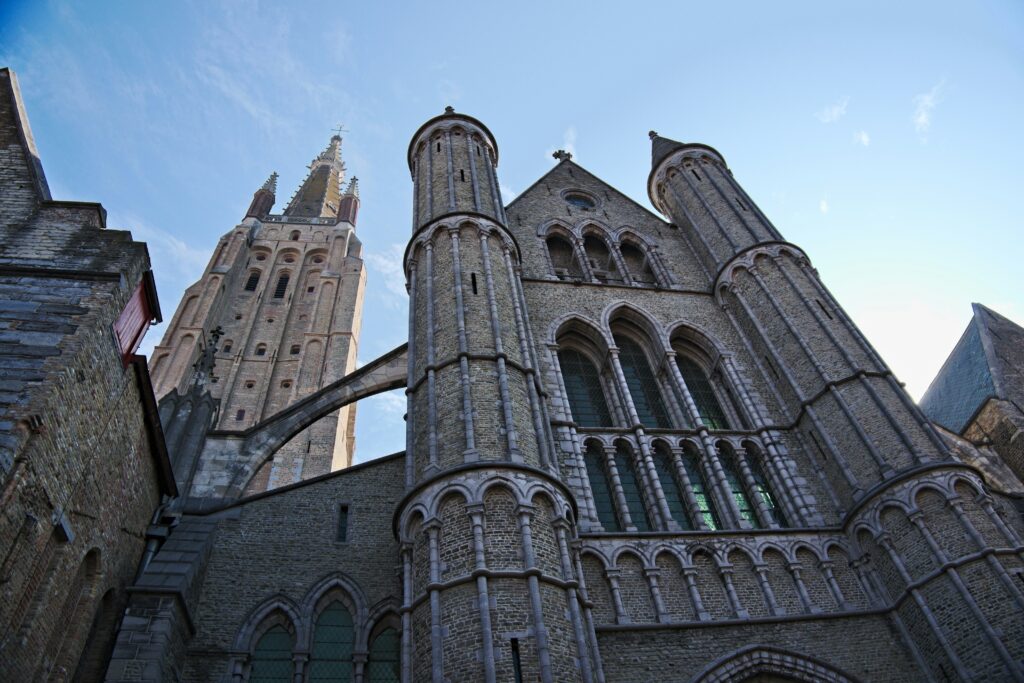
Earlier this year, I finally made my pilgrimage to the newly restored and rebuilt Notre-Dame Cathedral in Paris. I lived in Paris for a little while in my twenties and had gone inside several times as a curious tourist, but this was my first visit to the edifice as a practicing Catholic. (Technically, I was there to conduct research for a Catholic teen novel I’m working on that is set in and around the cathedral, but let’s face it: This was personal.)
At the opening of art historian Kenneth Clark’s famous 1969 television series, Civilisation, he is standing on the bank of the Seine with Notre-Dame in the background. He tells the audience that he can’t really define the word “civilization,” but, he says, “I think I can recognise it when I see it: and I am looking at it now.” It’s a wonder that it didn’t burn down in the fire of 2019; it will be a miracle if it survives the looming French Caliphate.
We had reserved visiting times and skipped the long line that wrapped around the sunbaked parvis. Since we weren’t going to Mass, we walked slowly around the interior perimeter, where the individual side chapels are. I noticed with dismay that each side chapel now has two pieces of artwork on its walls: one old, original painting of a religious scene and one postmodern abstract work hanging across from it. The modern French simply cannot help themselves when it comes to shoehorning trendy contemporary art into perfectly wonderful old tableaux. See, for example, the I. M. Pei glass pyramids in the courtyard of the Louvre.
But despite these “innovations,” the whole experience was reverent. There was a special area roped off for prayer before the Crown of Thorns, and pilgrims knelt in front of it.
When we came outside again into the glare, the parvis was even more crowded, with thousands waiting for their turn. I am aware that not all of them were penitent pilgrims waiting to genuflect before the relic of all relics. A great cathedral with lots of sweaty tourists waiting to enter it doesn’t actually prove that the heart of Catholic Europe still beats. When I once went to Mass at the Vatican, there was a small group in the pews and a large group of non-Catholics taking our picture, as though we were part of a display.
The day we arrived was a Sunday, so we went to Mass at a very old church, Saint-Germain-des-Prés. If you have ever visited Paris, this is the old stone church directly across the narrow street from Café Les Deux Magots. The seven o’clock Mass was absolutely packed. As we waited to go up for Communion, hundreds of people streamed up the aisle toward the altar. Nearly everyone was young, in their twenties, well-dressed, chic, and good-looking. How were there this many Mass-going young people in one of the nicest parts of Paris? I thought everyone in Paris, including the poshest Parisians, was a Marxist these days!
On the final Sunday of our trip, we decided to visit Église Saint-Sulpice for its eleven o’clock Mass. Saint-Sulpice is a massive, hulking edifice on the border between the fifth and sixth arrondissements, recognizable from distant vantage points by its two mismatched towers. It features prominently as one of the locations in the terrible novel The Da Vinci Code.
We walked into the church and immediately realized we were attending a school Mass. Not a regular school Mass: There were dozens of small children wearing white dresses and formal suits. A First Communion! What a treat! We listened as the priest called the name of each adorable child: Martine and Louisa and Gaston and Odile and Sophie and Vincent. We were surrounded by their families.
The thing you forget when you attend Mass in an old church in Europe is that there are no pews and no kneelers. You perch on rickety wooden chairs; you kneel on cold, hard stone. The chic couples in dresses and suits knelt there unflinching—stalwart and ramrod-straight. Coddled American Catholics, with our air-conditioned churches and plush upholstered kneelers, could never.
France, like the United States, is enjoying a small but real Catholic revival. Adult baptisms are at record highs, especially among teenagers and people in their twenties, and the number of Easter Vigil baptisms is increasing. Traditional parishes that offer some semblance of reverence are full, many of them with young, devout families.
And yet, the same conditions plaguing the rest of the West also apply. Once above 90 percent, the proportion of French people who identify as Catholic is now just 45 to 55 percent, and only around 5 percent attend Mass weekly.
Secularism, of course, is the new religion of France, and its main liturgical practice is welcoming millions of Muslim immigrants into its towns and cities.
But the tourists aren’t visiting the Paris mosques. They want one thing and one thing only: the old France, the real France, the Paris of their dreams. Notre-Dame is the battery that charges the whole place. When you first see its towers rising as you sail past on a boat tour or speed down the quay in a taxi, you catch your breath.
Notre-Dame de Paris persists. She survives. Take good care of her, France.