What Happens Now?
The choices Republicans make now will determine more than who occupies Graham's vacant chairs.
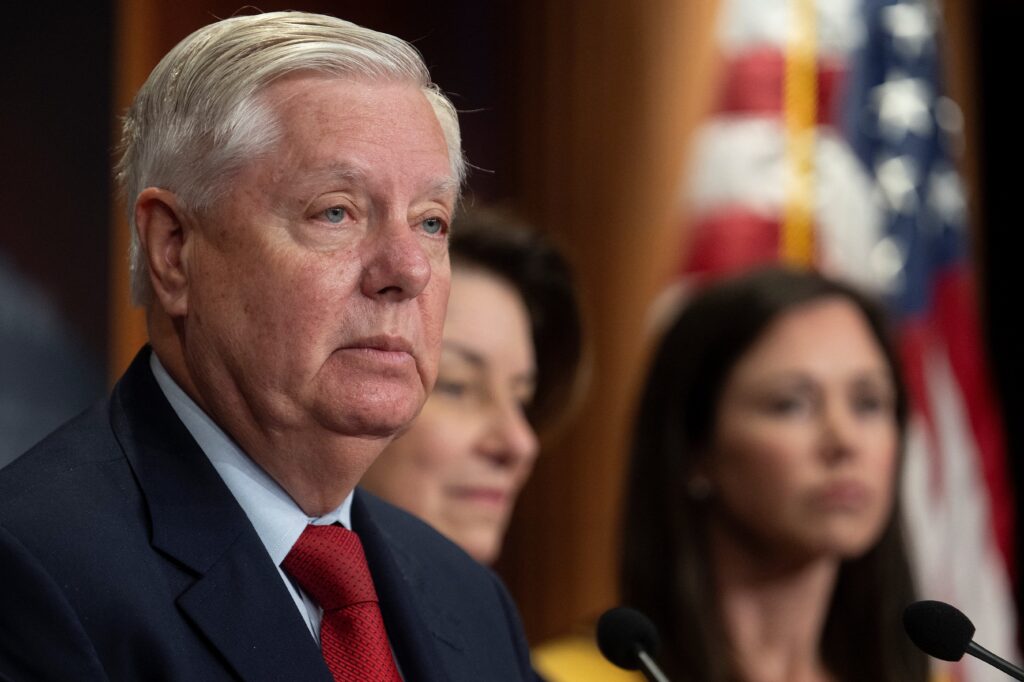
Lindsey Graham’s sudden death leaves four vacancies on some of the Senate’s most important committees, and an opening atop a panel critical to Republicans if they try to pass another reconciliation bill this year. Graham chaired the Senate Budget Committee. He also sat on its Appropriations, Judiciary, and Environment and Public Works committees. His death has just set off another round of musical chairs inside the Senate Republican Conference.
The most pressing question is that of Budget. Graham’s absence leaves the committee without a chairman just as Republicans weigh using reconciliation again to sidestep a Democratic filibuster and advance parts of their agenda — including the SAVE America Act. That opening matters more than most. The Budget chairman crafts the chamber’s budget resolution, which unlocks reconciliation, and then helps write the resulting bill and steer it through the Senate. Republicans can’t use the filibuster-proof process without first choosing who replaces Graham on the panel.
Senate GOP conference rules empower each committee’s Republican members to choose its chairman — or its ranking member when the party is in the minority. The full conference must ratify that choice, but it almost always does. Committee Republicans usually hand the gavel to their most senior member. They are not required to. Their conference rules state that the chairman “need not be the member with the longest consecutive service” on the panel.
Those rules — and past practice — point to Ron Johnson (R-Wis.) Chuck Grassley (R-Iowa) and Mike Crapo (R-Idaho) both outrank Johnson on Budget. But Grassley already chairs Judiciary and Crapo chairs Finance. Johnson comes next, and he doesn’t currently chair a committee. Budget Republicans could follow seniority and select Johnson. They could persuade Grassley or Crapo to switch gavels. Or they could depart from seniority and reach further down the roster. Johnson remains the likeliest choice: handing the gavel to Grassley or Crapo would open vacancies atop other committees that Republicans must then fill, and the party rarely breaks from seniority.
Graham’s death also reshapes who will serve as the top Republican on the Senate Judiciary Committee in the next Congress. Grassley, the panel’s current chairman, must surrender the gavel at year’s end. Conference rules allow a senator to serve six years as a committee’s chairman and six as its ranking member. Grassley chaired Judiciary from 2015 through 2018, and again in 2025 and 2026. He served as its ranking Republican from 2011 through 2014, and again in 2021 and 2022. He has reached both limits. Grassley cannot continue as the panel’s top Republican next Congress unless the conference grants him a waiver, which is unlikely.
After Grassley, Graham was the Judiciary Committee’s most senior Republican. His death elevates John Cornyn (R-Texas). But Cornyn lost his primary and will leave the Senate when his term ends in January. That leaves Mike Lee (R-Utah) as the next likely successor.
Seniority does not guarantee Lee the job. Judiciary Republicans may choose someone else, and the full conference must sign off on whoever they select. But passing over Lee for a more junior member is unlikely.
The choices Republicans make now will determine more than who occupies Graham’s vacant chairs. They will shape who controls reconciliation this year — and who presides over judicial nominations, oversight of the Justice Department, and some of the Senate’s most consequential legislative battles once the music stops.