Where Granite Meets Light
Hassam asks us to linger over the physical country, to recognize the beauty that exists before political arguments begin and remains after they exhaust themselves.
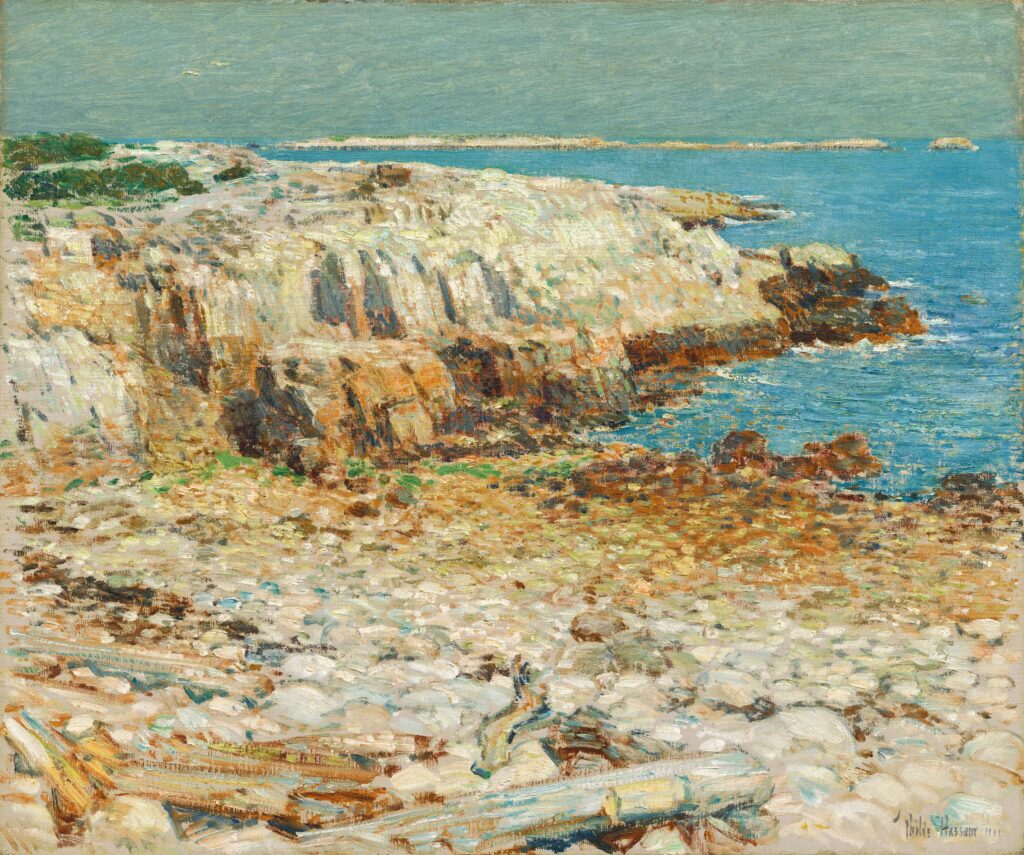
A country is loved in particulars: the color of its coastal water, the shape of its headlands, the pale stone exposed by the tide. Childe Hassam’s A North East Headland (1901) gives that attachment a visible form. Cream and ochre rocks stretch toward an intensely blue sea, their broken surfaces catching the light in strokes of lavender and gold. The close attention makes this stretch of American shoreline feel worthy of the care ordinarily reserved for a portrait of someone beloved.
There is a quiet patriotism in painting a place this carefully. Hassam asks us to linger over the physical country, to recognize the beauty that exists before political arguments begin and remains after they exhaust themselves. The solidity of the headland and the changing light suggest two qualities any enduring nation needs: something firm to inherit, and the capacity to see it freshly. Here, the American landscape becomes a shared possession in the fullest sense, a place whose beauty carries an invitation to belong and a responsibility to preserve.