Vindication But Not Yet Victory
It is no longer the skeptics who must explain their doubts; it is the defenders of this indefensible system.
For six years, those Americans who said the 2020 election appeared to be stolen were told to be quiet. They were called election deniers, conspiracy theorists, and a threat to democracy itself. They were censored, deplatformed, and investigated. Some were called before grand juries. Some were disbarred.
Through it all they made a simple argument: an election conducted on software-driven machines made in a foreign country, flooded with tens of millions of unverifiable mail-in ballots, in the middle of a declared political war against the United States by Communist China, could not honestly be certified as secure. No serious person, they said, could look at how that election was conducted and call it fair.
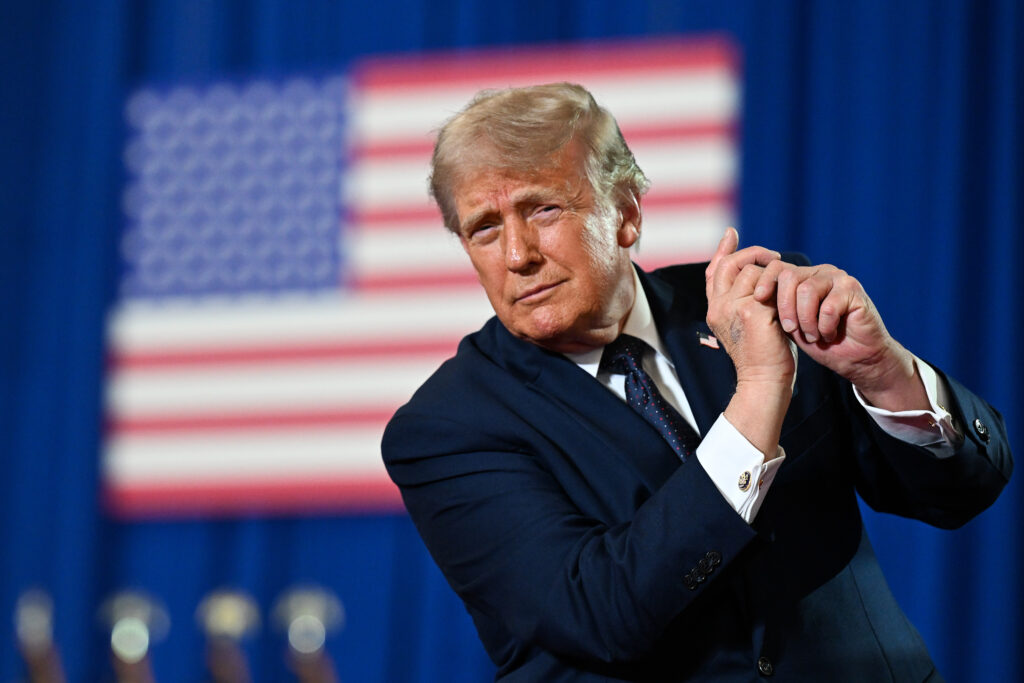
Thursday night, the President of the United States stood before the American people and began to prove it.
The President’s address, and the declassified materials behind it, put before the public what the intelligence community has long possessed. Communist China, he reported, obtained the voter registration files of some 220 million Americans in the 2020 cycle — a breach of the electoral system’s foundation that was never disclosed to the voters whose data was taken.
This should surprise no one who has been paying attention. The Chinese Communist Party declared a “People’s War” on the United States in May of 2019. The CCP spends an estimated $20 billion a year on intelligence and influence operations inside this country. We knew before the 2020 election that foreign actors had probed voter databases in more than a dozen states. To believe that a regime with the motive, the money, and the demonstrated capability simply declined to act on the most consequential election in the world is not skepticism. It is willful blindness. That all this critical intelligence was kept from President Trump was criminal.
The President said the electronic voting and ballot-counting machines had vulnerabilities that were concealed from the public, and that the system as constituted is “not defensible.” He is right, and this was never really in dispute among honest people. The 2020 HBO left-wing documentary, Kill Chain, The Cyber War on America’s Elections, demonstrated the machines’ vulnerabilities in detail. It featured Senators Elizabeth Warren, Ron Wyden, and Amy Klobuchar who eagerly agreed. This was the dominant left-wing media narrative prior to the election.
These electronic voting systems run proprietary software no citizen may inspect, on hardware containing components manufactured in China. The vulnerability is not this machine or that machine. The vulnerability is the architecture itself: an opaque, software-driven counting process interposed between the voter and the result, exposed to nation-state cyber capabilities that no county election office on earth can detect let alone defeat. Ask any cybersecurity professional whether he can guarantee such a system against the Chinese Communist Party’s Ministry of State Security and their cyber army of between 600,000 to one million men. The answer is no.
And the President said what the bipartisan commission of Jimmy Carter and James Baker said back in 2005: mail-in balloting is the largest single source of potential fraud in American elections. A ballot is radically easier to counterfeit than a twenty-dollar bill; it carries none of the currency’s security features. Implicit in the acquisition of America’s voter rolls by Communist China is the idea that they could have taken millions of names of low-propensity voters and with counterfeit ballots made in China, “voted” these ballots, inserted them into the US mail system, and decided the election for Joe Biden. It is frighteningly simple.
So, the skeptics were vindicated Thursday night. But vindication is not victory, and it is worth saying plainly what vindication does and does not mean. It does not mean we relitigate 2020 forever, satisfying as it may be to see the lies and gaslighting of the last six years collapse. The purpose of establishing what happened in 2020 is to make certain it can never happen again — not in November 2026, which is now mere months away, and not in 2028, when the presidency is again at stake. Communist China that stole the files of 220 million voters has not retired from the field. It is still at war.
What must be done is what the election integrity community has proposed for years, and it is not complicated.
First, the electronic voting machines must be outlawed and replaced with a system of paper ballots, marked by hand and counted by hand, at the precinct, on election night, under the eyes of observers from both parties, with results posted before the counters go home. Computerized counting is a convenience we cannot afford; convenience is not a constitutional principle, but the consent of the governed is.
Second, the drastic reduction of mail-in voting. Absentee ballots should return to what they were for most of American history: an accommodation for the deployed soldier, the permanently infirmed, and the citizen genuinely abroad, with signature verification and chain of custody rigorously enforced. Today it is a mass convenience that severs the ballot from accountability.
Third, citizenship verification and honest voter rolls. Congress should pass the SAVE America Act the President called for, requiring documentary proof of citizenship and compelling the states to purge the dead and the ineligible on a continuous basis. Federal elections are a federal concern, and minimum national standards for their conduct are both constitutional and overdue.
Fourth, elections must be treated as what they are: critical national security infrastructure under attack by a foreign enemy. That means full transparency about intrusions, real consequences for officials who conceal them, and counterintelligence resources commensurate with a peer competitor who has declared war against this country.
The media will spend the coming days doing what they have done since 2020: dismissing the evidence, deriding the messenger, and assuring Americans there is nothing to see here. But it is no longer the skeptics who must explain their doubts; it is the defenders of this indefensible system who must explain why the world’s oldest constitutional republic counts its votes on machines it cannot inspect, by mail it cannot verify, under the gaze of an enemy it will not name.
Thursday night was the beginning of the truth coming out. Whether it is also the beginning of secure elections depends on what Congress, the states and President Trump do between now and November. Quite likely it will fall to President Trump to take extraordinary steps by executive action to achieve.
One need only consider what we would do as a nation if we knew with absolute certainty that a nation-state foreign adversary was going to attack our election system. Would we sit by and watch, or would we do whatever was required to secure the integrity of a federal election?
How we answer this question now, at this critical juncture, will decide the future of this Republic. Let us pray common sense prevails.