Think More: Thursday, July 2, 2026
The birthright ruling and the ICE surge, the border's human ledger, L.A. Metro's fare collapse, the FCC and the airwaves, and the Declaration at 250.
Lead · After the Birthright Ruling
The Court Upholds Birthright Citizenship; ICE Answers With 10,000 Arrests in Five Days
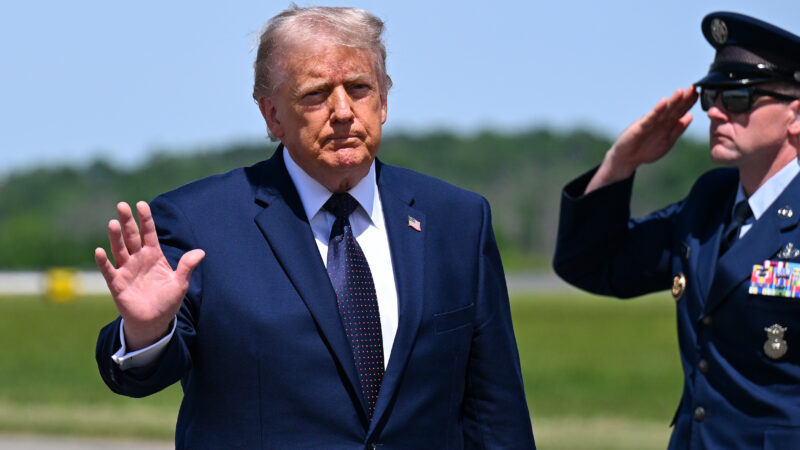
The Supreme Court’s 6-3 ruling on Tuesday rejected President Trump’s bid to end birthright citizenship, and the administration answered with force: Department of Homeland Security figures obtained by Fox News show more than 10,000 ICE arrests in the past five days. Nearly 70% of those arrested have been charged with or convicted of crimes, DHS says, and Trump now wants Congress to finish what his executive order could not.
After the Birthright Ruling
Birth Tourism Lands in the Crosshairs as the Hill Erupts Over Sanctuary Policies
Hours after the ruling, Border Czar Tom Homan promised to “triple, quadruple down” on birth tourism investigations; researchers estimate the practice yields 5,000 to 26,000 births annually. On Capitol Hill, a Judiciary subcommittee hearing on sanctuary policies dissolved into a shouting match between Reps. Mike Lawler and Jamie Raskin as victims’ families looked on.
The Bill Comes Due
Angel Families Describe a Justice System With Two Tiers
Ashe Short gathers the stories of Angel Families, parents whose children were killed by illegal immigrants who fled, vanished, or drew light sentences. One mother calls Americans “second-class citizens” in their own courts. Several perpetrators remain on ICE’s Most Wanted list; one was removed from it under the Biden administration and restored only this April.
Oversight Republicans Press the Case of 300,000 Unaccompanied Children
House Oversight Committee | oversight.house.gov
The Subcommittee on Federal Law Enforcement convened its second roundtable on unaccompanied alien children, roughly 300,000 of whom were released during the Biden years without proper legal oversight. Witnesses described cartel exploitation and fraudulent sponsorships, and Chairman Clay Higgins noted that Democrats declined to attend. A comprehensive congressional review continues.
A Federal Trafficking Indictment Lands, and the South L.A. Motel Stays Open
Chris Bray | Tell Me How This Ends
Chris Bray reads the newly unsealed 48-count federal indictment of an alleged South Los Angeles child sex-trafficking ring run from the Stadium Inn motel, whose manager allegedly took about $65,000 to look the other way. Bray visited the same afternoon and found the motel open for business. Federal agents also raided it in 2025.
The Wages of Utopia
Los Angeles Metro Stopped Checking Fares and Handed the Trains to Criminals
Christopher F. Rufo & Haley Strack | City Journal
Christopher F. Rufo and Haley Strack trace how activists branded fare enforcement racist and pressured Los Angeles Metro until checks collapsed, from as many as one million per month in 2016 to about 5,000 in 2025. Crime more than doubled, and riders have been beaten, stabbed, and killed while the agency tries everything but policing.
Roger Kimball: Socialism Persists on Envy and Fails on Contact With Reality
Writing as Democratic Socialists sweep New York primaries and Keir Starmer resigns in Britain, Roger Kimball argues that socialism runs on emotional incontinence and envy, from Rousseau to Robespierre to new candidates who would abolish ICE, prisons, and borders. Wherever it triumphs, immiseration follows; reality, he writes, contains a self-correcting guidance system.
The collapse of L.A. Metro fare enforcement: City Journal, from Metro records and officials
5,000
Fare checks per month in 2025
50%
Riders who do not pay
90%+
Violent offenders who evade fares
Monopolies of the Mind
The FCC Puts Broadcasters’ “Free Monopoly” on Notice
The Federalist reports FCC Chairman Brendan Carr’s vow to end what he calls legacy broadcasters’ “free monopoly” on the public airwaves by enforcing the equal time rule against talk shows long treated as news programming. Enforcement proceedings against ABC’s The View are already underway, and the old guard, Carr argues, brought this on itself.
Georgetown Bankrolls a Doha-Partnered Study of Europe’s “Far-Right Populism”
Erik Durneika examines Georgetown’s inaugural DC-Doha research grants, which include a project on tackling “far-right populism” in Europe, funded in the $35,000 to $50,000 range. With the Middle East Forum tallying over $971 million in Qatari money behind the university since 2005, he argues the topic serves Doha’s interest in weakening Europe’s national populists.
The Declaration at 250
Justin Dyer on the Declaration as an Act of Recovery
Justin Dyer | The American Mind
In an excerpt from his Claremont Review of Books essay, Justin Dyer commends Matthew Spalding’s The Making of the American Mind as an act of recovery for the Semiquincentennial. The Declaration, Spalding argues, is grounded in the classical and Christian natural law tradition rather than Lockean skepticism, and it remains the founding’s central act.
Creed, Culture, or Covenant: 28 Thinkers Debate the Declaration
For the semiquincentennial, Modern Age assembles 28 thinkers, Michael Anton, Yuval Levin, Yoram Hazony, and Daniel J. Mahoney among them, to debate what the Declaration should mean today. Creedal nation, English inheritance, Christian covenant: the symposium airs the right’s deepest disagreement about America’s origin and holds every side to the light.
The American Character
Benjamin Franklin, the Happiest Founding Father
Christopher Flannery | Claremont Review of Books
Christopher Flannery rescues Benjamin Franklin from Mark Twain’s jokes and Max Weber’s iron cage, presenting the printer, scientist, and diplomat as a classical gentleman with an American twist. Franklin joined Aristotle in holding that virtue is the source of happiness, which made him, Flannery argues, our happiest founding father in the richest sense.
The Innovation Nation: Building America Without Asking Permission
Writing for Lyceum, Scott Rasmussen traces the American habit of building without permission, from Harvard’s defiant 1636 founding to the Wright brothers, who flew nine weeks after a government-funded flying machine sank in the Potomac. Politicians make the headlines, he argues, but innovators move the nation, and AI will prove it again.