The Real Lesson of Belfast
For decades, Western elites have treated immigration enforcement as optional. Belfast shows the limits of that thinking.
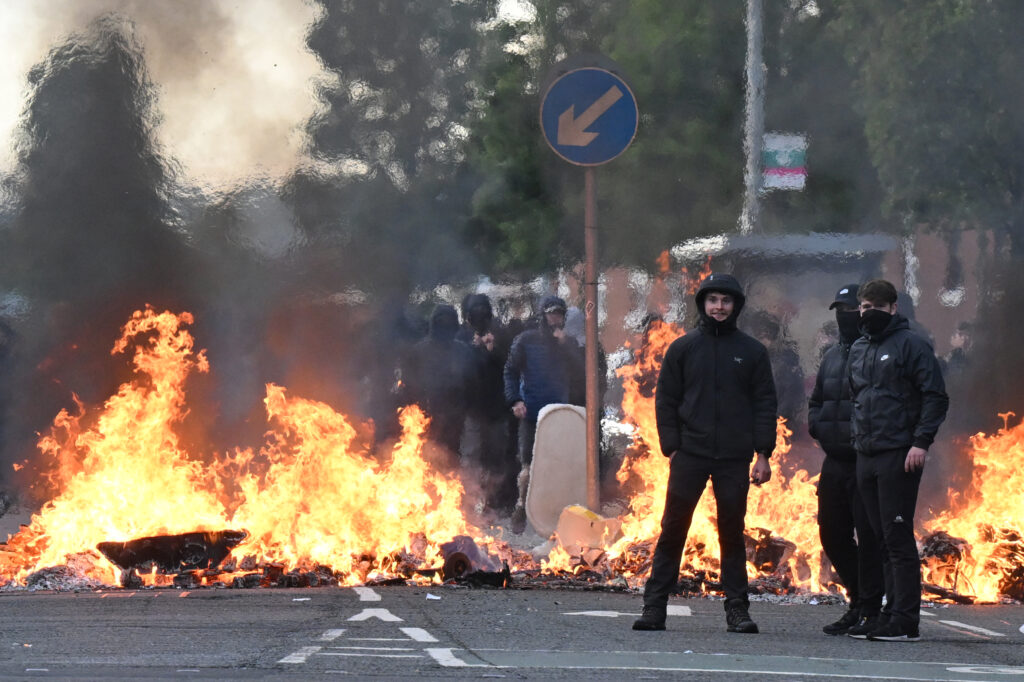
A man named Stephen Ogilvie is lying in a coma after a brutal knife attack on a Belfast street. If he wakes, he will have lost at least one eye and will carry severe scars on his face and neck for the rest of his life.
The man charged with attempting to murder him is a 30-year-old Sudanese national who entered the United Kingdom in 2023 after traveling through Paris and Dublin before claiming asylum. In the days after the attack, Belfast erupted. Homes were burned, businesses were attacked, and families fled their neighborhoods.
The political class quickly condemned the riots. That’s understandable — no one wants to see the city they govern burn. But politicians should also be asking why this crime, unlike others before it, triggered days of unrest.
For decades, Western elites have treated immigration enforcement as optional. Citizens were told that demographic change was inevitable, deportations were impossible, and concerns about social cohesion were ignorant or prejudiced. Belfast shows the limits of that thinking. Communities can absorb only so much before people conclude that the institutions meant to protect them no longer work. At that point, they stop waiting for the government to act.
Mass deportations are the moderate option. They are a lawful and peaceful way for a government to regain control before citizens begin seeking remedies of their own. Governments cannot ignore the public’s demand for order indefinitely and then claim surprise when disorder follows.
The truly radical proposition is that millions of people can enter Western countries illegally, remain there indefinitely, overwhelm asylum systems, strain public services, transform communities, and produce no serious political consequences. That is either wishful thinking or a willingness to sacrifice social cohesion for ideological ends.
Belfast is a reminder that public trust has limits. The question is whether governments respond through orderly enforcement or wait until people decide the state has abandoned them.
More and more citizens across the West appear to believe the latter. Americans should take Belfast as a warning: If we do not learn the lesson now, we may learn it later under much worse circumstances.
The media prefers to focus on the riots because riots are visible. Burning homes and shattered storefronts make dramatic images. They also allow politicians to condemn the people in the streets without discussing the policies that brought them there.
The deeper issue is why public trust has fallen so far that one crime can set off days of unrest. When a government cannot control its borders, people lose faith in its ability to govern. When it refuses to enforce its own laws, it teaches the public that those laws are optional. The real crisis is the collapse of public trust.
That trust will not be restored by speeches, commissions, or another round of promises from the same politicians. It will be restored by enforcement. Mass deportations matter because they show that the state is still capable of governing, that borders still exist, and that the law still has force. The unrest, rather than create the crisis, exposed it.
Mass deportations remain the most peaceful way to restore public trust before citizens begin pursuing solutions outside the law.