The Radical Left’s Religion of Destruction
We’ve been here before, and it wasn’t really that long ago.
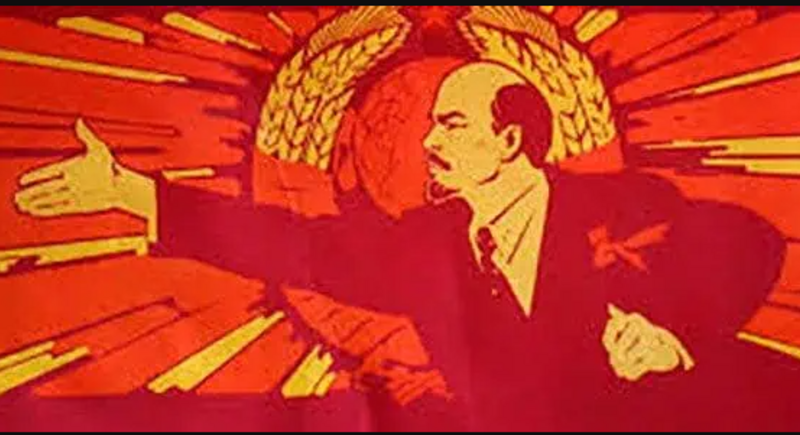
The oldest revolutionary tale is that destruction becomes justice if you call it rebirth. It’s a story that’s been told more times than we can hope to count. In Boris Pasternak’s novel about the Soviet Revolution, Doctor Zhivago, the title character shares a train compartment with a proud communist who is happy to explain the nature of current events.
“What you call disorder,” he explains, “is just as normal a state of things as the order you are so keen on. All this destruction — it’s the right and proper preliminary stage of a wide, constructive plan. Society has not yet disintegrated sufficiently. It must fall to pieces completely, then a genuinely revolutionary government will put the pieces together on a completely new basis.”
Society disintegrates, which is really good news, and then the right people can reassemble an entirely new order. Kill a bunch of people, destroy existing institutions, wake up refreshed. People who share this radical and stupid vision are always with us, but they have moments when they drag a bunch of new followers in the slough beside them. We’re in one of those moments.
Famously, an anti-Israel group at Columbia University has now announced that it’s fighting for “the total eradication of Western civilization.” The best-known of that organization’s co-founders is Darializa Avila Chevalier, who just won the Democratic nomination for a House seat that represents heavily Democratic upper Manhattan and parts of the Bronx. An advocate for the destruction of Western civilization is almost certainly headed for Congress. Insert your own joke here about Congress trying to destroy Western civilization anyway, but she appears to really mean it.
In a group biography of the Old Bolsheviks, the core group of activists who prepared for communist revolution in Czarist Russia and died at the hands of Joseph Stalin when their dream came true, the historian Yuri Slezkine framed his work as a history of a secularized religious movement. The instincts were the same, he argued. Slezkine compared the organizers of the October Revolution to the people throughout history who have sold all their belongings and waited on a hillside for God to destroy the world and usher in the next one: abandon the existing order, bring on the new order. Starve yourself in the rejection of what is so that what will be can show up.
Slezkine runs through a long list of burn-everything-to-fix-everything movements, including the catastrophic Taiping Rebellion in 19th-century China – which was led by a man who announced that he was the little brother of Jesus Christ.
The doctrine of creation through renunciation and destruction is called millenarianism, and Slezkine describes it as the ideology of history’s losers. “Millenarianism is the vengeful fantasy of the dispossessed, the hope for a great awakening in the midst of a great disappointment,” he writes. It’s now the vengeful fantasy of career grad students and professional antifa dorks, stranded in a culture and an economy that doesn’t have much use for them, even as they run for Congress.
We’ve been here before, and it wasn’t really that long ago. In the late 1960s, radical sociology students attacked the leading theorists of the Frankfurt School, accusing their fellow Marxist intellectuals of enjoying tenure and comfort. Too much theory, they said, and not enough brutal revolutionary practice.
They quoted proudly from earlier radical doctrine: “A revolutionary career does not lead to banquets and honorary titles, interesting research and professorial wages. It leads to misery, disgrace, ingratitude, prison and into the unknown, illuminated by only an almost superhuman belief.” If you’re miserable and being destroyed, you’re doing it right.
If you haven’t already, this summer is the time to read Bryan Burrough’s book about 1960s student movements that turned into idiotic 1970s violent left-wing terrorist groups. Days of Rage tells a long story about radicals who knew they had lost. America didn’t share their political vision, so Americans had to be punished with bombs and fear. Burrough quotes Mark Rudd, an SDS leader who joined the radical group called the Weatherman, at length:
“We were by now a classic cult,” Rudd wrote, “true believers surrounded by a hostile world that we rejected and that rejected us in return. We had a holy faith, revolution, which could not be shaken.”
Like Slezkine, Rudd compares end-stage political radicalism to religious faith, a passionate certainty shared among the faithful. The radical groups the 1970s all just fell apart, by the way, leading to embarrassment and tenure.
The question now is how many. We’re hearing the ridiculous language of millenarianism, as privileged Ivy League student groups promise to tear down Western civilization from the sociology department. But we have yet to see how serious and how widely distributed the turn to radical destruction as an ideology will be. The question will be tedious to answer, but we’ll see.