The American Dream
This story appears annually at tomklingenstein.com on August 28, in commemoration of 250 years—and counting—of American independence.
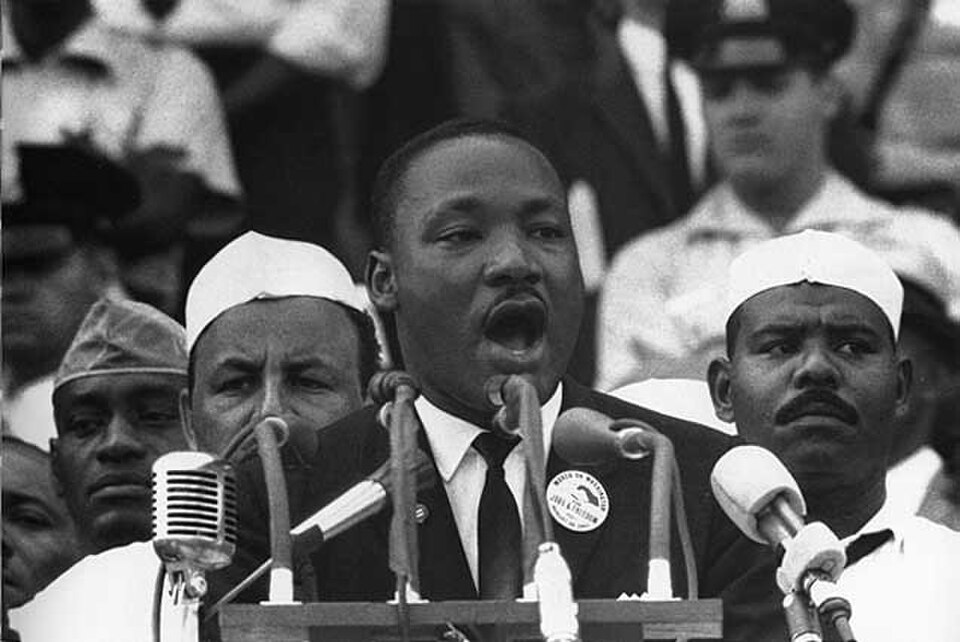
“I have a dream that one day this nation will rise up and live out the true meaning of its creed: ‘We hold these truths to be self-evident, that all men are created equal.’” These are among the most well-known words uttered by an American in the 20th century.
The words were spoken by Martin Luther King, Jr., on the steps of the Lincoln Memorial in Washington, D.C., on August 28, 1963. King opened his now-famous speech with a phrase already familiar to Americans: “Five score years ago.” By the number of the years, King meant to link his speech with the Emancipation Proclamation, issued by Abraham Lincoln a hundred years earlier in the midst of the Civil War: the “momentous decree,” as King said, that “came as a great beacon light of hope to millions of Negro slaves.”
But by the familiar Biblical language in which he expressed these years—“five score”—King meant as well to connect his speech to the most famous speech of the 19th century, Lincoln’s Gettysburg Address, which began: “Four score and seven years ago our fathers brought forth on this continent, a new nation, conceived in Liberty, and dedicated to the proposition that all men are created equal.”
In calling our attention to the American “creed,” King quotes the most familiar of all American words, from the Declaration of Independence, written by Thomas Jefferson and made official on July 4, 1776: “We hold these truths to be self-evident, that all men are created equal.”
What King in the 20th century called a “creed,” Lincoln in the 19th century called a “proposition,” and Jefferson in the 18thcentury called a “self-evident truth,” is an idea that doesn’t change in the course of the centuries: the truth that “all men are created equal.” This means that all men are equally endowed with certain unalienable rights; no man may rightly rule another without his consent; and governments are instituted to secure the equal rights of all the governed.
This truth, as Lincoln said, is the central idea from which all other American ideas radiate: It is the standard by which Americans from the beginning have judged the successes and failures of their experiment in self-government. King’s dream, the American Dream, is the aspiration, defining every generation of Americans, to live up to this high standard.
Proclaiming that all men everywhere and at all times possess by nature equal rights to life, liberty, and the pursuit of happiness, the American founders undertook the historic effort to secure these rights, so far as they thought they could then be secured, to a small people in a particular place and time. They were acutely conscious of the limits of their ability to secure these rights. It was all the new republic could do in the first century of its existence to keep the unprecedented experiment in freedom from failing miserably at home as the principles espoused in the American revolution slowly and uncertainly began to take hold on the minds if not yet in the politics of other peoples in the world.
In the course of human events, the American people have many times fallen beneath the high standard they set for themselves at the beginning. They have strayed from their principle, fought a civil war over it, become confused about it, and allowed misunderstood self-interest to obscure it. But, as King’s speech reminds us, it has always been through our fidelity to America’s “ancient faith” that, in Lincoln’s words, we have found ourselves “under the government of a system of political institutions conducing more essentially to the ends of civil and religious liberty than any of which the history of former times tells us.”
The anniversary of the most famous American speech in the 20th century is an auspicious time to trace the golden thread connecting it to the most famous American speech of the 19thcentury and to the most famous American words of all, first proclaimed to the world in the 18th century, which gave immortal expression to the timeless source of the American Dream.