Report: Britain’s Chagos Deal Could Put a Critical U.S. Military Base at Risk
Beijing’s growing influence throughout the Indian Ocean have made Diego Garcia more strategically important, not less.
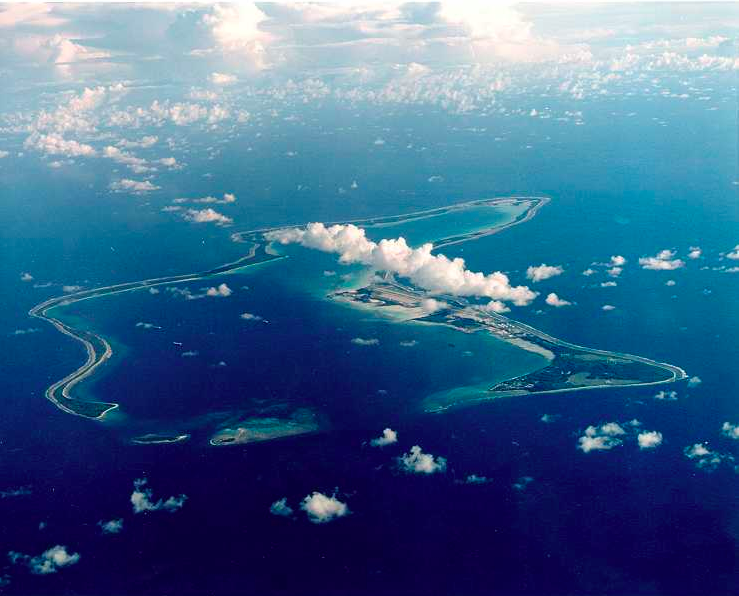
A new report from the Center for Renewing America is warning that Britain’s plan to transfer sovereignty over the Chagos Archipelago to Mauritius could jeopardize one of the United States’ most important military positions and expand China’s strategic opportunities in the Indian Ocean.
At the center of the dispute is Diego Garcia, the largest island in the Chagos chain and home to a joint American-British military installation that has supported operations in the Gulf War, Afghanistan, Iraq and counterterrorism campaigns. Its location gives the United States and Britain access to East Africa, the Persian Gulf, South Asia and Southeast Asia, making it an unusually valuable base for long-range aviation, naval logistics, intelligence and military resupply.
Britain agreed in May 2025 to recognize Mauritian sovereignty over the Chagos Archipelago, including Diego Garcia. Under the agreement, Britain would retain a 99-year lease allowing American and British operations at the base to continue, while paying Mauritius annual lease payments and development assistance. The agreement also establishes support for displaced Chagossians, thousands of whom were expelled from the islands between 1968 and 1973.
But the Center for Renewing America argues that the deal solves a problem Britain was never legally required to solve.
The report notes that the International Court of Justice’s 2019 finding against continued British administration of the islands was an advisory opinion rather than a binding judgment. It therefore argues that international law does not compel Britain to surrender sovereignty and describes the agreement instead as a political choice by the British government.
The larger concern, according to the report, is China.
The authors argue that Beijing’s growing naval presence, infrastructure projects and diplomatic relationships throughout the Indian Ocean have made Diego Garcia more strategically important, not less. China has developed ports and partnerships in countries including Sri Lanka and Pakistan, and the report warns that increasing Chinese influence around the archipelago could complicate American and British military planning.
The report goes further, characterizing Mauritius as a “de facto Chinese ally” and pointing to its economic relationship with Beijing as a reason to doubt whether guarantees protecting Diego Garcia will remain sufficient over the course of a 99-year arrangement. It also criticizes Mauritian legislation making it a criminal offense to “misrepresent” the country’s claimed sovereignty over territory including the Chagos Islands, arguing that such laws could intimidate British officials, researchers, businesses and Chagossians who dispute Mauritius’s position.
The Center also raises concerns about Jonathan Powell, the British negotiator involved in the agreement, arguing that his approach toward China has been too accommodating and citing controversies over his contacts in Beijing and allegations surrounding a British investigation into suspected Chinese espionage.
President Donald Trump has publicly opposed the agreement, according to the report, warning that it could threaten American military operations and criticizing the transfer of the islands to a country with economic ties to China and Iran. The Trump administration also explored the possibility in June of purchasing Chagos, although Mauritius rejected the suggestion that its sovereignty was negotiable. That possibility nevertheless forms the basis of the report’s most aggressive recommendation.
Rather than simply accepting the new arrangement, the Center argues that Washington should seek legally binding security guarantees preventing Chinese military, intelligence or dual-use activity anywhere in the archipelago. If those guarantees cannot be secured, it says the United States should consider negotiating direct sovereignty or long-term American administration over the islands.
And in what it describes as an “extreme contingency,” the report says Washington should even consider outright seizure of the Chagos Islands to guarantee continued control of Diego Garcia, comparing such a move to the strategic logic that historically drove American intervention in Panama and protection of the Panama Canal.
That proposal is extraordinary, but it follows from the report’s broader contention: that Western governments are treating a vital piece of military infrastructure primarily as a question of decolonization and international law when they should be thinking in terms of great-power competition.
The report argues that the coming struggle over the Indian Ocean will increasingly pit American and allied interests against China’s efforts to expand its military, economic and diplomatic reach. From that perspective, sovereignty over Chagos is not a historical technicality. It determines who ultimately controls the territory surrounding a base that Washington may depend upon in a future conflict.
The Center’s conclusion is therefore simple: Whatever diplomatic settlement Britain reaches with Mauritius, preserving the security and operational independence of Diego Garcia should take precedence. The United States, it argues, should be prepared to exert substantial pressure — and potentially assume control itself — rather than gamble a strategically indispensable military position on assurances that may have to survive for the next century.