Nikole Hannah-Jones and Parental Idealism
A decent politics has to begin from the stubborn fact that human beings love particular people more than humanity in the abstract.
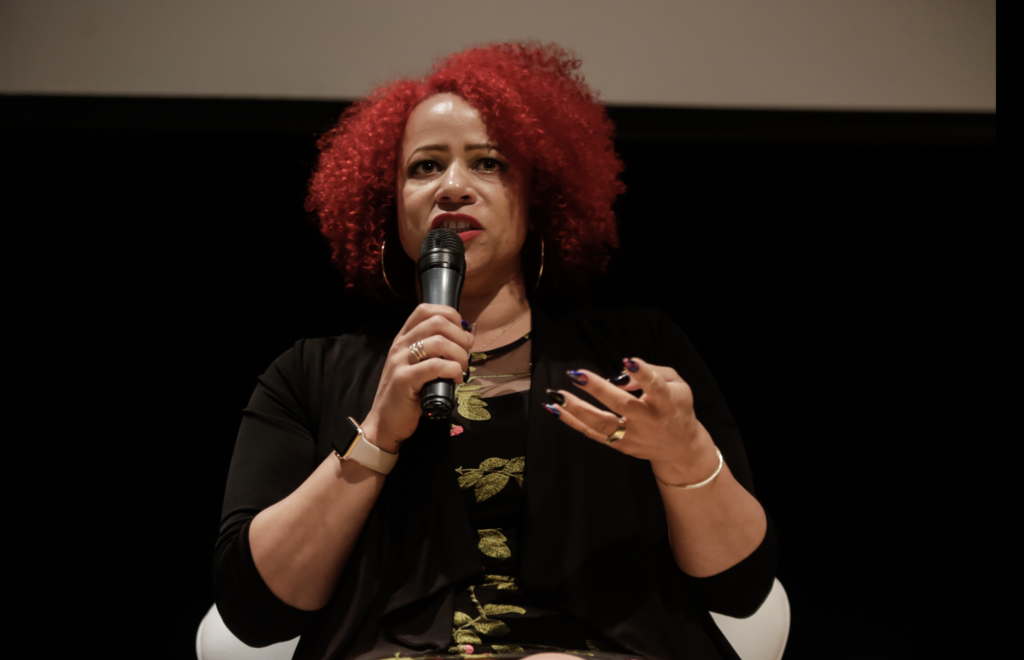
Nikole Hannah-Jones recently wrote about a decision she now deeply regrets. When her daughter was entering school, Hannah-Jones and her husband deliberately chose a low-income, predominantly Black public school that wealthier families with more options generally avoided. They did so partly because of Hannah-Jones’s commitment to school integration and her belief that affluent parents help reproduce inequality when they withdraw their children from struggling public schools. Years later, their daughter confronted them after realizing that they could have afforded to send her somewhere academically stronger. Hannah-Jones later discovered serious deficiencies in her schooling: required reading assessments apparently had not been administered properly, math assignments riddled with wrong answers had gone ungraded, and writing errors routinely went uncorrected.
The easy conservative response is to call this hypocrisy, ideological fanaticism, or proof that progressives care more about abstractions than their own children. But that misses the more interesting problem.
The real issue is that parenthood imposes special obligations.
Liberal societies generally accept that we may have universal duties to strangers while also owing more to particular people: our spouses, parents, friends and especially our children. A father need not divide his estate equally among every needy child in America. A mother is permitted—even expected—to spend vastly more time and money on her own child than on equally deserving children elsewhere. We do not normally regard this as injustice. We regard it as one of the institutions through which human beings take responsibility for one another.
Hannah-Jones’s story is interesting because it tests the limits of that principle. Her daughter eventually asked the obvious question: if her parents could afford a stronger education, why had they deliberately declined to provide it? Hannah-Jones herself writes that she no longer knows what her family accomplished and worries that she failed both her values and her child.
That does not mean integration is worthless. A school is a community, not simply a machine for maximizing test scores. There can be real moral and civic value in children growing up alongside people from different economic and racial backgrounds. Parents routinely trade some academic advantage for religion, neighborhood, family continuity, culture or other goods they reasonably believe matter. But there is an important distinction between choosing a different conception of a good education and knowingly accepting serious educational deficiencies in pursuit of a social objective.
At that point, the parental obligation becomes difficult to escape. Adults are free to sacrifice their own comfort, income or status for political principles. There is something noble about bearing the costs of your ideals yourself. It is morally more complicated to volunteer your child to bear them.
The lesson is not that parents should maximize every competitive advantage available to their children. Taken far enough, that principle produces its own ugly society. It is that social reform cannot depend on parents pretending they have no special obligations at all.
A decent politics has to begin from the stubborn fact that human beings love particular people more than humanity in the abstract. The task is to build institutions that harness that loyalty toward public good—not ones that require parents to apologize for it.