Firing the Senate Parliamentarian Won’t Solve the Problem
The current fight over Elizabeth MacDonough misses the point.
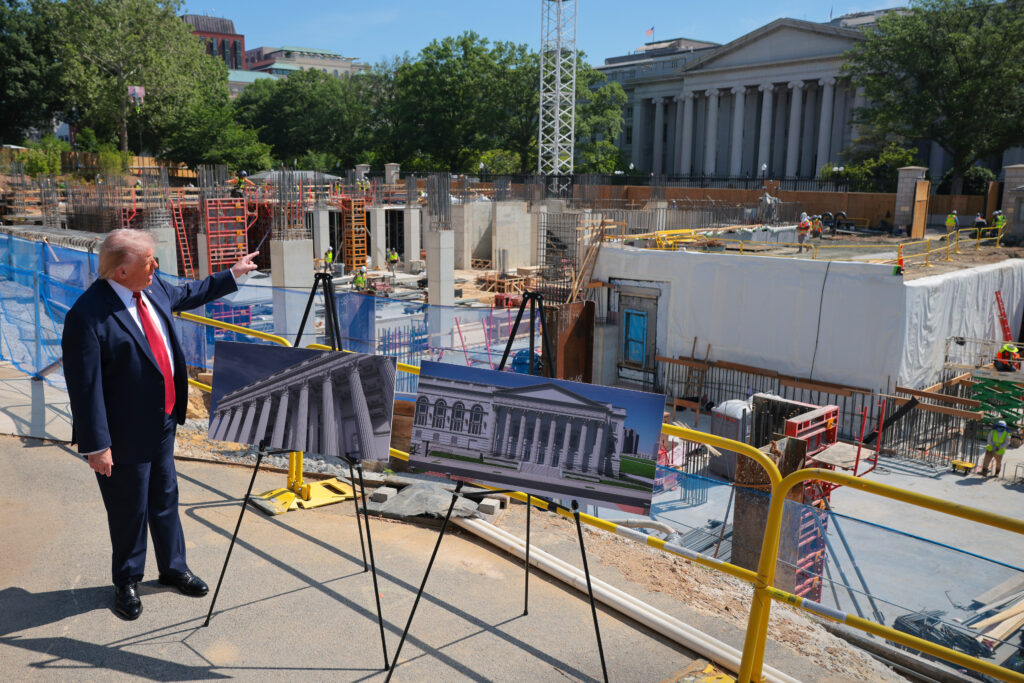
The Senate parliamentarian, Elizabeth MacDonough, is back in the news after President Trump called on Republicans to fire her. MacDonough drew Trump’s ire after advising that the Senate could not include security funding for the president’s White House ballroom in the Secure America Act (S. 2). Majority Leader John Thune, R-S.D., pushed back on the call to oust her. But Senate conservatives are increasingly warming to the idea of replacing her.
The pressure on MacDonough is not new. Nor is it unique to Republicans. Democrats have criticized her when her advice frustrated their agenda. Republicans now criticize her for the same reason. The pressure is most intense during reconciliation debates because reconciliation allows senators to bypass the filibuster. That makes the parliamentarian’s advice especially important. Senators rely on her to help them navigate the complex rules governing reconciliation bills.
But the Senate’s parliamentarian problem will not be solved by firing MacDonough. Replacing her will not end the bipartisan pressure on the office unless the next parliamentarian does the job differently. The issue is not simply who holds the position. It is how senators have allowed the position to operate.
The Senate created the parliamentarian’s office in 1935. Its purpose was straightforward. The parliamentarian advises the presiding officer and senators on how to apply the Senate’s rules to specific parliamentary situations that arise during floor debate. Today, the parliamentarian is central to the orderly flow of legislation on the Senate floor. When the presiding officer responds to a parliamentary inquiry or rules on a point of order, the parliamentarian typically whispers the proper answer to the chair. Senators and their staffs also consult the parliamentarian when drafting legislation and planning procedural strategy.
This advisory role matters because applying the Senate’s rules is rarely straightforward. Those rules come from four sources: the Constitution, the standing rules, statutory rules, and informal precedents. Article I, Section 5, Clause 2 empowers the Senate to determine the rules governing its decision-making. The Senate has used that power to adopt 44 standing rules and various statutory rules, including those that govern budget reconciliation. The standing and statutory rules are general for the most part; they do not address the specific circumstances that frequently arise on the floor. When that happens, the Senate relies on informal precedents to fill the gaps – that is, what the Senate did in similar situations in the past.
The parliamentarian’s job is to know those precedents and advise senators on what they say. But the parliamentarian does not make the rules. Nor does the parliamentarian create precedent. Only the Senate can do that. When the rules are silent or ambiguous, and no applicable precedent exists, the parliamentarian should say so. Senators must then decide the question on the floor. Once they do, the parliamentarian can record the new precedent and advise senators about it in the future.
MacDonough invites criticism when she does more than that. She creates unnecessary controversy by inferring a precedent from the existing body of practice rather than acknowledging that no controlling precedent exists. In those situations, she is not simply reporting what the Senate has already decided. She is helping determine what the Senate will do next.
That distinction matters because senators increasingly treat the parliamentarian’s advice as binding, even though it is advisory. They then act on that advice on the Senate floor and blame the parliamentarian when constituents object to the outcome. In this way, senators avoid responsibility for decisions that are theirs alone to make.
Reconciliation illustrates the problem.
The Byrd Rule bars senators from including “extraneous” provisions in reconciliation bills. One way a provision is extraneous is if its budgetary effects are merely incidental to its non-budgetary policy effects. A senator may raise a point of order against a provision on that basis. If the presiding officer sustains the point of order, the provision is stricken from the bill. Senators may move to waive the point of order, but doing so requires sixty votes.
The problem is that the Byrd Rule does not define “merely incidental.” Applying that test requires senators to weigh a provision’s budgetary effects against its policy effects. In some cases, that task is easy. In many cases, it is not. Senators, therefore, look to precedent to determine how the test should apply in a particular situation.
But there are not many adjudicated precedents on the “merely incidental” test. The Senate has not ruled on every conceivable question that may arise under the Byrd Rule. And informal discussions during the so-called Byrd Bath are not the same thing as Senate precedent. A conversation between staff and the parliamentarian before the floor debate may inform senators’ understanding of a provision. But it does not bind the Senate. It lacks precedential authority because the Senate did not reach a decision on the floor.
That is why the current fight over MacDonough misses the point. Trump called on Republicans to fire her because she advised that the ballroom security funding violated the Byrd Rule. But if there is no controlling precedent squarely resolving the question, the answer is not to pretend that the parliamentarian’s advice is law. The answer is for senators to decide the issue themselves.
They can do that. The Byrd Rule is not self-enforcing. The parliamentarian cannot strike a provision from a bill. Senators must raise points of order. The presiding officer must rule. Senators may appeal the chair’s ruling. And the Senate may establish a new precedent by deciding the question. That is how the institution is supposed to work.
Senators do not have to follow the parliamentarian’s advice. They choose to follow it. They do so because it is easier to blame an unelected staff official than to defend their own procedural decisions. This dynamic benefits senators politically, but it distorts the Senate’s rules. It also makes the parliamentarian a convenient scapegoat whenever a controversial provision is removed from a bill.
Firing MacDonough will not fix that problem. A new parliamentarian who treats informal judgments as binding precedent will face the same pressure. A new parliamentarian who answers questions that the Senate has not yet decided will become the same kind of target. The only real fix is for the parliamentarian to return to the office’s proper role: advise senators on what the rules and precedents say, identify when no controlling precedent exists, and leave unresolved questions for the Senate to decide.
The parliamentarian does not make the Senate’s rules. Senators do. They should stop pretending otherwise.