Reweaving the American Fabric: A Case for Restoration
America does not need to be reinvented. It needs to be restored.
For much of my life, I have had the privilege of working alongside people who believed deeply in the promise of America. I worked for Sam Walton during the formative years of Walmart, helped establish the Walmart Foundation, co-founded the Texas Public Policy Foundation, and spent decades advancing educational freedom and opportunity for families. Through those experiences, I learned something important: strong nations are not built primarily in Washington. They are built in families, churches, schools, businesses, neighborhoods, and voluntary associations, when ordinary people accept responsibility for something larger than themselves.
Today, many of those institutions are under strain. We often discuss the problems separately—family breakdown, educational failure, declining trust, cultural division, economic anxiety, and spiritual disconnection. But I have come to believe they are threads of the same fabric. And when a fabric begins to unravel, you don’t throw it away. You restore it.
A Family of Weavers
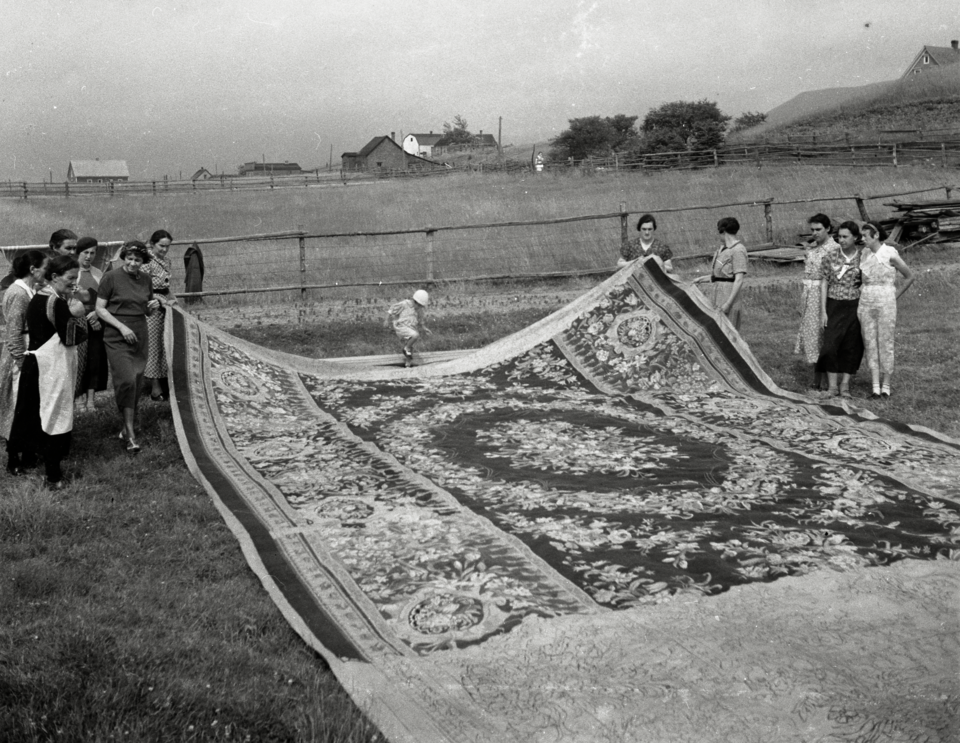
That idea has special meaning to me because weaving is part of my family’s heritage. My great-grandfather, Emil, founded Deltox, which grew into one of America’s largest rug manufacturers. My grandfather Carl became known in our family as “the weaver.”
The lessons they passed down went beyond manufacturing rugs. They understood that an enterprise was ultimately about people and relationships. During the Great Depression, Deltox worked to keep its employees working. My grandfather walked the factory floor and knew the people whose hands operated the looms. Those stories taught me something I would later see demonstrated repeatedly throughout my own career: the greatest value often lies not simply in what we produce, but in the relationships we cultivate.
A rug is made from individual threads. Alone, a thread is easily broken. Woven together, those same threads become something strong enough to endure for generations. So it is with a nation. America’s social fabric consists of millions of relationships—husbands and wives, parents and children, teachers and students, pastors and congregations, employers and employees, neighbors and communities. Government has an important role in protecting liberty and maintaining a just civil order, but government cannot manufacture these relationships. They must be cultivated by people.
What Sam Walton Taught Me
I saw this principle demonstrated powerfully when I went to work for Sam Walton in 1981. Walmart was growing rapidly, but Sam never viewed the company simply as a collection of stores. He understood the importance of associates, customers, communities, and relationships.
When I helped establish the Walmart Foundation, we began experimenting with relatively simple ideas. One early scholarship initiative started as a pilot involving just 8 stores and eventually grew nationally. Community matching grants empowered local stores and citizens to work together to meet needs in their own communities. There was no grand national blueprint. There were people taking responsibility where they lived.
That experience shaped much of what I subsequently did in public policy and educational choice. When we began building institutions such as the Texas Public Policy Foundation and later working to expand educational opportunity, many of the ideas we advocated were far outside the political mainstream. But ideas have consequences, and persistent people can move ideas from the margins into the mainstream. That lesson matters today.
Restoration Is Not Nostalgia
When I speak of restoring America, I am not suggesting that we somehow recreate the America of 1950, 1980, or any other moment in history. America has never been perfect. Restoration is not nostalgia; it means recovering enduring principles and applying them faithfully to a new generation.
Faith, family, freedom, responsibility, educational opportunity, entrepreneurship, service, and community are not artifacts belonging in a museum. They are building blocks of a flourishing society.
We often look to elections, legislation, court decisions, or government programs as the principal instruments for changing America. Public policy unquestionably matters, and I have spent much of my adult life working in that arena. But after decades in public policy, I have become convinced that political renewal without cultural renewal will always be incomplete.
A legislature can change a law, but it cannot make a father love his children. A court can protect religious liberty, but it cannot make people faithful. Government can create conditions favorable to entrepreneurship, but it cannot create the courage required to risk everything on an idea. Public policy can give parents greater educational freedom, but it cannot replace parents who accept responsibility for the formation of their children. Those things happen closer to home.
Reweaving the Fabric
This is why I believe America’s next great movement must be broader than politics. Imagine what could happen if people already doing remarkable work stopped viewing themselves as isolated organizations and began seeing themselves as threads in a much larger fabric.
Churches can strengthen marriages and families; educators can expand opportunity; entrepreneurs can create businesses and jobs; policy organizations can defend freedom and responsible government; artists and storytellers can shape culture; philanthropists can invest strategically in people and institutions; and community leaders can rebuild trust at the local level. None of them alone can restore America. Together, they can begin reweaving its fabric.
That requires something increasingly rare in our fragmented culture: collaboration. We need fewer people asking, “Who gets the credit?” and more asking, “What can we accomplish together?”
A Covenant With the Next Generation
At this stage of my life, I find myself thinking less about what my generation has accomplished and more about what we will leave behind. That question became particularly personal with the arrival of my first grandson, Henry. He represents another generation of our family—and another generation that will inherit the America we leave behind. What will we give him? Will we leave our children and grandchildren institutions stronger than we inherited them? Will they inherit strong families, vibrant churches, excellent schools, thriving communities, economic opportunity, and the freedom to pursue the purposes God has placed upon