The Empty Chair
Ali Safavi says Iran’s mullahs are on their last legs and the West should bet on the people.
As seen on “Just the News, No Noise” with John Solomon and Amanda Head Tuesday, September 22nd.
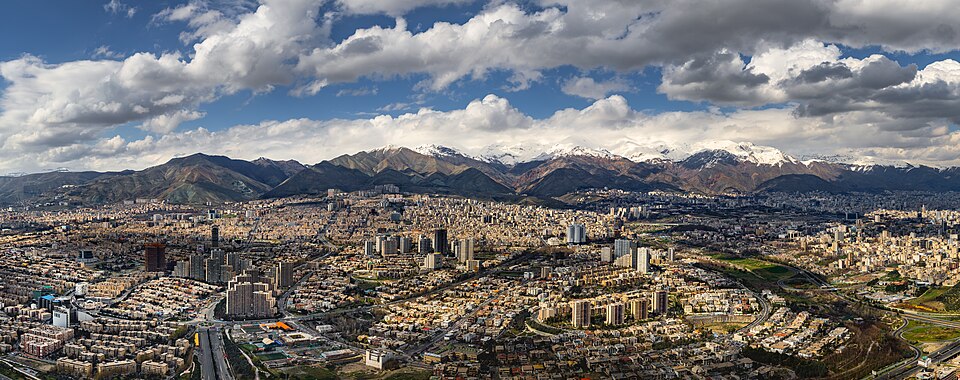
Six months. That is how long Iran’s new supreme leader has gone unseen, by Ali Safavi’s count, and it is the crisis at the top of a regime “on its last legs,” he told hosts John Solomon and Amanda Head Tuesday on “Just the News, No Noise”. Safavi, of the Foreign Affairs Committee of the National Council of Resistance of Iran, spoke as the regime’s envoys met American negotiators at the UN and thousands of Iranian-Americans outside demanded its expulsion. His case: the regime is weaker than it looks, and the West keeps betting on the wrong Iranians.
Solomon called it “a big blink.” Days earlier Tehran had repeated its conditions for any talks — an end to the fighting, unfrozen funds, a lifted blockade — and then Foreign Minister Abbas Araghchi met envoys Steve Witkoff and Jared Kushner anyway. “Contrary to what some pundits are saying in Washington, the regime came out of the 40-day war much, much weaker and more vulnerable,” Safavi said.
The 40-day war ended in an April 8 ceasefire; the uprising before it began Dec. 28 with the currency’s collapse, and its causes, he said, are worse. “The economy is tanking. The Iranian currency is not worth the paper [it] is printed on.” By his count, inflation runs at 127 percent, bread is up 97 percent and there were more than 4,000 protests through March.
Mojtaba Khamenei, wounded and installed at the war’s outset, has yet to be seen or heard in public. “The new supreme leader, so-called, hasn’t been seen for six months, hasn’t been heard for six months,” Safavi said.
Head raised Secretary of State Marco Rubio’s complaint that morning, on NBC, that some American coverage sounds as if it is rooting for Iran. The habit, Safavi said, is old. “Historically, the Western media has been feeling that the only option is to somehow moderate the behavior of this regime,” he said. “History has proven that no amount of economic or political concessions to this regime will result in the change in the behavior of the [mullahs].”
The alternative has a precedent. When Poland’s generals crushed Solidarity and jailed Lech Wałęsa in December 1981, Ronald Reagan cut off food and credits to Warsaw and refused business as usual with the perpetrators; the bet on the union over the junta paid out in 1989. Safavi wants the same wager. “It is time for the international community to invest, for a change, in the Iranian people and in the resistance. What’s there to lose?”
The rally was about executions. “Since mid-March, more than 40 protesters, including nine members of the MEK, have been executed,” Safavi said, with 100 more on death row by his count; Amnesty International counted at least 78 under sentence of death in May. At Dag Hammarskjöld Plaza, former Ukraine envoy Keith Kellogg, former NATO commander Gen. Wesley Clark and former Ambassador Carla Sands told the crowd, in his summary, that “the Iranian regime does not represent the people of Iran.”
Maryam Rajavi, the NCRI’s president-elect, sent a message Safavi relayed: “the presence at the United Nations of the perpetrators of crime against humanity and those implicated in genocide makes a mockery of human rights, peace, and justice,” and called for their expulsion. The NCRI declared a provisional government on Feb. 28, based on Rajavi’s Ten-Point Plan, one “that rejects any kind of dictatorship, whether monarchical or theocratic,” Safavi said, with elections within six months of the regime’s fall, gender equality, no death penalty and no nuclear weapons.
A government that hides its leader, hangs its critics and blinks at the first invitation is not a partner to be moderated; it is a problem to be outlasted. Safavi’s point is who does the outlasting. The Iranian people, he said, “are the rightful owners of sovereignty in Iran, and they are the force that the world must invest in, not the mullahs.”