The Campaign Never Ends
Republicans are still fighting elections as though voters begin paying attention in September. The rest of America has been living with politics all year.
There was a time when an American political campaign had something resembling a beginning and an end. Candidates emerged from their primaries, spent a few months promising to repair the country, and then returned to Washington, where they could resume the ordinary business of disappointing everyone. Elections were periodic intrusions into normal life. You were allowed to forget about politics for a while. Your congressman might even have been permitted to become a real person again.
That arrangement has disappeared. The campaign is now permanent, an atmosphere that envelops the country whether anyone has declared for office or not. The television advertisements never entirely stop, the fundraising emails continue to arrive, and every event, from a military operation overseas to the price of a carton of eggs, is immediately absorbed into the machinery of electoral politics. The American voter lives inside a campaign that has no discernible beginning and will apparently continue until the sun burns out.
And yet, astonishingly, much of the Republican Party still conducts elections as though it were 1988.
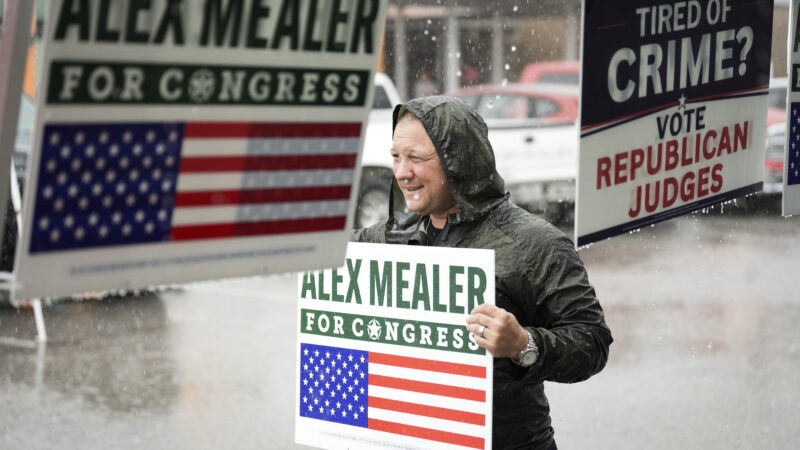
Robert Cahaley, chief pollster for the Trafalgar Group, made this observation in the aftermath of the disastrous 2026 midterms. Republicans, he argued, spend the early part of the election cycle fighting expensive and frequently vicious primaries, only to emerge around Labor Day and begin the serious work of campaigning against Democrats. By then, their opponents have spent months establishing themselves in the public imagination. The Republicans arrive carrying an enormous sack of opposition research and discover that the voters have already made up their minds about the people they are supposed to hate.
There is something almost touching about this faith in the old calendar. The consultants still get their contracts, the advertisements still get filmed, and the machinery faithfully produces its little thirty-second denunciations of an opponent’s voting record. Everyone involved gets paid. The machinery itself remains immaculate. Only the election goes wrong.
The 2026 results offer a particularly dramatic illustration. Democrats captured both chambers of Congress and made substantial inroads into territory Republicans had recently considered secure. In Texas, Democrat James Talarico defeated Ken Paxton after a bitter Republican primary season. In Ohio, Sherrod Brown returned to the Senate. The national picture was considerably bigger than any single messaging failure, but the timing of campaigns deserves scrutiny.
The problem, however, goes deeper than television advertising. Modern politics has become a contest over the meaning of ordinary experience, and Republicans have repeatedly mistaken the production of favorable economic statistics for the production of public confidence.
Consider the peculiar debate over the economy. The Trump administration can point to whatever improvements appear in wages, investment, or economic activity. It can announce that the country is becoming prosperous again, that its policies are finally bearing fruit, and that the experts who predicted disaster have been proven wrong. But the voter has an entirely different set of measurements. He knows what a tank of gas costs. He knows what the grocery bill was last week. He knows whether his wages have risen enough to make the rent feel less oppressive.
The difference between these two accounts of reality cannot be closed by repeating the word growth more loudly.
The CBS News exit polls found that roughly three-quarters of voters were dissatisfied with the country’s direction, while more than twice as many said their family finances had worsened as said they had improved. The economy remained the leading issue for voters, and the cost of living was an especially powerful concern among those supporting Democrats. These are genuine grievances, however much partisan media may amplify them.
A politician who tells someone that the economy is wonderful while that person is struggling to pay his bills has accomplished something extraordinary: he has made the listener suspicious of both the politician and the economy.
But there is a second problem here, one that Cahaley identifies more persuasively. Even when an administration has a defensible economic record, the public does not automatically assemble the relevant facts into a coherent political judgment. People experience changes in their lives; they still need some explanation of why those changes are happening, who is responsible, and what the future might hold.
Republicans have frequently treated this explanatory work as an optional extra, something to be handled by a particularly enthusiastic television advertisement in October.
The Iran conflict offers a revealing example. The administration’s supporters have argued that military action was necessary to confront a potentially grave strategic threat. Its opponents have pointed to the costs of war, the danger of escalation, and the pressure on energy prices. These are competing accounts of a consequential decision, and both involve questions that deserve serious public examination.
Yet the political debate has often been reduced to a contest between distant geopolitical dangers and the immediate indignity of paying more at the pump. Cahaley believes Republicans failed to make a sustained argument for why Americans should accept the short-term costs of the conflict. Even voters sympathetic to the administration’s objectives cannot be expected to understand a military strategy that has never been adequately explained to them.
There is a temptation to describe all this as a failure of communication, which is what political consultants invariably call any disaster they were recently paid to prevent. But communication is a rather small word for the problem.
Political parties must offer people an intelligible account of the country they inhabit. They must explain why life feels the way it does, how present sacrifices connect to future benefits, and what kind of society their policies are supposed to produce. Such arguments cannot be manufactured a fortnight before Election Day.
Nor can they substitute for results. A government cannot talk its way out of a genuine affordability crisis, and the constant insistence that voters have simply misunderstood their own circumstances is liable to become another source of resentment.
The Democrats, for their part, face a version of the same difficulty. Their victory was a powerful expression of public dissatisfaction with Republican governance, but dissatisfaction alone cannot settle the question of what should come next. A party that campaigns on making life affordable will eventually have to explain how its own policies achieve that result. The opposition has the luxury of identifying what has gone wrong; governing requires confronting the causes.
America’s permanent campaign has created a strange political order in which everyone is always campaigning and almost nobody is ever finished explaining anything. Every election becomes a referendum on the previous election, and every governing decision becomes raw material for the next one. The parties fight endlessly over the country’s condition while its citizens continue to inhabit the actual place.
The lesson of 2026 may be that the old distinction between governing and campaigning has become impossible to maintain. A government must account for its actions throughout its term, and its opponents must offer more than a periodic catalog of failures. The work of persuasion takes place over years, in the slow accumulation of experience and public trust.
By the time September arrives, the argument is already well underway. By November, much of it may be over.