The New China Syndrome
The truth about Beijing that Washington keeps burying — and the five lies Xi Jinping must be forced to answer for.
In 1979, “The China Syndrome” thriller flick wasn’t really about China at all. It was about the choice between honesty and ambition, between career and conscience, between profit and responsibility. A reporter stumbles onto a nuclear accident and finds herself fighting not the meltdown itself, but the inside machine built to hide it from the public—to keep it a secret.
Almost fifty years later, the title has found its real subject. Today the meltdown is real, it is happening in slow motion, and almost no one in Washington is willing to say so out loud.
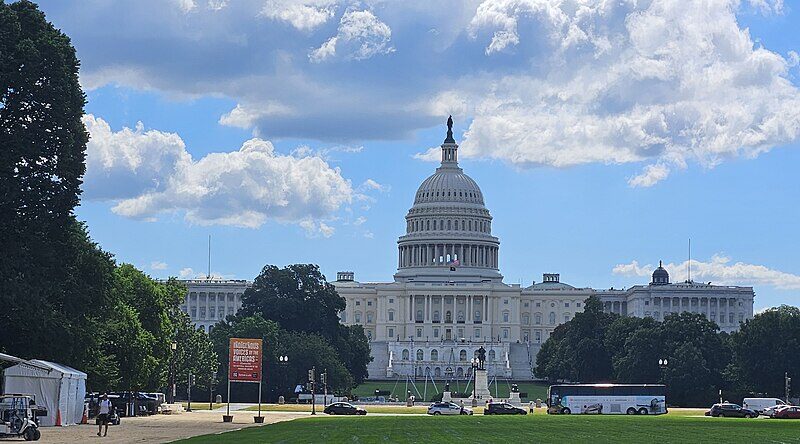
When Red emperor, Xi Jinping walks into Washington, he is not visiting as the head of a misunderstood trading partner. He is visiting as the head of a regime that has told the world, repeatedly and in its own words, exactly what it intends to do — and American leaders keep pretending they didn’t hear it. That is the new China Syndrome: the full scope of Beijing’s ambitions kept just quiet enough, just diplomatic enough, just profitable enough, to let everyone in the room avoid the conversation and actions that actually matters.
It’s time to stop avoiding it. American security is not an abstraction — it is the thing on the table. Chinese Communist Party theory and practice have made the goal unmistakable: displace the United States, dominate the global order, and treat any resistance as an obstacle to be managed. That is not alarmism. It is the Chinese Communist Party’s own stated doctrine, translated into policy for anyone willing to read and watch it.
It doesn’t matter that some in Washington would rather just try to get along. It doesn’t matter that others have financial ties to Beijing, or a soft spot for the ideology of the men who built the Maoist system. None of that changes the five lies — lies that come directly from the CCP’s own mouth, and that Xi should be forced to answer for at the table, not bowed and kowtowed to. This is a test of nerve, not diplomacy. If Donald Trump wants to prove he’s the leader who finally tells China the truth to its face, this is indeed the moment. Bring Secretary of State Rubio to the table he is a China Hawk.
“Taiwan is inalienable Chinese territory.”
Beijing insists Taiwan is Chinese soil and treats any foreign support for the island as interference in its internal affairs. Taiwan’s government — and the 23 million people who live under it — see something else entirely: a self-governing democracy that has never been ruled by the PRC for a single day, contesting a status the CCP has simply declared “settled” by fiat.
This is no longer a rhetorical dispute. China has built the military capability and, by its own planning documents, the intention to seize and take the island. The question isn’t whether Beijing believes its own propaganda. The question is what the United States actually does when the invasion comes — and “soon” is no longer a hedge word.
“Xinjiang is counterterrorism and vocational training.”
That’s the official line: camps are schools, surveillance is safety, and forced labor doesn’t exist. The documented reality — verified independently by the United States, the United Kingdom, and human rights investigators around the world — is mass detention, pervasive surveillance, forced slave labor, and the systematic destruction of Uyghur culture. The U.S. government has formally called it what it is: genocide.
Calling it out in speeches changes nothing. If Washington means what it says, it bans the slave-made products from entering American markets and forces the issue in every international body, including the WTO, instead of issuing mere statements and moving on.
“COVID-19 didn’t start in Wuhan.”
Beijing spent years pushing alternate origin stories while blocking the international investigations that could have settled the question outright. U.S. intelligence assessments have since confirmed the lab-leak explanation as the more plausible account — not a fringe theory, but a conclusion built on the evidence Beijing tried hardest to keep buried. The debt from that cover-up, in lives and in dollars, has never been paid. It should be, in full.
“China is a fair, market-based economy.”
That is the position Beijing defends in every trade negotiation. The record says otherwise: forced technology transfer, dumping, intellectual property theft, state subsidies that no foreign competitor can match, and market access that runs in only one direction. The Chinese equivalent to our CIA—the Ministry of State Security (MSS) is involved in industrial espionage and cyber intrusion at unprecedented levels. These aren’t allegations — they’re findings, documented in WTO disputes and government reports for over a decade. Nixon and Kissinger were wrong—China is not moving toward democracy.
There is no such thing as fair trade with a partner that lies, steals, and rewrites the rules whenever they become inconvenient. The real question isn’t how to negotiate better terms. It’s whether partial engagement with a systematic cheat is still worth defending at all, or whether full decoupling is the only strategy left that doesn’t reward the behavior. The battle for AI supremacy intensifies this winner takes all competition.
“The South China Sea belongs to China.”
Beijing’s “nine-dash line” claims almost the entire sea as historically Chinese territory, and it has built militarized island fortresses to make the claim physical — floating aircraft carriers planted in international waters. In 2016, an international tribunal rejected the legal basis for those claims outright. China simply ignored the ruling. The Philippines, Vietnam, and Malaysia are left disputing a claim the world’s own legal system already said doesn’t hold up. The US does nothing and allows this behavior when it should take kinetic steps to end it. An ultimatum sits on the table that no administration has been willing to deliver, recognize international law or be treated as the outlaw the tribunal already found you to be.
Gordon Chang — who has studied this regime longer and closer than most of the diplomats who claim to understand it — calls it Plan Red: China’s Project to Destroy America. His argument is blunt: the assault on the United States is already underway, and it is deliberate. If that’s true, and the evidence keeps piling up that it is, the response cannot be another photo op and another joint statement about frank “constructive dialogue.”
It must start with five questions, asked to Xi’s face, with no room to dodge or hedge. Not because diplomacy is worthless, but because diplomacy built on a fiction isn’t diplomacy — it’s the cover-up. The China Syndrome was never really about the reactor. It was about who gets to keep hiding the meltdown, and for how long. We are out of time to keep pretending we don’t already know the answer.