Radical Revisionism at the National Museum of American History
The National Museum of American History isn't a museum about American history, but rather about activists' attempts to shape the future.
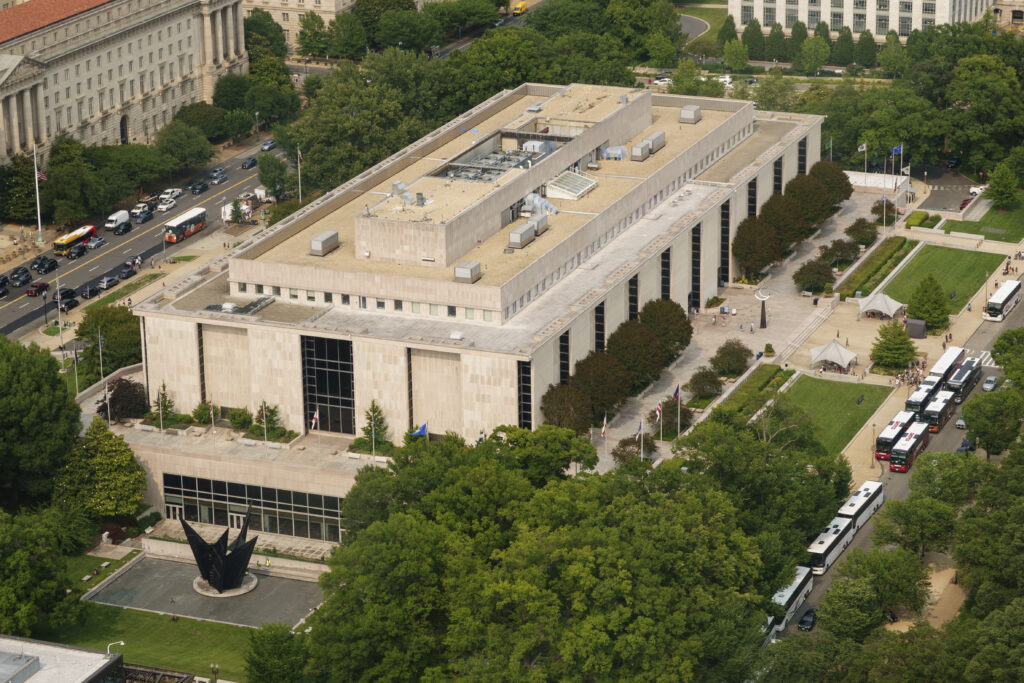
This hearing, held by the Committee on House Administration, took place on July 22, 2026. Below is the transcript of the testimony from Jeff Anderson, President of American Main Street Initiative.
Chairman Style, Ranking Member Morelle, and members of the committee, thank you for the opportunity to testify today.
The National Museum of American History is perhaps the most important museum in America. Yet rather than depicting American history traditionally and conventionally as the glorious and inspiring though imperfect story of a nation conceived in liberty, it depicts it as a history of oppressors versus the oppressed with most traditional American heroes portrayed as oppressors. When not condemning our history, it simply ignores huge swaths of it. As Chairman Steil and Mr. Gonzalez noted, at the museum’s dedication, President Johnson said its artifacts should be used to foster patriotism. Director Anthea Hartig seems like a very nice lady, we just met a moment ago in the waiting room, but in marked contrast to Johnson, she has said at the National Museum of American History, “We want to reframe the traditional celebratory narrative of U.S. history.” She’s also spoken of the need to problematize the 250th anniversary of the Declaration of Independence, and as Chairman Steil noted, has opined that loving America is very complicated.
Increasingly, the National Museum of American History isn’t a museum about American history, but rather about activists’ attempts to shape the future. Indeed, Smithsonian Secretary Lonnie Bunch has said museums should be used to inspire new generations of activists. The newer exhibits at the American History Museum are not nuanced but simplistic, viewing our rich history through the narrow lens of oppression. The exhibits open under Director Hartig are heavy-handed, artless, agenda-driven, and dumbed down. Worse, they’re anti-American, anti-historical, and dis-unifying. They focus on group identity at the expense of the shared national identity that Lincoln said should be built around a common belief in our founding documents and principles. Further dividing Americans in the museum’s newer displays, every sign in English is paired with one in Spanish. As a result, exhibits are cluttered with words with no additional information conveyed.
The museum says little about the colonial period, the American founding, the Louisiana Purchase, the Lewis and Clark Expedition, the Lincoln-Douglas debates on slavery, the pioneers and settlers of the American West, the Roaring ’20s, the Great Depression, the Cold War, and much else. Instead, it features exhibits on such matters as really big money, which discusses large, almost entirely foreign currency. Here we learn that the tail feather of a male quetzel bird is 21 inches long and those living in Mexico and Central America once used quetzel tail feathers to make payments. In a large exhibit on low riding culture, we learn as the song Low Rider plays on a loop, that low riding is more than blinged out cars, it’s a way of life. Another exhibit opened during this 250th year of American independence is called Piro Ripmo: The Musical Journey of Salsa. It’s actually a close call whether more of the museum square footage is devoted to salsa music or to the American founding, but salsa is presented a lot more favorably.
In the American Democracy exhibit, the museum presents two ways to view our nation’s founding. Was it a complete, perfect, sacred event led by a great patriot who as American children would learn never told a lie? Presumably not, so that leaves this. Or was it part of a wider, unfinished movement that was deeply imperfect? Across the hall, 1492 to 1776 is referred to as the time of unsettling the continent. Meanwhile, the entire east wing of the second floor, roughly one sixth of the museum, contains no exhibits whatsoever. It’s essentially empty. Visitors can vote with their feet, and many have. The American Alliance of Museums says 2024 attendance at a majority of U.S. museums matched or surpassed pre-COVID levels. But at the American History Museum, according to the Smithsonian’s own published statistics, there were 4.1 million visits in 2018, but just 1.8 million in 2025, a 56% drop in visits on Director Hartig’s watch.
Last fall, John Fonte and I had the chance to interview Ken Burns. When I asked who came off as the greatest hero in his documentary, The American Revolution, Burns replied, “Oh, without a question, it’s George Washington. We don’t have a country without him.” None of that sentiment appears in the newer exhibits of the National Museum of American History. That’s because such exhibits aren’t designed by old school liberals, by centrists, or by conservatives. They’re designed by woke activists, woke revolutionaries who don’t believe in the ideals of the American Revolution. Such activists want to fundamentally transform the nation and are using the museum to that end. China, Iran, or Russia would happily finance such anti-Americanism in our national museums, but they don’t have to because American taxpayers are unwittingly footing the bill. It’s past time for change of leadership at the Smithsonian. Thank you.