The Doctrine of Coercive Ambiguity
"Fire and fury" was rhetoric backed by potential. The rhetoric of 2026 is backed by Fordow's rubble.
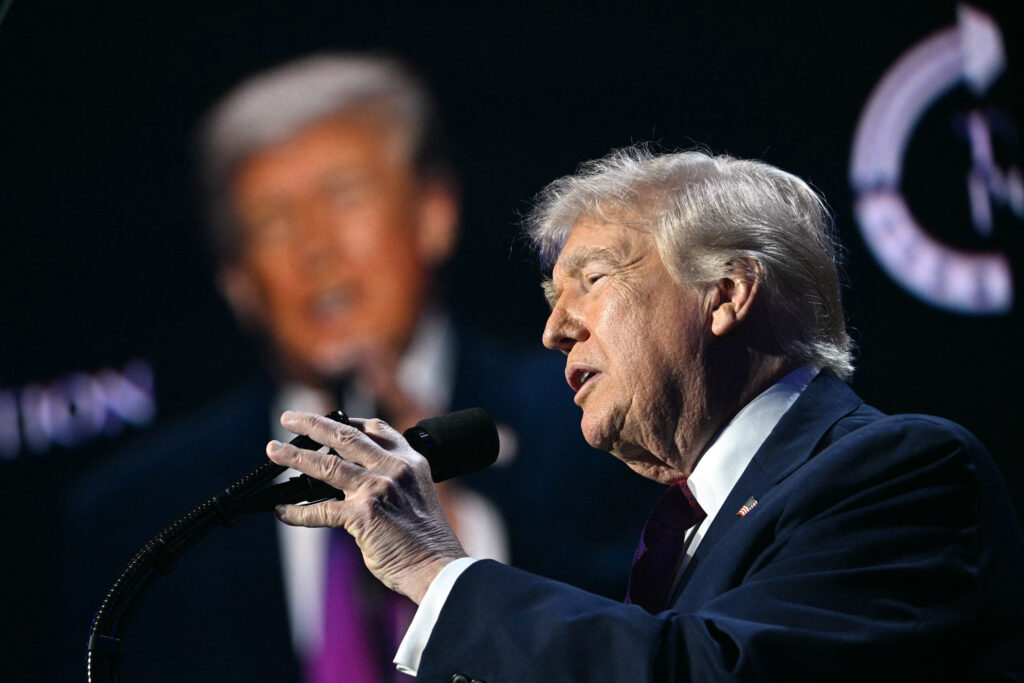
At 8:06 on the morning of April 7, President Trump posted on Truth Social that “a whole civilization will die tonight, never to be brought back again.” By 6:30 that evening, roughly ninety minutes before his own 8 p.m. deadline, he announced a two-week ceasefire with Iran, contingent on Tehran reopening the Strait of Hormuz to international shipping. Iran’s Supreme National Security Council accepted. Foreign Minister Abbas Araghchi confirmed safe passage would resume under coordination with Iran’s armed forces. Negotiations are set to begin Saturday in Islamabad, with Vice President JD Vance, Special Envoy Steve Witkoff, and Jared Kushner leading the American delegation.
The commentariat spent the day calling Trump unhinged. Foreign Policy ran “Did Trump Miscalculate on Iran?” The Wall Street Journal published “How Trump Miscalculated in Iran.” Bloomberg declared the war had left America “looking weakened to adversaries.” House Democrats demanded the 25th Amendment. The framing was unanimous: reckless president, erratic threats, inevitable catastrophe.
The framing is not just analytically incomplete. It is psychologically incapable of accounting for the possibility that the ambiguity is the strategy, not a byproduct of it.
Trump’s rhetorical methodology against adversaries follows a discernible sequence, and it has been consistent from Pyongyang to Tehran. He opens by extending a deal, knowing the adversary will reject it. He escalates rhetoric. He threatens. He backs off. He ramps the pressure again. He offers an off-ramp. Then he pushes harder, driving the rhetoric to a register so extreme that it makes irrational observers more irrational and causes even some rational ones to assume an attack is imminent. He keeps every option on the table until the final hours. And then he produces a deal at the eleventh hour that the adversary was unwilling to accept at the first. The uncertainty is itself the weapon, and the president wields it with the fluency of long practice.
Consider the record. In August 2017, Trump warned North Korea that continued threats would be met with “fire and fury like the world has never seen.” The foreign-policy establishment treated the remark as the outburst of a man unacquainted with nuclear diplomacy. Within months, Kim Jong Un was at the table in Singapore for the first summit between a sitting U.S. president and a North Korean leader. The 2017 National Security Strategy, released that December, laid the doctrinal groundwork. It identified North Korea and Iran as “rogue states” and articulated a third pillar: “Preserve Peace Through Strength.” Trump himself, introducing the strategy, was explicit: “We recognize that weakness is the surest path to conflict, and unrivaled power is the most certain means of defense.”
That was the theory. Iran is the proof of concept, though the returns are not yet final.
What distinguishes the Iran case from North Korea is the credibility behind the threat, built through actions no previous administration would have contemplated. In June 2025, Operation Midnight Hammer sent seven B-2 Spirit bombers into Iranian airspace and dropped 14 Massive Ordnance Penetrators on the nuclear facilities at Fordow, Natanz, and Isfahan, obliterating enrichment capacity Tehran had spent two decades constructing. On February 28 of this year, Operation Epic Fury opened with a joint U.S.-Israeli strike that killed Supreme Leader Ali Khamenei in his compound, alongside his defense minister and the commander of the IRGC. Israel executed its largest air operation in history, hitting roughly 500 targets with 200 fighter jets. The regime’s proxy architecture, from Hezbollah’s command structure to Hamas’s senior leadership, had already been dismantled.
When Trump told the world a civilization could die, the regime now led by Khamenei’s hastily installed son Mojtaba had no theoretical basis for disbelief. That is the difference between rhetoric and doctrine: the words carry weight because the actions preceded them.
The administration’s own 2025 National Security Strategy codifies the logic. It articulates eleven core principles, three of which are directly operative here. “
- “Peace Through Strength”: “Strength is the best deterrent. Countries or other actors sufficiently deterred from threatening American interests will not do so.”
- “Flexible Realism”: a posture that avoids imposing ideological conditions on adversaries while maintaining freedom to act decisively when interests demand it.
- “Predisposition to non-interventionism” moderated by the recognition that “for a country whose interests are as numerous and diverse as ours, rigid adherence to non-interventionism is not possible.”
Read that triad together and the Iran campaign becomes legible. The NSS identifies Iran as the Middle East’s “chief destabilizing force,” already “greatly weakened,” and envisions an endgame in which the region shifts from chronic crisis to partnership and investment.
The continuity between the 2017 and 2025 strategies is worth noting. Both identify the same threat categories: revisionist great powers and rogue states. Both ground American posture in the same principle: that deterrence requires credible, overwhelming strength. But the 2025 document adds the operational dimension the first term lacked: a demonstrated willingness to use force surgically and then leverage the aftermath into negotiation. The “fire and fury” of 2017 was rhetoric backed by potential. The rhetoric of 2026 is backed by Fordow’s rubble.
This is not a declaration of victory. It is a war, and wars are not won on the strength of a two-week ceasefire negotiated ninety minutes before a deadline. The terms remain deeply fragile. As of Thursday, the Strait of Hormuz is effectively still closed: only a handful of bulk carriers have transited the waterway, against a pre-war volume of over 100 vessels per day. Iran’s navy has released maps indicating possible mine fields and is demanding coordination fees exceeding $1 million per ship. Tehran’s security council claimed it had “forced the criminal America to accept its 10-point plan.” Israel’s massive strikes on Lebanon, which killed at least 254 people on Wednesday alone, prompted Iran to accuse Israel of violating the ceasefire and temporarily halt all tanker traffic. Hezbollah launched retaliatory rockets into northern Israel. Oil has climbed back above $97 a barrel. The distance between a two-week pause and a durable peace remains vast, and no one should pretend otherwise.
But the critics calling this a miscalculation cannot explain why, if the rhetoric was merely reckless, it produced an adversary at the table accepting terms it had rejected the day before. The “Trump miscalculated” frame assumes the president intended a single, fixed outcome and failed to achieve it. It cannot accommodate the possibility that the ambiguity was the objective: that the cycling between threat and withdrawal, between annihilation and off-ramp, is not evidence of incoherence but the operational signature of a man who understands that in coercive diplomacy, the adversary’s uncertainty about your intentions is more powerful than certainty about your capabilities.
Whether the Islamabad talks produce a lasting settlement or merely a pause before the next escalation remains to be seen. This is a war with real costs, real casualties, and real risks of miscalculation on every side. But what is no longer debatable is the method. Coercive ambiguity is not a character flaw. It is the doctrine, and its operational lineage now runs from Pyongyang to Tehran.