Catholic Sisters Shouldn’t be Forced to Facilitate Assisted Suicide
There is a moral difference between accepting the natural limits of medicine and intentionally causing death.
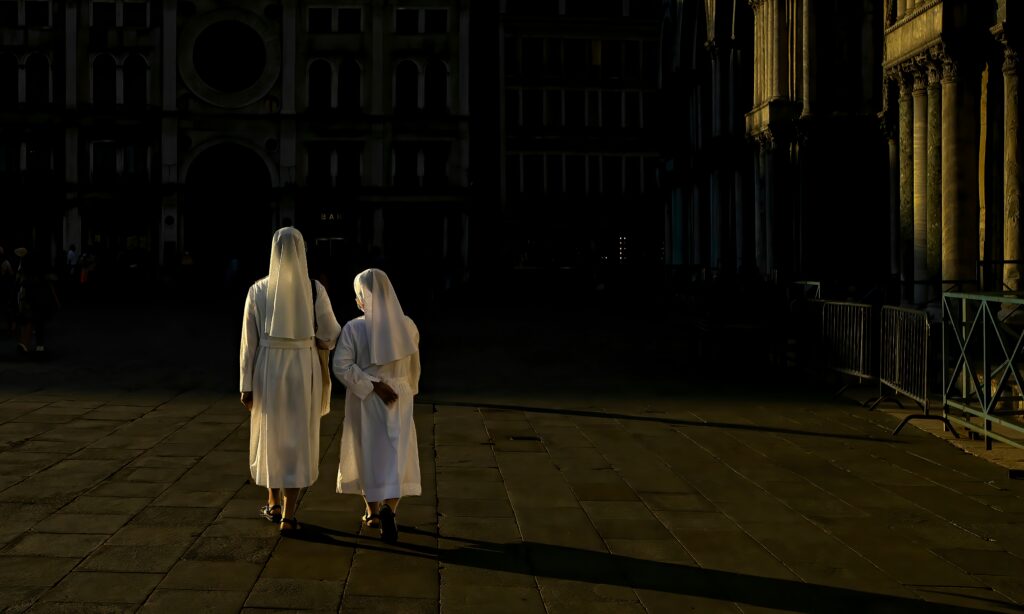
For generations, Catholic sisters in New York have performed one of society’s most difficult and intimate duties: caring for people who are approaching death. The Carmelite Sisters for the Aged and Infirm operate homes where elderly residents receive medical treatment and spiritual care. The Dominican Sisters of Hawthorne serve poor patients dying from cancer. The Missionary Sisters of St. Benedict provide homes for the aged. The Little Sisters of the Poor have cared for impoverished elderly people for nearly two centuries.
These women do not regard dying patients as problems to be solved or burdens to be removed. They believe each patient bears the image of God and deserves care, companionship and protection until natural death.
New York’s government has now decided that this ministry must make room for assisted suicide.
Four orders of Catholic sisters, several affiliated health care ministries, Bishop John Barres and the Diocese of Rockville Centre filed a federal lawsuit Friday challenging the state’s new Medical Aid in Dying Act. The religious-liberty law firm Becket is representing the Catholic plaintiffs in Carmelite Sisters for the Aged and Infirm v. James. It is asking the court to block the law before it takes effect on August 5.
New York describes the procedure authorized by the law as “medical aid in dying.” The statute permits a mentally capable adult with a terminal condition to request medication intended to hasten his or her death.
The euphemism does considerable work. The medication is not intended to treat the disease, relieve a symptom or allow death to occur naturally. It is prescribed so that the patient can deliberately bring about death.
Catholic institutions cannot participate in that process. Their objection extends beyond the final act of writing a prescription. They cannot recommend suicide, counsel patients toward it, help them qualify for lethal drugs or arrange for another provider to complete what they themselves consider gravely immoral.
New York’s purported conscience protection does not fully respect that position.
Under the law, an individual doctor may decline to prescribe the lethal medication. A private health care facility may also prohibit the prescribing or self-administration of the drugs on its premises. But Becket argues that the statute still requires objecting providers to participate in other stages of the process.
According to Becket’s complaint, Catholic doctors could be required to inform patients about assisted suicide, assess whether they meet the law’s qualifications and transfer relevant records to a new provider. An objecting facility could be required to transfer a patient promptly to another institution willing to permit the prescription and use of the lethal drugs.
The state’s message is therefore not really, “You do not have to participate,” but, rather, “you may refuse to perform the final act, provided that you help the patient get to someone who will.” That is not a meaningful religious exemption. It simply moves the point of compulsory cooperation one step backward.
New York may regard the transfer of records or patients as morally neutral administration. The Catholic sisters do not. From their perspective, helping a patient obtain lethal drugs is participation in the suicide, even when another person eventually writes the prescription.
That judgment is not a convenient position invented for litigation. It follows directly from the Catholic understanding of human life, medical care and moral cooperation.
Catholic teaching does not insist that every dying person undergo every conceivable treatment. A patient may decline extraordinary or disproportionately burdensome interventions. Doctors may administer pain medication even when an unintended secondary effect could be the shortening of life. Hospice and palliative medicine are not only permitted but encouraged.
There is, however, a moral difference between accepting the natural limits of medicine and intentionally causing death.
The sisters have organized their lives around that distinction. Their purpose is not merely to keep institutions running. It is to accompany the sick and dying without treating death as a service to be provided.
“At our homes, we bring Christ’s unbounded love to elderly New Yorkers of every background and walk of life,” Mother Mary Rose Heery, prioress general of the Carmelite Sisters, said in a statement released by Becket Law. “We strive to bring His compassion to those entrusted to our care, ensuring that no resident ever has to die alone. This law strikes at the heart of that vocation.”
That last sentence identifies what is really at stake. New York’s law does not merely regulate a medical procedure. It attempts to redefine the vocation of caregivers who reject the premise behind that procedure.
The sisters say their role is to care for suffering people so faithfully that no one is abandoned in illness or left alone in death. The state says that care must now include assistance for those seeking to end their lives.
Supporters of assisted suicide routinely frame the issue as one of personal choice. But a legal right claimed by one person does not automatically create a moral duty for another.
A patient’s decision cannot settle what a doctor, nurse or religious institution may be forced to do. Otherwise, “choice” becomes a one-way principle: absolute for the person requesting death, but irrelevant for the person ordered to help arrange it.
This is particularly troubling in institutions dedicated to elderly, disabled and terminally ill people. Such patients are often frightened, dependent and acutely conscious of the financial or emotional burdens their care may place on others. Even without explicit coercion, they can absorb the message that death would be easier for everyone.
The Catholic response is deliberately different. It tells the suffering person: You still belong here. Your dependence does not erase your dignity. We will not abandon you, and we will not help you disappear.
That is not cruelty disguised as doctrine. It is a serious moral vision of care—one that has inspired Catholic sisters to perform exhausting and frequently thankless work for generations.
The lawsuit also raises a straightforward constitutional question. The First Amendment protects the free exercise of religion, not merely the freedom to hold private religious opinions while obeying every conflicting state command.
If New York can force Catholic institutions to counsel, qualify or transfer patients for assisted suicide, then the state has reduced religious liberty to the right to object silently while facilitating the very act being opposed.
Becket argues that providers that refuse to comply could face fines, professional discipline and criminal penalties. It also contends that New York’s treatment of religious objectors conflicts with federal protections for health care entities that decline to participate in assisted suicide. Those claims will now have to be tested in court.
But the fundamental principle should not be difficult.
New York can legalize assisted suicide without conscripting Catholic nuns into its administration. Patients who seek lethal drugs can obtain them from willing providers. There is no legitimate need to force institutions founded on an opposing moral vision to serve as intermediaries.
The sisters are not seeking control over every hospital, physician or patient in New York. They are asking to continue their own work without being compelled to violate the faith that created and sustains it; the state should be capable of tolerating that difference.
A government confident in the justice of its laws does not need to force nuns who care for the dying to help arrange their deaths. And a society that still values religious liberty should recognize that the freedom not to administer assisted suicide means little without the freedom not to facilitate it.