The Pay-and-Chase State
Federal agencies lost $186 billion to improper payments last year. The House Oversight Committee just passed nine bills built on the premise that the government cannot police its own outflows.
Feeding Our Future was the name of a Minnesota nonprofit that claimed to deliver meals to needy children during the pandemic. It delivered very few. Federal prosecutors have charged 78 defendants in the case and obtained 65 convictions to date, with the loss in federal child-nutrition funds estimated at more than $250 million. The same prosecutors have estimated that as much as $9 billion may have been stolen across 14 Medicaid programs administered by the State of Minnesota. Governor Tim Walz, whose own employees raised the alarm years ago, abandoned his reelection bid on January 5.
Minnesota is one data point in a much larger ledger.
On April 29, the House Committee on Oversight and Government Reform, chaired by James Comer, passed nine bills aimed at the structural problem the Feeding Our Future case made unmissable. The Government Accountability Office estimates annual federal fraud at between $233 billion and $521 billion. In fiscal year 2025 alone, 15 federal agencies reported $186 billion in improper payments across 64 programs, a $24 billion increase over the prior year. Medicare and Medicaid together accounted for $94 billion. Six programs reported error rates above 25%. The cumulative figure since 2003 is roughly $3 trillion.
The volume is the point.
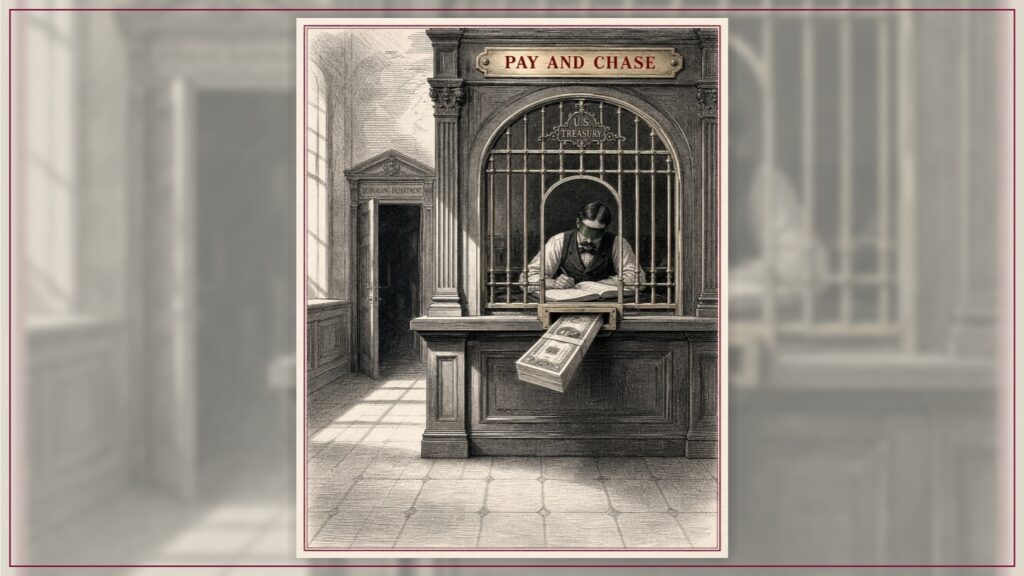
Begin with the structure of the loss. Most federal benefit programs operate on what Comer accurately calls a “pay and chase” model. Funds go out the door first; agencies attempt to claw them back later, after the fraudster has already bought property in the Twin Cities, financed luxury cars, or wired the proceeds offshore. The Treasury Department maintains a Do Not Pay system designed to flag suspicious payments before disbursement. Federal agency use has been uneven, and Treasury cannot return a payment request once an agency has issued it. The sequencing is hard-wired into the architecture of federal disbursement, and it does not get fixed by better software.
The Oversight Committee’s package addresses the sequencing directly. The Pre-Payment Fraud Prevention and Treasury Data Access Act (H.R. 8463) and the Stopping Fraudulent Payments Act (H.R. 8464), both introduced by Comer, would require agencies to conduct anti-fraud risk evaluations before requesting disbursement and would empower Treasury to return suspicious payment requests. The Fraud Prevention and Accountability Act (H.R. 8312), introduced by Texas Republican Pete Sessions, would establish a permanent inspector general for fraud, accountability, and recovery at Treasury, absorbing the analytics infrastructure built by the expiring Pandemic Response Accountability Committee. Several of the bills passed with bipartisan support. Tennessee Republican Tim Burchett introduced the state and local fraud assessment bill jointly with California Democrat Ro Khanna, and South Carolina Republican William Timmons partnered with California Democrat Dave Min on the agency CFO accountability bill.
The bipartisanship is itself instructive. Disagreement about the proper scope of federal benefits is one thing. Disagreement about whether the federal government should be capable of telling who is receiving them is another. The second has, at last, become embarrassing enough that members of both parties are willing to treat it as the procedural minimum it always was.
But the legislation, however necessary, addresses a symptom. The condition beneath it is older and deeper.
A self-governing republic asks its citizens to surrender a portion of their earnings on the understanding that the institutions receiving those earnings will administer them with at least minimal competence. When 15 federal agencies cannot account for $186 billion in a single year, when the GAO concedes the actual figure is much higher because major programs do not report at all, when state governments managing federal money allow $9 billion to flow to fraudsters and then retaliate against the employees who try to stop it, the implicit contract degrades. The taxpayer is no longer being asked to fund a government. The taxpayer is being asked to fund a regime that has decided its own oversight is optional.
That is the legitimacy problem, and it runs deeper than waste or abuse. Ordinary citizens are required to document every dollar of their earnings under penalty of audit. The agencies that receive those dollars cannot be made to document where they went. The contract has become one-sided.
The bills are a first installment on a much older debt.