We Don’t Need No (Civic) Education
What universities require tells you what they worship.
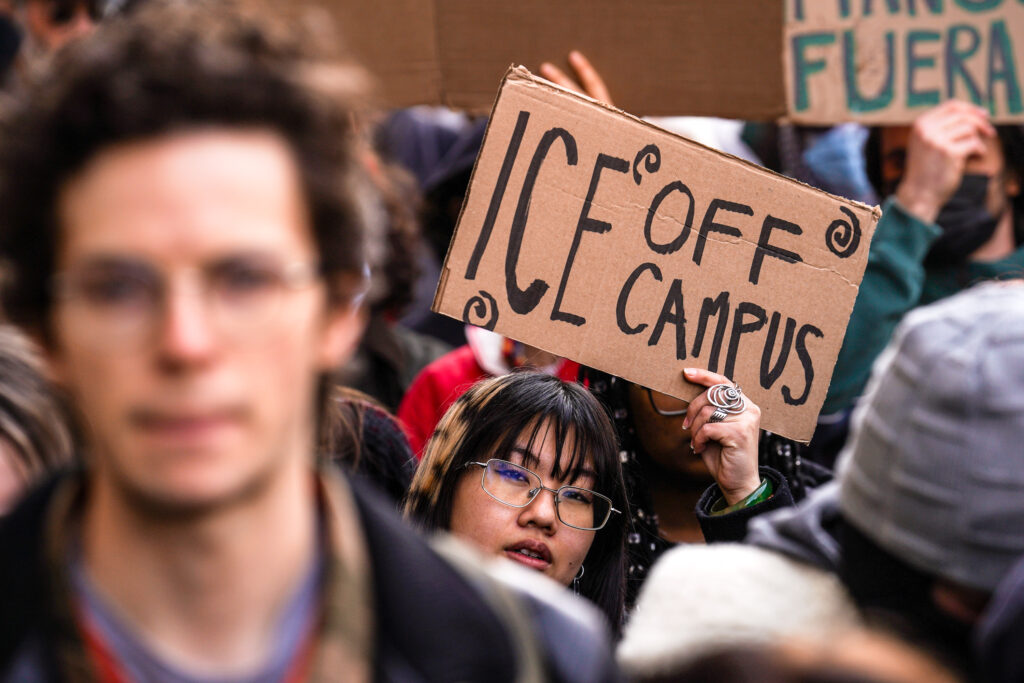
Of the 120 most prominent colleges and universities tracked by City Journal’s College Rankings, 51 percent require coursework organized around the vocabulary of diversity, equity, and inclusion. Only 15 percent require a class in U.S. government or American history. None requires economics.
And it is these schools produce a disproportionate share of the country’s lawyers, judges, editors, executives, and senior civil servants. On other words, our so-called ruling class presides over a country it does not understand or respect.
Kevin Wallsten, an adjunct fellow at the Manhattan Institute who reviewed each school’s general education requirements, found the pattern uniform across institutional type: DEI mandates appear at 27 percent of Ivy and Ivy Plus universities, 45 percent of private research universities, 57 percent of private liberal arts colleges, and 59 percent of public flagships. Of the 61 campuses requiring a DEI course, only three also require a class on U.S. government or American history.
Institutions teach what they worship. A university that compels DEI coursework while leaving the Constitution elective has made its choice.
What They Compel
Georgetown University, founded by Bishop John Carroll in 1789 and the first federally chartered university, now requires every undergraduate to complete a “Seminar in Race, Power, and Justice” to acquire “a baseline vocabulary for discussing racial difference and marginalization.” Williams College, the top liberal arts school in America, mandates a “Difference, Power, & Equity” course so students may “confront and reflect on the operations of difference, power and equity.” The University of Vermont obliges students to take “Race and Racism,” organized around “the meaning and significance of power and privilege.”
None of these institutions requires a course on the Declaration of Independence, the Constitution, or The Federalist. The asymmetry is by design. Nine states have passed laws requiring U.S. government and American history at their public universities; fewer than one in three public universities complies. In California, the statutory American Institutions requirement is satisfied through Africana Studies, American Indian Studies, or Chicano Studies. Twelve states have banned DEI programming by law. Their public universities still require DEI coursework. State legislatures can pass any statute they like; the faculty senates that translate those statutes into the actual curriculum substitute the categories they prefer.
What They Produce
Unsurprisingly, sixty percent of college students cannot identify the term lengths for U.S. senators and representatives. Forty-eight percent believe, falsely, that the president can declare war. Only 31 percent know James Madison was the father of the Constitution. Those are the 2024 numbers from the American Council of Trustees and Alumni. The Foundation for Individual Rights and Expression’s 2025 campus survey found that 34 percent of students consider “using violence” to stop a campus speech “acceptable.”
Researchers at Rutgers University’s Social Perception Lab and the Network Contagion Research Institute reported in 2024 that even brief exposure to widely assigned DEI authors made students more likely to perceive prejudice in ambiguous situations and to express punitive impulses toward imagined offenders. The mandatory semester is doing what its designers built it to do.
Thucydides described the civic rupture the Greeks called stasis and recorded how language itself inverted during it. The ability to see all sides of a question, he wrote, came to be called inability to act. The Romans named the same disorder seditio. In America, it is now Monday morning seminar.
Better take notes.