The City That Forgot the Individual
Mamdani’s 375-page equity plan and his luxury tax share one doctrine.
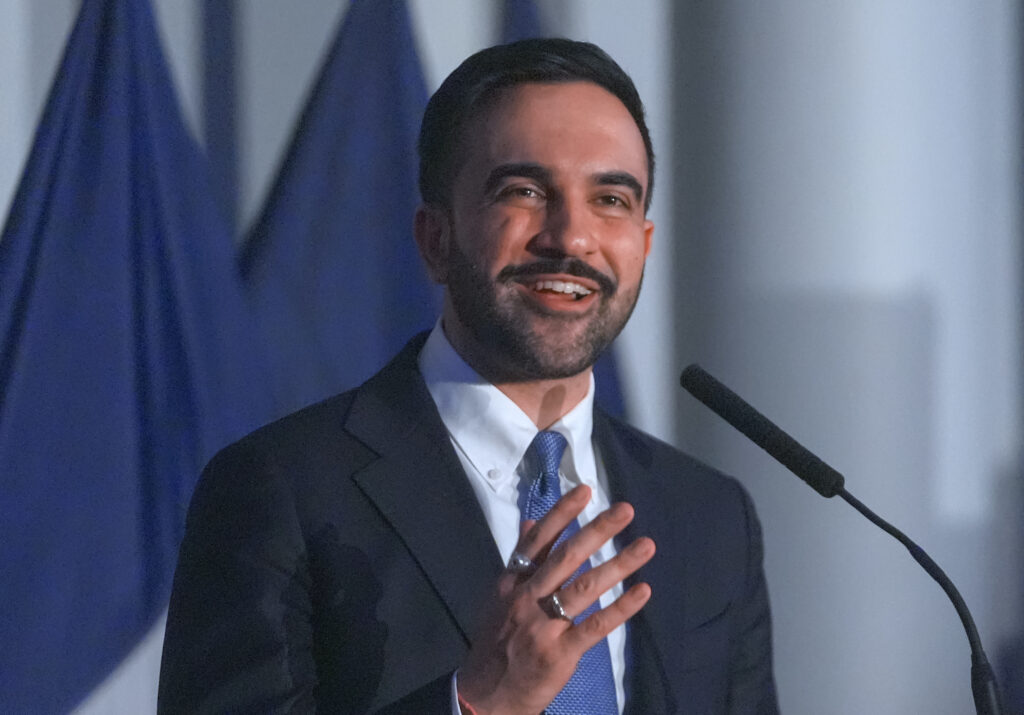
Tax Day in New York is usually a complaint, not a celebration. Mayor Zohran Mamdani made it one. Standing in front of Ken Griffin’s $238 million penthouse at 220 Central Park South, he announced the new pied-à-terre tax on second homes worth over $5 million, projected to raise $500 million a year. “When I ran for mayor, I said I was going to tax the rich. Well, today, we’re taxing the rich.” Nine days earlier, less loudly, his administration had filed the other half of the week’s doctrine: a 375-page Preliminary Citywide Racial Equity Plan. Together they describe a single philosophy administered in two registers. Both sort New Yorkers into categories and decide who owes and who is owed.
The equity plan, as Wai Wah Chin documents in City Journal, directs 45 city agencies to view every budget line, hiring decision, and service delivery through a “racial equity lens.” It generates more than 800 strategies and 600 indicators across seven domains, from economy to housing to education to public safety. Its vocabulary is disclosing. The word “race,” with its variants, appears 751 times. “Black” appears 189 times. “Latin” or “Hispanic,” 97. “Color” and “white,” 49. “Asian,” 27. The word “Jew” or “Jewish” appears once. Jews have been the largest share of hate-crime victims in New York City since 2000, when systematic tracking began, and accounted for 57% of reported incidents last year.
This is not an oversight. It is a taxonomy. The plan knows precisely whom it intends to see and whom it intends to overlook. It is also the most ambitious American experiment in explicit group-identity administration since the affirmative-action executive orders of the early 1970s, which were at least framed as a temporary remedy. The Mamdani plan treats group sorting as the permanent operating system of the nation’s largest city. Assistant Attorney General Harmeet Dhillon of the DOJ Civil Rights Division took one look and called it “fishy/illegal.” She has grounds. The plan’s 30% minority- and women-owned business utilization target mirrors the set-aside the Supreme Court struck down in City of Richmond v. J.A. Croson Co. (1989); its logic runs directly into Students for Fair Admissions v. Harvard (2023).
The pied-à-terre tax is that same philosophy miniaturized. Nonresident owners of luxury apartments are a politically useful category: small enough to lack voting power, wealthy enough to moralize against, nonlocal enough that their eventual departure can be blamed on greed rather than policy. The surcharge will close roughly 9% of the city’s $5.4 billion projected deficit. What it accomplishes more durably is civic pedagogy. It teaches New Yorkers that prosperity is theft, that wealth stored in the city is wealth extracted from it, and that government exists to identify the offending class and charge it accordingly. “As mayor,” Mamdani explained, “I believe everyone has a role to play in contributing to our city, and some a little bit more than others.”
The philosophy did not stop at the city line. Governor Kathy Hochul joined the proposal the same afternoon, abandoning in the process a pledge she had reiterated as recently as a March 11 Politico forum, where she said she wanted “a system in place where it’s not just taxing for the sake of taxing.” Three months earlier, in a Fox 5 interview, she had been more emphatic. “I don’t believe in raising taxes for the sake of raising taxes…. I don’t see a justification.” At a press event the next day, she supplied the doctrine’s clearest articulation. Of the absentee owners of luxury second homes, Hochul said: “They’re part of our skyline but those people are not part of our city.”
Those people. Not part of our city. A sitting governor had decided, in public, which Americans who lawfully own homes within her state counted as members of the civic community and which did not. The decision was not accidental to her political situation. Hochul faces a Democratic primary challenge from Lieutenant Governor Antonio Delgado, who has run explicitly on taxing the wealthy. She faces a general election against Nassau County Executive Bruce Blakeman, who called the proposal a “war on homeownership.” She had accepted Mayor Mamdani’s endorsement in February. The pattern is the one she established by pausing congestion pricing until safely past the 2024 election: when the politics aligned, the principle followed. What had been, in January, a matter of settled conviction became, by mid-April, a revenue instrument with a sorting mechanism attached.
The founders saw this coming. Madison’s warning in Federalist #10 was about a specific kind of faction: the one that stops persuading and starts governing. The distinction is older than the Republic. Aristotle makes it in Book III of the Politics: regimes that rule for the whole are legitimate; regimes that rule for a part are something else. A plan that sorts New Yorkers by ancestry rules for a part. A surcharge that identifies the offending class and charges it accordingly is the same regime, funded. The citizens handled by such instruments are no longer individuals who happen to share a city. They are demographic units to be audited, redistributed, and, when necessary, made to contribute a little bit more than others.
New York will survive most of what any mayor does to it. What is at stake in the next year is not the solvency of the five boroughs but the civic premise on which Western self-governing cities were built: that a citizen is a person, not a category; that taxes are the price of common goods, not the instrument of moral scorekeeping; and that no administration, however sure of its own justice, is owed the authority to rank its own people. Public comment on the equity plan closes May 6. Kennedy’s Executive Order 10925 promised “equal opportunity for all qualified persons, without regard to race, creed, color, or national origin.” That is the founding mandate of American civil rights. It is also the standard against which Mamdani’s plan must be measured. It is not close.