The AI Race is Lost without Power
AI politics has moved from chatbots to power plants. Conservatives need a doctrine of building before the agencies and the Left write one for them.
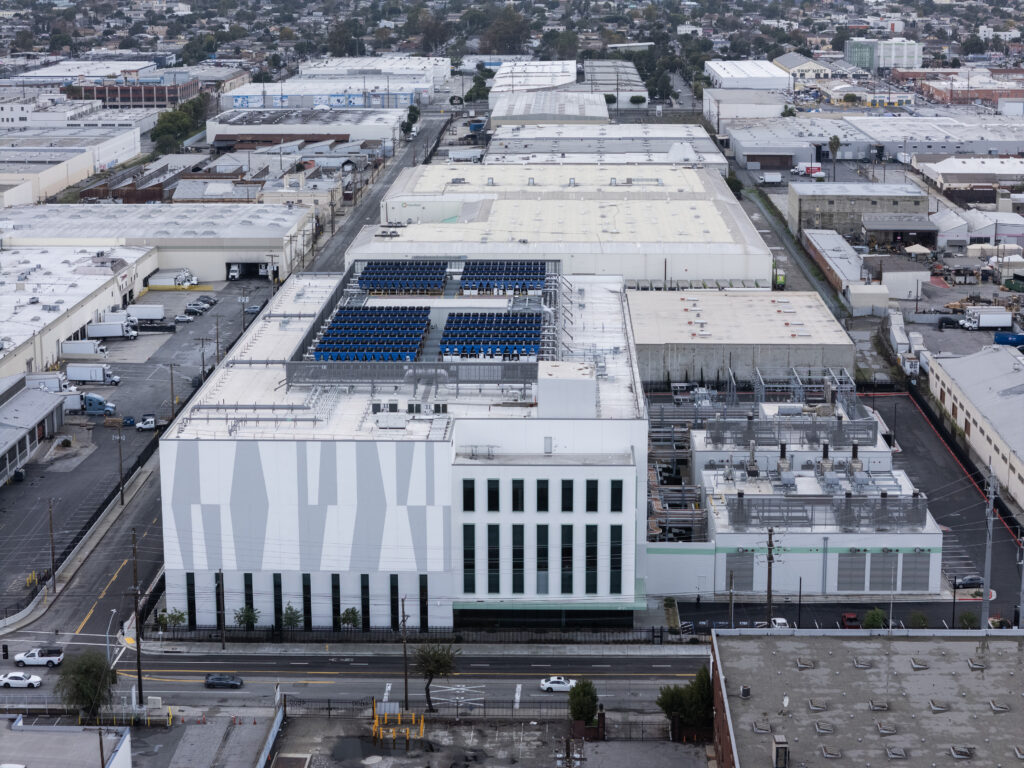
On a recent Monday evening, in a Box Elder County fairgrounds in Tremonton, Utah, three commissioners voted unanimously to approve a 40,000-acre artificial-intelligence campus that will, at full buildout, consume more than twice the electricity used by the entire state. Five hundred residents showed up.
The chants began as “people over profits” and ended as “shame, shame, shame.” When the commissioners cut off the meeting and finished it virtually, Republican commissioner Boyd Bingham yelled at the protesters: “For hell’s sakes, grow up.” This is what the AI debate sounds like in 2026: a county fairgrounds, an angry crowd, and a power grid no one knows how to expand fast enough.
The next phase of AI politics will be fought over electricity, water, transmission lines, permits, and whether the United States can still build at scale. The Stratos project, backed by Kevin O’Leary’s O’Leary Digital and shepherded by Utah’s Military Installation Development Authority, will draw an estimated nine gigawatts at full buildout. Utah’s annual electricity consumption averages four. To lure O’Leary, MIDA executive director Paul Morris approved an energy tax cut from 6% to 0.5% and rushed the vote before environmental and traffic studies were complete. The residents who showed up understood the moment correctly. They were watching their state get rewired in a single board meeting.
The Bill Is Already in Your Mailbox
The numbers explain why every state is about to have this fight. The Department of Energy estimates that data centers consumed 4.4% of U.S. electricity in 2023 and will consume between 6.7% and 12% by 2028. PJM, the grid operator covering 13 states and the District of Columbia, has run three consecutive capacity auctions at the legal price ceiling. The 2025/2026 auction cleared at $269.92 per megawatt-day, an 833% increase from the year prior. According to PJM’s independent market monitor, data centers drove $9.3 billion of that increase, costs that will be recovered from consumers in their utility bills. In the most recent auction, data center load accounted for 40% of total capacity costs. Pepco residential customers in Washington saw their bills rise by an average of $21 per month starting in June 2025; about half of that traces directly to the spike in capacity prices.
You can see the same dynamic farther south. Virginia is the data center capital of the world. The state hosts nearly 450 facilities, with Loudoun County alone running 199 and another 117 in development. Data centers now consume roughly 40% of Virginia’s electricity, up from less than 5% in 2010. In December 2024, the Joint Legislative Audit and Review Commission, the General Assembly’s nonpartisan research arm, warned that data center growth would raise residential bills by an estimated $14 to $37 per month by 2040, even net of inflation. In November 2025, the State Corporation Commission approved Dominion Energy’s first base-rate increase since 1992. Meanwhile, Virginia hands out roughly $1 billion per year in sales-tax exemptions to the data-center industry, 82% of it captured by the top five companies. Tech firms collect the abatements. Households cover the grid upgrades. This is the cost curve nobody put in the AI presentation deck.
Washington Wrote the Wrong Half of the Doctrine
Federal policy has begun to recognize the stakes. President Trump’s December 11, 2025 executive order, “Ensuring a National Policy Framework for Artificial Intelligence,” created an AI Litigation Task Force, threatened states with the loss of $42 billion in federal Broadband Equity, Access and Deployment funds, and laid the foundation for preempting California’s, Colorado’s, and other state regulatory regimes. The same order expressly declined to preempt “AI compute and data center infrastructure, other than generally applicable permitting reforms.” That choice was politically reasonable; it preserved local control over what gets built where. It was also strategically incomplete. The federal preemption project now covers AI models. The infrastructure fight stays with the counties, the state legislatures, and the public utility commissions.
The buildout, meanwhile, is national in everything but its politics. The $500 billion Stargate project, a joint venture of OpenAI, Oracle, SoftBank, and the UAE’s MGX, has committed roughly 10 gigawatts of capacity across sites in Abilene, Texas; Shackelford County, Texas; Doña Ana County, New Mexico; Lordstown, Ohio; Milam County, Texas; Saline Township, Michigan; and a Wisconsin location to be announced. The Abilene flagship alone will draw 1.2 gigawatts at full buildout, enough to power roughly one million homes. Each one of those campuses is a Box Elder County in waiting. Each one will require electricity that Washington is not currently helping the states procure.
The Capital Is Already Leaving Earth
The most sophisticated firms in the AI economy have stopped waiting. Panthalassa, a Portland startup, just closed a $140 million Series B led by Peter Thiel for floating wave-powered compute nodes designed to operate hundreds of miles offshore. The company’s CEO claims a generation cost of two cents per kilowatt-hour, well below natural gas. Its first commercial nodes are scheduled for August deployment.
Above the atmosphere, Starcloud, a Redmond, Washington startup, raised a $170 million Series A in March at a $1.1 billion valuation, the fastest unicorn in Y Combinator history. Its first satellite, Starcloud-1, launched in November 2025 with an Nvidia H100, the most powerful GPU ever sent to orbit, and proceeded to train an AI model and run a Google language model in space. Starcloud has since filed an FCC application for a constellation of up to 88,000 satellites. Elon Musk’s Terafab project, a Tesla-SpaceX-xAI joint venture, aims to manufacture one terawatt of AI silicon annually and put 80% of it into orbital data centers powered by direct sunlight. On May 6, Anthropic announced it had leased the entire compute capacity of SpaceX’s Colossus 1 facility, more than 220,000 Nvidia GPUs, and “expressed interest” in developing multiple gigawatts of orbital AI compute with SpaceX. When the country’s most sophisticated AI firms start writing checks for ocean and space infrastructure, they are pricing in the political cost of building on American soil.
Conservatives have a tradition to learn from for moments like this. Eisenhower built the interstate highway system as a national-defense project and reordered local land use across 48 states. Hoover Dam was built over the objections of those who preferred the Colorado run wild. The Reagan boom of the 1980s was built atop the deregulatory acceleration that made it possible to construct factories, plants, and refineries in the first place. The principle was constant: the country could not lead in its own century without the physical infrastructure to carry the load. The data center is the factory of the cognitive economy, and the right to build one, with the electricity to run it, has become the central question of American industrial policy.
If the Right does not arrive at this debate with a coherent doctrine of national-purpose construction, infrastructure permitting reform, ratepayer protection, and a federalism robust enough to sustain it, the Left and the agencies will write that doctrine in our absence. The bureaucracies that produced California’s permitting timelines and the activist coalitions training their fire on Box Elder County are not waiting for conservatives to catch up. The chants outside the fairgrounds were, in their way, a warning. Power is local. Power is also the whole game.