The Cowboy Philosopher
Will Rogers, the “cowboy philosopher,” both lifted and expressed the national spirit with his down-home humor and horse-sense commentary on the human condition.
The story has it that Grace Coolidge, wife of the thirtieth president, was once asked why he did not run for reelection in 1928. “Cal saw hard times coming,” she said. Cal wasn’t alone. Well before 1928, America’s greatest humorist was warning of hard times to come. And he wasn’t just joking.
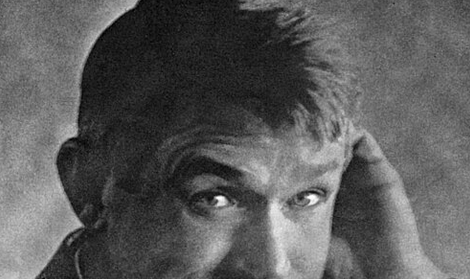
William Penn Adair Rogers was born to a Cherokee family in Indian Territory, near what would become Oologah, Oklahoma, on November 4, 1879. Of his American bona fides, he liked to say: “My ancestors didn’t come over in the Mayflower, but we was there to meet the boat.”
After working as a real cowboy, he performed in wild west shows, developed a vaudeville rope act, joined the Ziegfeld Follies, and by the time of the Great Depression was one of Hollywood’s most well-paid and popular movie stars and “America’s most beloved citizen.”
By 1933, America’s gross national product had fallen to half its 1929 level. Some 13 million workers, 25% of the workforce, were unemployed, and many of those who had jobs worked part time. In big cities like Chicago and Detroit, the unemployment rate approached 50%. Iron and steel production declined by 60% and machine-tool makers cut their output by nearly two-thirds. Residential and industrial construction collapsed to less than one-fifth of its pre-Depression level. Five thousand banks failed. 600,000 homeowners lost their property. Stockholders lost three-quarters of the value of their assets. Agricultural income plunged by 60%, and by 1933, banks were foreclosing 20,000 farm mortgages a month.
The fascists, Nazis, and communists across the ocean seemed to offer a better future. Benito Mussolini made the trains run on time in Italy. Adolf Hitler restored Germany’s national pride and economy. The journalist Lincoln Steffens, after a visit to the Soviet Union, proclaimed, “I have seen the future, and it works.” In 1931, 100,000 Americans applied for jobs in Stalin’s workers’ paradise.
Somehow, in its great distress, America did not succumb to the totalitarian temptation. Maybe humor had at least a little to do with it. Will Rogers, the “cowboy philosopher,” both lifted and expressed the national spirit with his down-home humor and horse-sense commentary on the human condition. There was something in this American spirit that helped to weather rough times. Somehow it is hard to imagine a zealous Nazi or communist apparatchik enjoying an open-hearted, knee slapping laugh with a friend.
Rogers famously “never met a man [he] didn’t like.” But in his live performances, on radio, and in his syndicated newspaper columns, he poked fun at everyone. Bankers, lawyers, and congressmen were high on his list, but he often ribbed the ordinary folks, too, who were just as bad as the stockbrokers, “spend[ing] money they haven’t earned to buy things they don’t want to impress people they don’t like.”
There was no end of suggestions for ending the depression—presidential advisors, congressmen, intellectuals, columnists, economists, all had their pet remedies; none seemed to work. Rogers had about as good a solution as any offered by the experts: He figured, “We will just about have to save ourselves accidentally. That’s the way we stumbled on prosperity.”
Professional economists and historians with PhDs have tried to explain the depression ever since it occurred. Rogers had his own theories. As he explained the paradox of overproduction: “Too much wheat, too much corn, too much cotton, too much beef, too much production of everything. So we are going through a unique experience. We are the first nation to starve to death in a storehouse that’s overfilled with everything we want.” When dust storms ravaged the prairies, Rogers pondered the legal puzzles this would present: If Kansas blows over Colorado, who pays the property tax?
A kind of national crisis developed when Rogers, against his better instincts, and with the advice of friend Eddie Cantor, decided to invest in bank stocks. They kept going down in value, and it began to affect his humor; the more his investments tanked, the less funny he got in the Ziegfeld Follies, where he was paid to be funny. Wall Street was “just no place for a weak hearted comedian,” he said. He sold at a loss, and American humor was much the better for it. It may have saved the country.
Will Rogers did not live to see his generation beat the Great Depression and defeat the Nazis and fascists. He died in a plane crash with the famed aviator Wiley Post in 1935. But his chastened investment strategy left a national treasure for future generations. Having been burned by bank stocks, he decided to invest in land, because, whatever happened, “you could always walk on it.” He was especially keen on ocean frontage because they only made so much of it and they weren’t making any more. The happy result of this amusing strategy is Will Rogers State Historic Park in Pacific Palisades in Santa Monica, California. You can still walk on it. It’s good for the spirits.