Marxism and Democracy
The Marxist playbook remains in use in the United States.
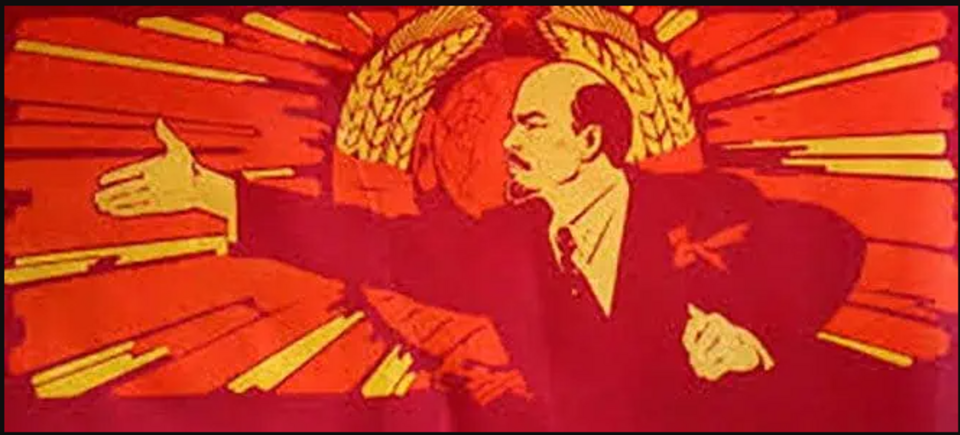
One of modern American Leftists’ consistent claims is that they believe in democracy, which they use to pillory political opponents—including Donald Trump, who won two presidential elections certified as democratic by authorized election officials. This apparent contradiction is more strongly based in Marxist ideology and Soviet history than is generally recognized. Marxism long has had a distinct vocabulary, partly to aid chronic Soviet deception campaigns designed to fool non-believers into thinking revolutionary Marxism is something different than it really is. Relevant history is especially important to understand now, as Democratic Socialists of America (DSA) seem poised to assume a growing role in the Democratic Party if pollsters are right about the 2016 national mid-term elections. Long-standing Marxist linguistic gymnastics remain in use in the United States today.
The Soviet Union, the first Marxist state, claimed to be “democratic” from the start. “Democratic centralism” meant that leaders of the Communist Party of the Soviet Union (CPSU) sometimes talked with each other and citizens, and they supposedly worked in the interests of “the people,” making them democrats. “Centralism” meant that despite superficial “democratic” niceties, the CPSU was firmly in charge.
Some early Soviet communists with actual democratic leanings got ahead of themselves at the CPSU’s 17th party congress in 1934, when delegates voted by rare secret ballot to confirm Josef Stalin as party leader. By many accounts, there were “nay” votes. Fixing that problem, Stalin had about 70 percent of the delegates to the congress executed during the Great Purge of 1936-1938, which he ordered. Soviet elections always featured only one candidate—party leaders’ choice.
In 1945, as the Red Army rolled into Eastern Europe, the Soviets created “people’s democracies” run by Soviet-installed communist parties. They too were totalitarian rulers. Some established Potemkin legislatures, such as East Germany’s Volkskammer (People’s Chamber) replete with fake opposition parties, which were designed to fool gullible Westerners about the nature of Marxism in practice and to give foreign communist parties talking points that there really was “democracy” in the Soviet empire.
In China, undisputed party leader Xi Jinping now extols a “whole-of-process people’s democracy” wherein the Chinese Communist Party holds ill-defined, periodic consultations with unnamed people but does not hold elections for major offices.
Communist-run dictatorships sometimes even use Soviet-style terminology—containing variants of “people” or “democracy” or both—to name themselves, thereby proclaiming clearly that they are not democratic as usually defined. The world has been graced by the Democratic People’s Republic of Korea since 1948 and the People’s Democratic Republic of Yemen in 1967-1990.
The notion that “democracy” is a characteristic only of left-wing organizations is a matter of left-wing faith in the United States, too. The term “democratic” in the name of the Students for a Democratic Society (SDS), which existed for less than a decade in the 1960s but prominently influenced the New Left of that time, was not accidental. The “democratic” society student radicals liked was explicitly socialist is orientation. According to historian of the SDS Kirkpatrick Sale, SDSers saw democracy as a characteristic of left-wing organizations only. The SDS collapsed in 1969 into its final form, the Weather Underground, that espoused revolutionary violence and abandoned even a façade of democracy.
Some of the radical detritus of the collapse of the SDS and the New Left joined splinter communist parties while others formed the New American Movement, which joined Michael Harrington’s Democratic Socialist Organizing Committee to form the DSA in 1982. Dorothy Healey, a long-time Communist Party USA official who ran afoul of party chief Gus Hall but had once had been a big fan of Stalin and remained a self-described unaffiliated communist, became vice chair of DSA at its founding. By many accounts, DSA members now hold a variety of Marxist views, but the DSA’s website and formal policies reflect class-oriented, Soviet-style Marxism leavened a bit by modern race- and gender-considerations. “Democracy” is still a left-wing thing.
Extremists virtually always win power struggles over milquetoast moderates, and that surely is true among Marxists, as Lenin demonstrated. From the time of Marx himself, Marxists have worked hard to enforce ideological orthodoxy among the faithful. Thus, it is unsurprising that in 2026 intimidation to maintain ideological orthodoxy became overt among Marxists in the Democratic Party. After heated discussion about DSA candidates’ wins in Democratic primaries that summer, for example, influencer Hasan Piker called for “Marxist-Leninist” punishment of Democrats who do not “follow the party line.” Stalin presumably would have approved. So, obviously, do the many intimidated and Marxist Democrats who are not really democrats.