The Music That Crossed the Color Line
The fiddler’s performance reaches everyone, even as the social conventions governing who belongs inside remain intact.
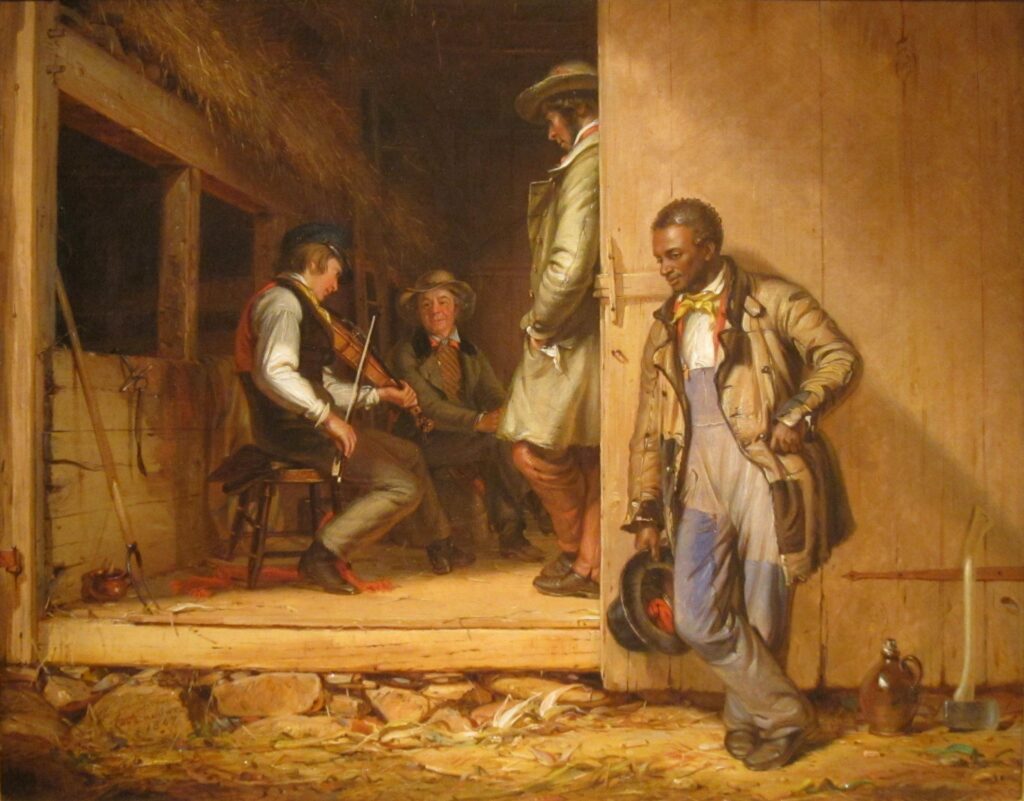
Music can pass through doors that people cannot. In William Sidney Mount’s 1847 painting The Power of Music, three white men gather inside a Long Island barn to hear a fiddler, while a Black laborer stands just beyond the threshold, listening with equal pleasure. The scene appears almost idyllic, a portrait of the easy sociability of rural American life. Yet its quiet arrangement reveals something more troubling about the society Mount inhabited.
The black listener occupies the painting’s most revealing position. His body remains outside the barn, but his attention is entirely absorbed by the music within. Mount leaves the reason for his exclusion unstated, allowing the threshold to suggest the racial divisions of antebellum America. The fiddler’s performance reaches everyone, even as the social conventions governing who belongs inside remain intact.
Mount was himself an accomplished fiddler, deeply interested in American folk music and the instruments that produced it. His familiarity with rural musical traditions lends the painting its unusual intimacy, from the relaxed postures of the listeners to the concentration of the performer. Completed fourteen years before the Civil War, The Power of Music preserves a fleeting moment of common enjoyment in a country whose deepest divisions were becoming increasingly difficult to ignore.