Sen. Eric Schmitt: Codifying DOJ National Fraud Enforcement Division and Border Enforcement Model
Fraud against federal programs has become a transnational criminal enterprise.
Mr. President, the Federal Government has become a gold mine for fraudsters. Just last week, we saw that one health insurance marketplace had over 700,000 fraudsters and over $2 billion in fraud. In the 6 months since President Trump tapped Vice President Vance to lead the White House Task Force to Eliminate Fraud, Federal investigators have uncovered more than $200 billion in fraud against the American taxpayer. Think about that—hundreds of billions of dollars stolen from hard-working Americans every single year.
The fraud is egregious, and it is systemic. Consider New York City. The Vice President’s task force discovered that there is more than $2 million in unemployment insurance fraud every day—$2 million in fraud every day—in one program in one city alone. That is more than $700 million annually, all stolen from the American taxpayer. It is money that was earned through blood and sweat, through sacrifice and service. It is money that was supposed to care for the sick, to assist those with disabilities, to feed hungry kids, to help struggling families, to support our veterans. Instead, it has been stolen by lowlifes, degenerates, con artists, and organized crime.
For years, as government spending boomed, this theft from the American people was treated as a cost of doing business. Career bureaucrats shrugged, and politicians—many purposefully—looked the other way, all while fraudsters kept stealing and looting from our country.
In that environment, it isn’t too surprising to learn that there was not a Division at the Department of Justice focused on investigating and prosecuting fraud against the government. President Trump saw that. Vice President Vance saw that. Attorney General Blanche saw that. And they took action. They created the National Fraud Enforcement Division within the Department of Justice to root out this fraud and hold the fraudsters responsible.
We saw this problem here in Congress as well. I launched the Senate Anti-Fraud Task Force with my colleagues to help build durable solutions to prosecute this fraud and prevent it from happening in the future.
That is why I rise here today—to take the first step in ending the rampant fraud against the American taxpayer and to enshrine the National Fraud Enforcement Division as a permanent Division within the Department of Justice.
Fraud against our country has become not only a multistate problem but a transnational criminal enterprise. To address this problem, we need a permanent National Fraud Enforcement Division that brings together prosecutors, investigators, Federal Agencies, and State and local law enforcement to attack fraud on the frontlines. The mission is simple but very, very important: Protect the American taxpayer and government against fraudsters. That mission should transcend red jersey-blue jersey party politics. Find the people stealing taxpayer dollars, and bring them to justice.
Today, right here, we can make that Division permanent. Regardless of party affiliation, every Member of this body should want taxpayer dollars to go where they are supposed to go, not into the pockets of fraudsters. It is that simple, truly. So often, we squabble over commissioning studies or we analyze a problem or host briefings to research root causes of an issue or hem and haw toward issuing a white paper, but today, on this Senate floor, we can permanently establish an enforcement Division that does three things: finds fraud, prosecutes fraud, and stops fraud.
The House passed this bill with overwhelming bipartisan support. Why? Because stopping the theft from the American taxpayer is just as important as deciding how to spend those dollars.
When I am back home in St. Louis, I often hear from the great people of the Show-Me State with similar complaints. They are sick and tired of watching criminals steal millions—billions—of dollars while their friends and families struggle to achieve and receive basic services. They are sick and tired of a government that can track down a single Venmo payment, but somebody can’t find the organized fraud rings walking out the front door with an obscene amount of taxpayer dollars. These are not signs of serious governance, and at a certain point, indifference to fraud becomes complicity in it.
As chairman of the Senate Anti-Fraud Task Force, I have seen how deep the rot goes. Fraudsters exploit virtually every government program ever created. They create fake businesses. They bill for services never provided. They manufacture beneficiaries who do not exist. They exploit vulnerable people as names on the screen while diverting money into their own pockets to fund obscene purchases and lifestyles.
These people, they are sick and twisted people. They are cold and calculated. These fraudsters are running an entire criminal enterprise into empires to steal from the American people.
The purpose of government assistance is to help Americans who genuinely need it. Government assistance should not help subsidize lavish lifestyles for criminals who have learned how to manipulate a lackadaisical legislature. We need prosecutions with real authority, with serious resources, so that our government can follow the money wherever it leads and consequences—real consequences—for those who defraud our country.
If we are a serious Senate, we must be able to say with clear eyes: If you steal from the American people, we will find you, and we will prosecute you.
You may hear shortly that this division already exists. And thanks to President Trump and Vice President Vance, that is currently true. But without this bill codifying it, fraudsters will know that their paydays will soon return because a future administration could disband the division, be distracted elsewhere. There should be no reason that the U.S. Senate should object to creating a permanent division within the Department of Justice to find and investigate and prosecute fraud.
I would also like to thank Senator Moody for her work on this. Senator Moody has been fighting fraud since day one, and she has been a great partner. We served together as attorneys general, and she had a reputation for that even then.
I want to yield the floor at this point to Senator Moody.
Mr. President, reserving the right to object.
My bill is simple. It should be a really uncontroversial purpose codifying the National Fraud Enforcement Group. It has done remarkable work protecting American taxpayer dollars. And by the way, this wouldn’t survive. This isn’t just for this administration—beyond it. It would be great if a Democrat President somewhere down the road was focused on this with an existing National Fraud Enforcement Division.
But the proposed amendment deals with a completely different topic. Regardless of how you feel about the amendment, it seeks to undo the administration’s new model for combating transnational organized crime, a new model that has been incredibly successful.
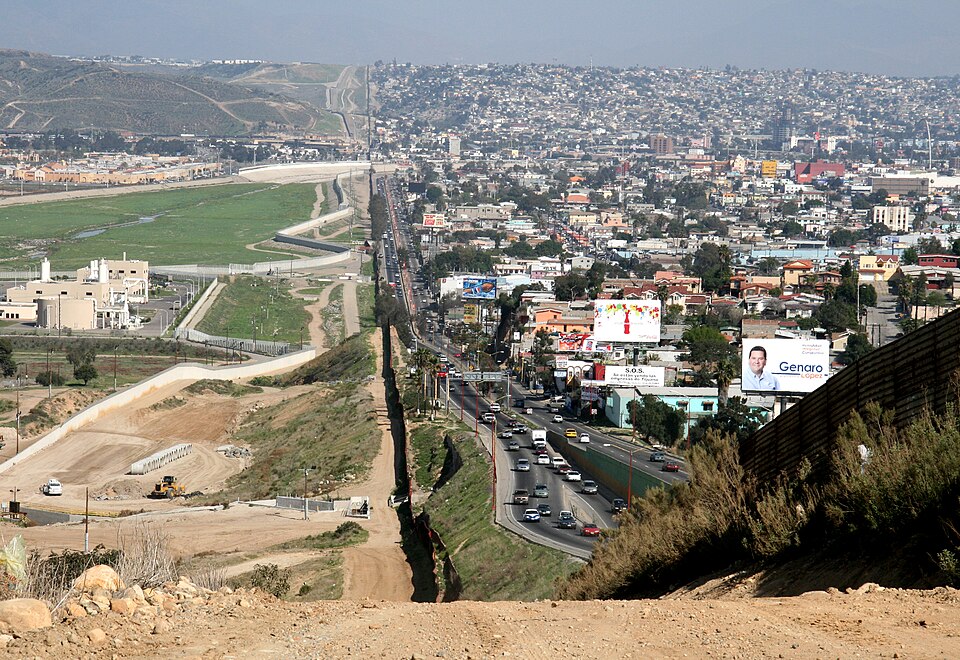
During the prior administration, fentanyl and other dangerous drugs poured across Joe Biden’s open borders. Those drugs poisoned our communities, destroyed families, and stole the lives of Americans who should still be here with us today.
Cartel members poured across the open border as well and victimized the American people with violent crime, human trafficking, and dangerous drugs.
In Missouri, the consequences of that open border were all too real. There are empty chairs at kitchen tables, parents who buried their children, grandparents raising their grandkids.
President Trump ran on closing the border and stopping the flow of these dangerous drugs. He understood that it is our obligation to protect the homefront, protect those families, and use the resources at our disposal wisely.
To accomplish these goals, he reoriented how the Federal Government counteracts transnational organized crime, focusing on using Homeland Security task forces. That model incorporates FBI and DHS agents alongside the more than 20 Federal Agencies and over 400 State, local, and international law enforcement agencies for coordinated operations.
The reorganization sought to go upstream and get to the source of the true problem, securing the border and stopping the cartels and other transnational criminal organizations. By focusing on the actual root of the problem through the Homeland Security Task Force model, we have seen investigators, prosecutors, intelligence analysts, and immigration enforcement working together to disrupt the cartels and the criminal networks threatening our country.
That is how we should fight crime that operates across borders, by taking the fight to them. And there is an important downstream effect of this approach: The trafficker moving fentanyl often also traffics people, launders money, and arms violent gangs.
By updating our law enforcement model to meet the reality on the ground and the realities of modern transnational criminal threats, the new Homeland Security Task Force model has achieved remarkable success. Our intelligence Agencies have reported that fentanyl crossing the border fell 55 percent after President Trump took office.
In some year-over-year statistics, drug flows have been cut by 98 percent—98 percent. And the new Homeland Security task forces have arrested thousands of criminals, including more than a thousand cartel members, hundreds of MS-13 gang members, and hundreds of Tren de Aragua members.
They have seized tons of illegal drugs, including more than 300,000 fentanyl pills, and they have taken thousands of illegal guns off the streets as well from hardened gang members and cartel members.
Law enforcement agents have worked tirelessly over the past few decades to try to stem the tide of transnational organized crime and criminal gangs. The Trump administration inherited the status quo with dedicated law enforcement agents but an organizational and operational model that wasn’t working.
So the administration got to work and reorganized the operations, and the results have been promising. This proposed amendment—an amendment to a bill that seeks to codify protection for American taxpayer dollars—would disrupt this new model approach, and it tries to codify the old approach of combating transnational organized crime. That would be a return to the approach that just wasn’t working.
We should instead allow the administration to continue its good work of reorienting enforcement through the Homeland Security Task Force model. Too often, people in DC confuse the survival of a program or an enforcement model with the success of its mission. President Trump’s reorganization efforts broke that mold, and it proved to be one of the most important steps we have ever taken against the cartels. This amendment is an attempt to revert to a prior model that wasn’t working, and it is a distraction from our effort to codify the administration’s important efforts to protect Americans’ hard-earned taxpayer dollars against fraudsters. And for those reasons, I do object.