Germany’s Nokia Moment
Six things Germany must do to survive and thrive into the future.
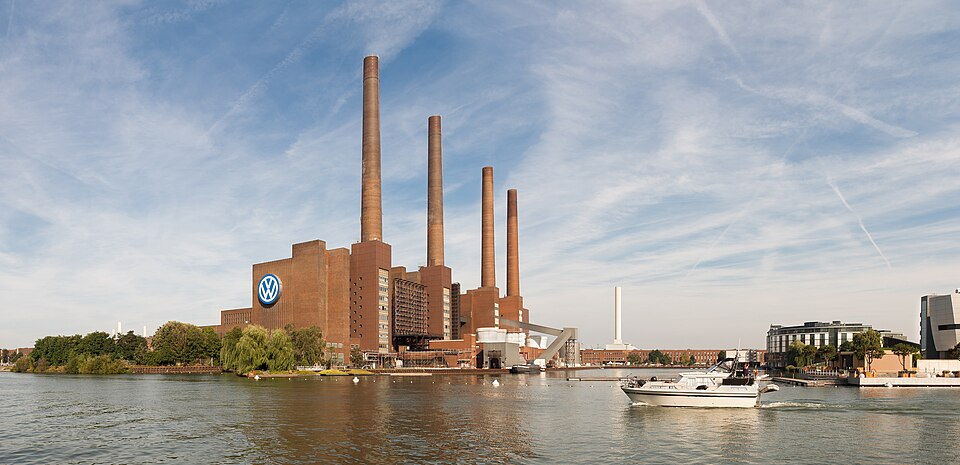
Volkswagen’s supervisory board approved another 50,000 job cuts and conceded it cannot secure future production at four German plants beyond 2031. The debate in Wolfsburg, Berlin and the business pages of the Frankfurter Allgemeine has turned almost entirely on cost: wages, energy prices and which factories survive.
That is the wrong argument.
This month Volkswagen lost its place in the Euro Stoxx 50, Europe’s blue-chip index. Its seat went to Nokia, which no longer makes phones and now supplies network equipment to AI data centers. Some are calling it Volkswagen’s Nokia Moment: a maker of superbly built products losing to rivals with better software. Volkswagen is now turning to Rivian in the West and Xpeng in China for the software it could not build itself. Jochen Sengpiehl, a former Volkswagen marketing chief, warns that the China shock is only beginning and that cars are merely the first domino to fall.
The diagnosis is widely shared. What’s missing is a plan. Here are six things Germany must do to survive and thrive into the future.
Start with what Germany is actually good at. The usual answer is engineering, but engineering was only the visible part. Beneath it sat thousands of specialized Mittelstand firms, 75 Fraunhofer institutes that turn research into products, a vocational system that passes skills across generations, patient banks and shared technical standards. Germany’s real genius was making many specialized capabilities work together. Max Weber noted that the German word for occupation, Beruf, carries the older sense of a calling. That moral economy of competence and trust is capital, even if no balance sheet records it.
Decide what to own and what to buy. No carmaker can build everything, so buying software is defensible. The danger is buying the wrong things. Battery cells and chips come from many suppliers. The positions that govern the customer relationship do not: the operating system, the vehicle data, and the AI interface through which a family will soon ask for a car that seat four and never leaves them hunting for a charger. In strategy we call these control points. Every German board should be able to name its own and say which it is prepared to surrender.
Plug into American AI. Germany cannot out-invest the U.S. in frontier AI, and it should stop trying. In 2024, American private AI investment exceeded that of China, the European Union and Britain combined. Last year it reached $285.9 billion. The better course is to secure access to the best American models, chips and cloud capacity on terms that let German companies build on top of them.
The exchange runs both ways. American labs have the models. German industry has what those models still lack: decades of factory data, deep process knowledge, and the physical systems where industrial AI must ultimately prove itself. Siemens shows how it works, building its industrial AI assistants with Microsoft and its industrial AI platform with Nvidia. Take the models, keep the control points.
Organize around systems, not sectors. Mobility now runs into energy, software and semiconductors; machinery into robotics and data. Yet Berlin’s ministries and trade associations remain arranged by industries drawn over a century ago. Germany should pick the few systems where it has enough capability to matter globally, such as mobility, industrial automation and energy, and build the connections among them. Think of it as an interaction field: value created among companies, technologies, customers and institutions, rather than by one firm pushing a product down a chain.
Remove friction and let markets pick winners. Berlin shouldn’t choose the car architecture or the AI model every manufacturer must use. It should fix what keeps new combinations from forming: grid connections that take years, research that takes too long to reach the market, skilled immigrants who wait months for visas, and public procurement too timid to be anyone’s first customer. Germany’s thoroughness has served it well. Thoroughness has a less attractive cousin called delay.
Attach conditions to every rescue euro. A plant doesn’t earn another generation of investment because it has stood for forty years. When public money supports an existing site, a fixed share should buy what comes next: software skills, supplier development, research partnerships. Otherwise, the state isn’t financing transformation. It is renting the past.
Rebuild the Beruf. The apprenticeship system and the Meister tradition rested on the conviction that competence accumulates. Their next version must blend mechanical, electrical, software and AI training. Let people move freely between laboratories and factories and treat foreign talent as part of the German model rather than an exception to it. Stewardship means preserving the capacity to build expertise even as the expertise itself changes.
Together these add up to a new mission. “Made in Germany” became one of the great industrial brands because it meant quality and reliability. Das Auto and the Ultimate Driving Machine meant something. Its second chapter should be “Orchestrated from Germany”: German engineering and Mittelstand specialization combined with American AI, Dutch chip equipment, Taiwanese and Korean semiconductor know-how, Indian engineering talent and international capital. Those combinations should be assembled with whichever European partners are ready to move, without waiting for all 27. Germany never prospered through self-sufficiency. It prospered through specialization, coordination and trade.
The executives and ministers now arguing over factories inherited an extraordinary stock of industrial, human and moral capital from generations of engineers, workers, communities and families. Their duty is to rewire it for the world their successors will actually compete in.
Nokia, after all, survived by becoming something else. It stopped making phones, rebuilt itself around the infrastructure of the AI economy, and took Volkswagen’s seat among Europe’s fifty blue chips.
Volkswagen’s crisis is not a labor-cost story, and treating it as one is a category error with a shelf life. It is the first loud alarm that the architecture of an entire industry has shifted beneath a country that built its postwar identity on being the best in the world at the old architecture. Germany does not need cheaper factories. It needs a seat inside the system that will decide, a decade from now, whether a German-made car is even part of the conversation at all.