From School Reopenings to a Statewide School Board Fight
Reopening Failure Prompts Initial Activism
Paul Martino, who runs a venture capital firm and has founded nine companies, said his involvement began when the local superintendent announced that schools would remain closed for the next school year even though the buildings had been open in June and the district had the full summer to prepare. He described the superintendent as having manipulated the school board in a significant way and called the outcome a clear case of incompetence that failed students.
Martino stated that the extended closures marked the start of wider community division. He said he decided to act because the situation was letting down both his own children and other families in the district, and he wanted to determine why the reopening had not occurred despite available planning time.
He framed his entry into activism as a direct response to that specific failure rather than a prior interest in political work. The episode led him to question how school board decisions were being made and who held influence over them.
Remote Learning Reveals Classroom Content to Parents
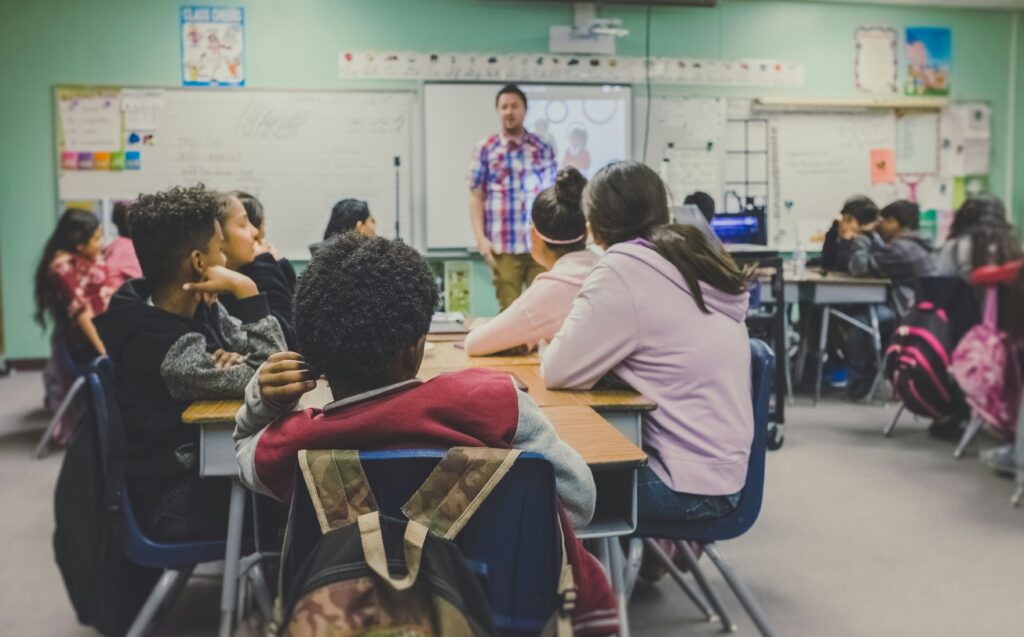
Martino explained that many parents had previously paid little attention to school board elections or the details of daily classroom instruction. The shift to remote classes during the pandemic gave families an unexpected window into lessons through Zoom, allowing them to observe teaching approaches and content directly for the first time.
He noted that this visibility prompted parents to conclude that school board elections carried more weight than they had realized. Some parents liked what they saw in certain classrooms, while others found material they viewed as inappropriate or politically slanted.
Martino added that the experience made families more aware of the power school boards hold over curriculum, personnel, and daily operations. He said the period showed parents that who serves on those boards affects what happens inside schools in concrete ways.
Neutrality Policy Responds to Reports of Classroom Political Pressure
After the new board took control in Central Bucks, members enacted a neutrality policy. Martino said the measure was needed because some teachers had directed students on which candidates to support and had indicated that grades could be affected by disagreement with a teacher's political views.
He contrasted this with his own school experience, during which teachers kept personal political positions private as a matter of professional pride. Martino described younger teachers as sometimes taking the opposite approach and making their views known to students.
The policy became a central element of the documentary, according to Martino, and remains a point of ongoing disagreement. He said the issue highlighted how political instruction had entered classrooms in ways that had not been present in earlier generations.
Venture Capital Approach Scaled to Multiple Districts
Martino reported that his group applied principles from venture capital work to recruit and support candidates, resulting in the placement of approximately 160 school board members in the original district. The same methods were then documented in a written playbook and applied in fifty additional locations across Pennsylvania.
He described the effort as an attempt to pair resources with targeted execution in the same manner used in private-sector investments. The approach produced both support and opposition, yet Martino said it delivered measurable impact on board composition in multiple districts.
Martino noted that the work drew personal criticism but allowed him to translate day-to-day professional skills into political activity. He expressed satisfaction at having used his background in company founding and investing to affect outcomes in public education governance.
PBS Film Draws Criticism for Presenting Both Perspectives
The documentary Bucks County, USA was produced for PBS by directors Barry Levinson and Robert May, both described by Martino as left-leaning. He said the filmmakers expressed surprise at the strength of criticism they received from progressive outlets for including conservative voices rather than presenting a single viewpoint.
Reviews in IndieWire and Slate objected to the decision to show arguments from multiple sides. Martino observed that the reaction illustrated a reluctance in some quarters to engage with opposing positions even when presented by filmmakers with established progressive credentials.
He pointed out that the directors had not hidden their own political leanings yet still faced accusations for allowing conservative families to appear on screen. Martino said the intensity of the response itself became part of the story the film captured.
Extended Filming Alters Crew Views on Conservative Families
Martino recounted that the film crew spent four years documenting his household, including holiday periods when his daughter prepared gifts for crew members. Several crew members later stated in interviews that the prolonged personal contact changed their prior assumptions about conservative families.
One crew member reportedly said the experience made them more open to speaking with individuals wearing political symbols they previously would have avoided. Martino emphasized that the central narrative of the documentary centers on his daughter maintaining a close friendship with her best friend despite the families' differing political views.
He described the friendship story as one viewers could relate to across political lines. Martino noted that the personal interactions during filming produced measurable shifts in perspective among some crew members who had limited prior contact with people holding opposing political positions.
Watch the full episode of Just the News, No Noise with John Solomon here.