After the Flood, a Republic
The Revolution had swept away the old authority of the British Crown, and the young republic stood, like Noah’s world, before the difficult promise of renewal.
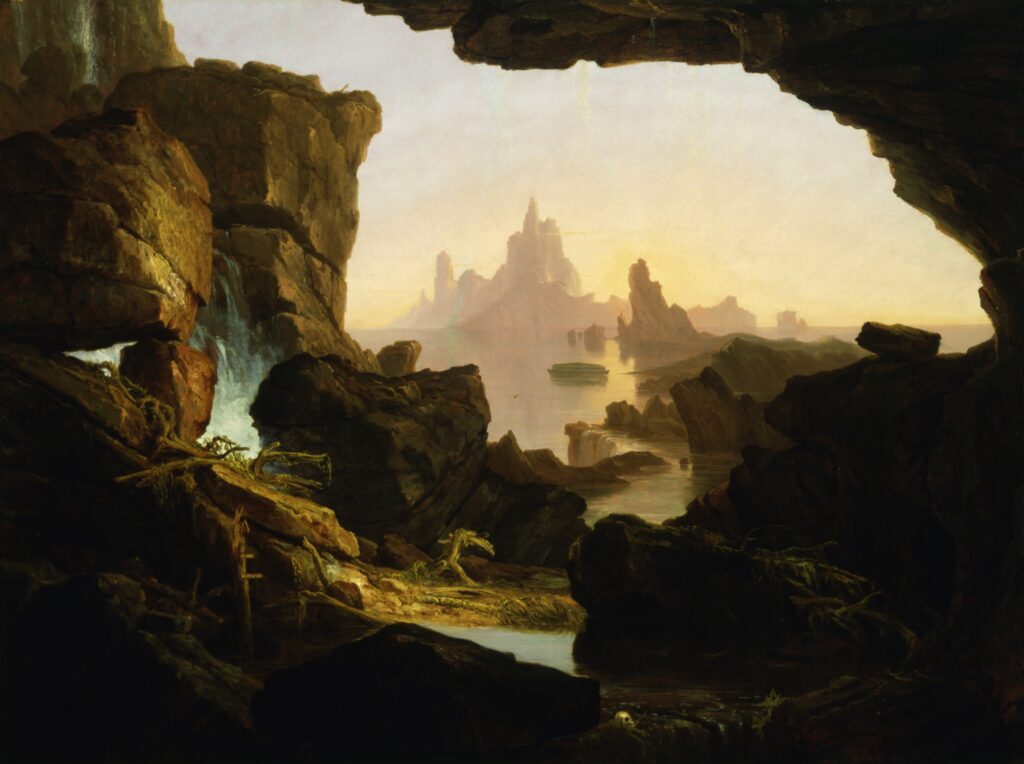
Thomas Cole, The Subsiding of the Waters of the Deluge, 1829, oil on canvas
Thomas Cole painted The Subsiding of the Waters of the Deluge in 1829, imagining the biblical Flood as something more than sacred history. For Cole, America itself represented a civilizational beginning: the Revolution had swept away the old authority of the British Crown, and the young republic stood, like Noah’s world, before the difficult promise of renewal. In the painting, the violence has already passed. The waters retreat into the distance, the ark rests beneath a clearing sky, and a dove moves toward land.
Yet Cole refused to make rebirth uncomplicated. In the foreground lies a human skull, a reminder of the folly and destruction that preceded the new world now emerging into light. The result is a distinctly American kind of optimism: not the belief that history begins without inheritance, but that a people may pass through catastrophe, remember what was lost, and nevertheless build again.