Docendo discimus
Make Rome, Not Athens, the Center of Classical Schooling
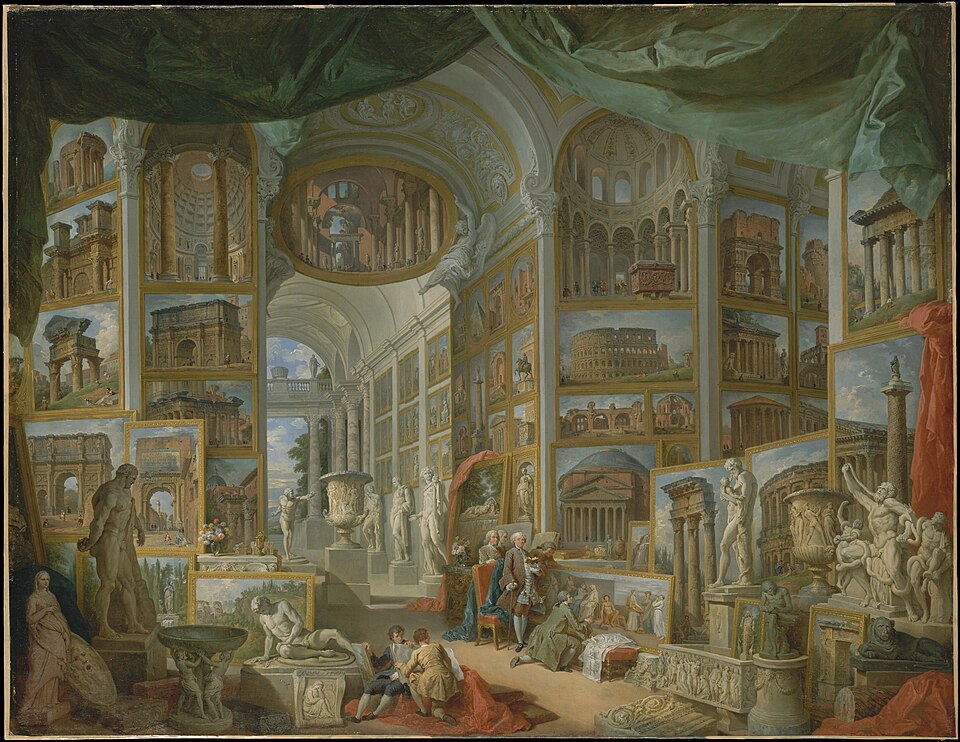
A new paper from The Heritage Foundation argues that the fast-growing classical education movement has strayed from its own founding purpose, and that fixing it requires putting the Roman Republic — not ancient Greece or vague appeals to “critical thinking” — at the center of the curriculum.
The paper, “Make Classical Education Roman Again,” is the fifth installment in Heritage’s Conservative Perspectives series. It’s co-written by Ryan Hammill, executive director of the Ancient Language Institute, and Pavlos Papadopoulos, a visiting fellow at Heritage’s B. Kenneth Simon Center for American Studies. The series describes itself as a forum for conservative viewpoints rather than official Heritage policy.
The authors’ central claim is that classical education has expanded dramatically in recent years but risks losing its way by unconsciously importing the very progressive habits it was built to resist. Many classical schools, they write, still rely on grades, bells, and a need to satisfy college admissions offices, and some have justified Latin instruction using modern, skills-based arguments like SAT score gains rather than treating it as access to Roman civilization itself.
The paper takes particular aim at two figures widely credited with inspiring the classical revival: Dorothy L. Sayers and Mortimer Adler. Sayers’s 1947 essay “The Lost Tools of Learning,” reprinted by National Review in 1979, became what the authors call the movement’s unofficial founding document. But they argue her framework treats the Trivium as stages of cognitive development rather than as bodies of substantive content, leaving history reduced to memorized dates and Latin reduced to a “mental whetstone” rather than a gateway into Roman civilization. Adler’s Great Books project, meanwhile, is faulted for privileging abstract philosophical ideas — and ancient Greece — over the political history, biography, and institutions the authors say actually shaped America’s founders.
That, the authors write, is a historical mismatch. Citing letters from John Adams and John Jay urging their sons to study Cicero, Sallust, Livy, and Plutarch, the paper argues that the Founders’ own education emphasized Roman political history, rhetoric, and biography far more than Greek philosophy — Sparta over Athens, Cato and Cicero over Plato and Aristotle. That Roman emphasis, they argue, produced statesmen equipped for republican self-government, not merely critical thinkers or connoisseurs of “Great Ideas.”
The paper also pushes back on philosopher Leo Strauss’s influential framing of Western civilization as an unresolved tension between “Athens and Jerusalem,” arguing that formulation sidelines Rome’s — and Christianity’s — historical centrality, and that it doesn’t match the tradition that actually formed the American Founders.
From this history, the authors draw prescriptions for today’s schools: center Latin language instruction (not just a weekly class), organize the Trivium and Quadrivium around real content rather than treating them as generic thinking skills, and prioritize the biographies of statesmen — Cicero, Cato, Cincinnatus — over early exposure to abstract philosophy. Citing Aristotle and Plato, they argue that moral formation and civic service should precede philosophical study, not follow progressive-style “critical thinking first” approaches.
The paper is explicit about the political stakes it sees in the project. It frames the modern classical education movement as an heir to the resistance against the “administrative state” and casts contemporary progressive education — citing frameworks like Critical Race Theory and gender ideology — as aiming to produce “post-Western” and “post-American” citizens. Classical education, in this framing, is a countercultural corrective aimed at restoring what the authors call “citizen competence.”
The authors also argue that a true classical education is inherently elitist rather than egalitarian, invoking C.S. Lewis’s line that democratic societies need education that is “ruthlessly aristocratic” to produce capable leaders, and Renaissance humanist Pier Paolo Vergerio’s argument that liberal education is fitting training for those preparing to rule.
The paper concludes that neither technical training nor unschooling can substitute for this civic formation, and that a Rome-centered classical education is necessary to prepare a new generation of American statesmen.