The Anonymous Branch
John Thune runs the United States Senate. Nearly half the country cannot say who he is.
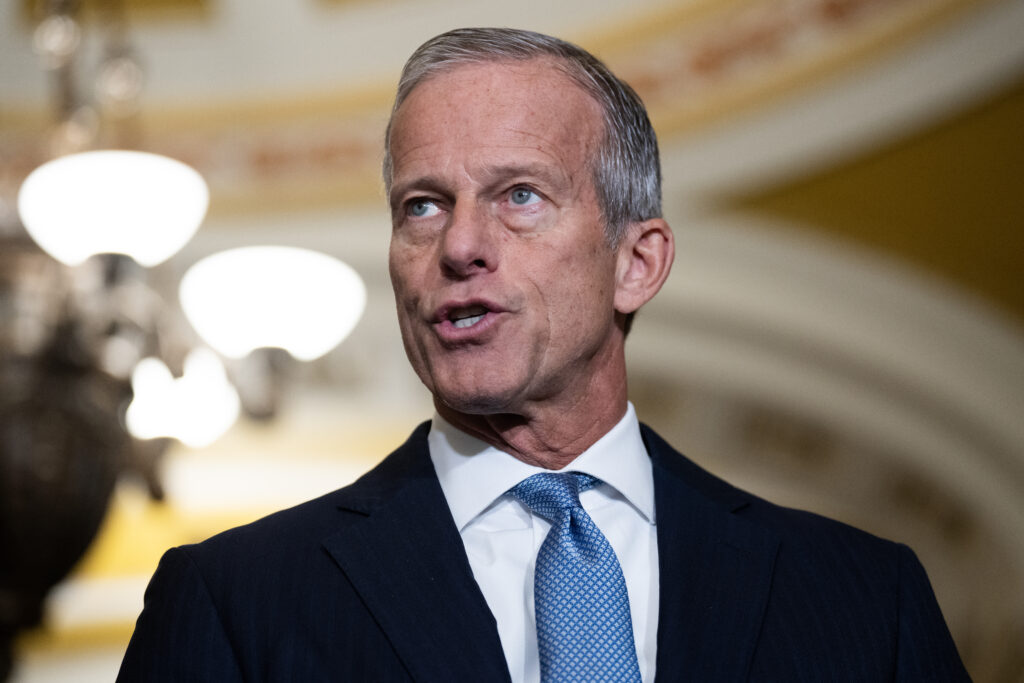
The Senate Majority Leader of the United States is a stranger to nearly half the country. In the latest Napolitan News Service survey, 48% of registered voters say they have never heard of John Thune or do not know enough about him to offer an opinion. Among those who will, 17% are favorable and 35% are not. The man who runs the floor of the upper chamber cannot get one in four members of his own party to say a kind word: Republicans rate Thune favorable at just 25%, Democrats at 12%.
This is the state of congressional leadership in 2026. The men holding the gavels are either unknown or disliked, and familiarity buys them nothing.
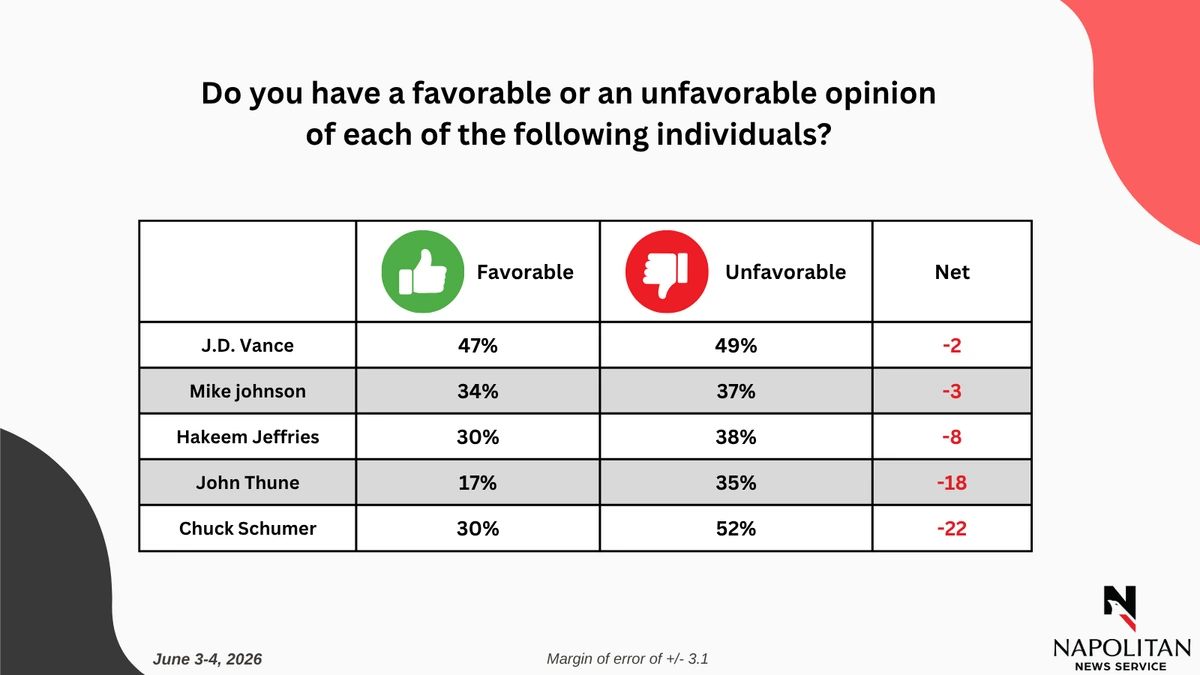
Speaker Mike Johnson does only somewhat better. Thirty-four percent of voters view him favorably and 37% unfavorably, with roughly a third unable to place him at all. His numbers have risen six points since April, yet the second man in the line of succession to the presidency remains a figure most Americans meet only in passing. Republicans favor him 57% to the Democrats’ 14%.
Then there is the contrast. Vice President J.D. Vance, who holds the one national office the Founders left nearly empty of duties, is the best-known of the five and the only one gaining ground. Forty-seven percent view him favorably, up seven points since April and within reach of the 50% he reached in December. He is still polarizing, 49% unfavorable, with 82% of Republicans favorable against 16% of Democrats. But Vance commands a presence the men running Article I cannot. The branch the Constitution created first now generates no one the public can see. The executive generates everyone.
The Democratic bench offers no relief. Senate Minority Leader Chuck Schumer, in Washington since 1999, is the most disliked name tested: a solid 52% view him unfavorably against 30% favorable, and even his own party has cooled, 42% of Democrats favorable and 37% not. House Minority Leader Hakeem Jeffries sits at 30% favorable and 38% unfavorable, with about a third of voters still unable to form a view of the man who would be Speaker.
The pattern is hard to miss. Recognition in Congress now runs one way. Schumer is known and rejected; Thune is neither known nor embraced. The leaders voters can name, they dislike; the ones they might abide, they have never met. A chamber that once sent Clay, Webster, and Robert Taft to the national stage now produces men the country cannot pick out of a crowd.